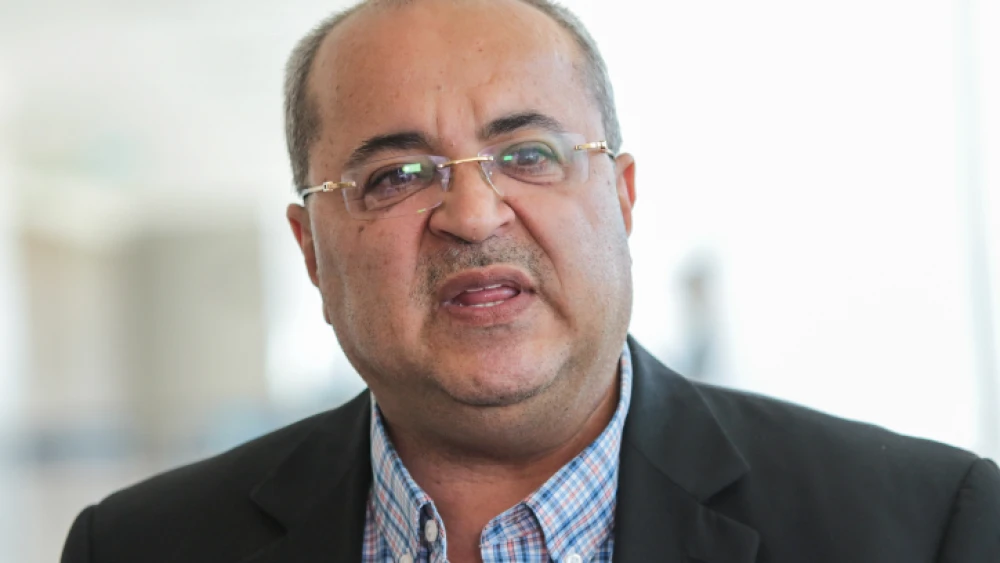
Ta’al Party chairman Ahmad Tibi has asked the Knesset to authorize his party’s split from the Joint Arab List.
In a letter to Likud MK Miki Zohar, who chairs the Knesset’s House Committee, Tibi asked for the separation to be confirmed as early as possible, in light of the upcoming April 9 elections. Zohar was set to convene the committee on Wednesday to allow the Ta’al Party to officially split from the Joint List.
Tibi is the most popular lawmaker in the Arab sector, according to some polls, and any party he heads is expected to easily pass the electoral threshold should he decide to run independently of the Arab faction.
Sources close to Tibi said that given his support in the polls, the composition of the Joint List and its leader should be determined by the will of its voters. They said that after this request to head the Joint Arab List was rejected by the other member parties, Tibi was left with no choice but to withdraw from the list for a single party.
But senior leaders in the Arab community told Israel Hayom that they planned to act in the coming days to try to bridge the gaps between Tibi and representatives of the other parties in the Joint List—Balad, Hadash and United Arab List parties (Ra’am and Ta’al). “Tibi is right that we need to refresh the composition of the Joint List and its head and let the list’s voting public determine who will be its representatives, but the move to split Arab votes will harm us all and that is what we will try to prevent,” said a senior member of the Arab Higher Monitoring Committee.
Another senior official from the Arab sector said that in the four years in which Hadash leader Ayman Odeh has served as the head of the Joint List, its power had not grown and “according to the polls, it may be that we lose Knesset seats.”
The official added: “MK Odeh calls for us to set an example, and put our ego and personal interests aside. He should adhere to his own words for the sake of the Arab public.”
On Twitter, Odeh rejected calls for him to step down, saying, “The person who most wants to see the Joint List break up is [Prime Minister Benjamin] Netanyahu. … The radical Right seeks to divide and conquer Arabs.”