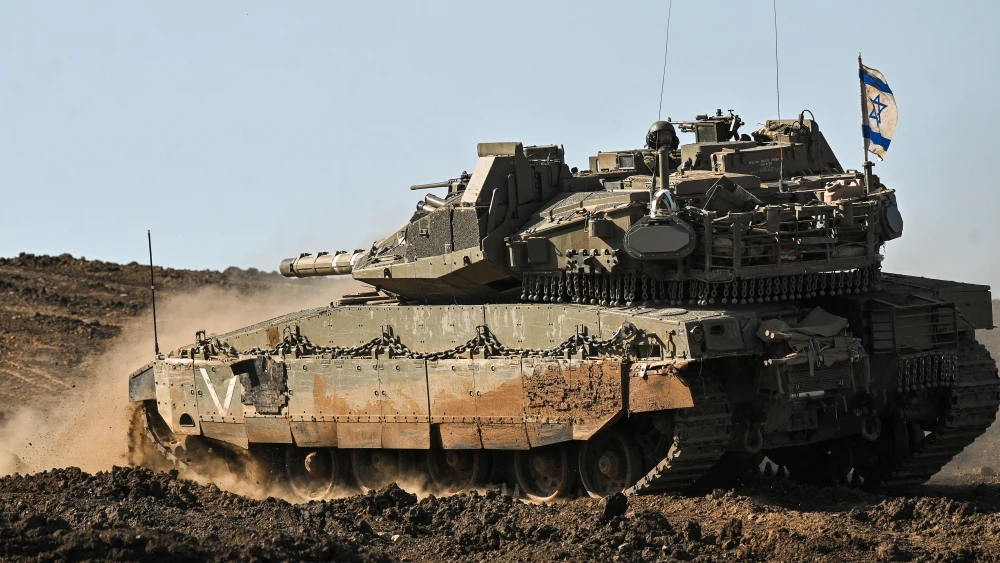
The U.S. Defense Department doled out a $73.5 million sales contract to Rolls-Royce Solutions America Inc. to supply Merkava tank power-pack kits and engineering support to Israel.
The deal, which runs through 2032, draws funds from a program with a “total cumulative face value of $462,947,478,” the Pentagon said.
The kits help sustain Merkava propulsion modules. The contract includes full and lite kits, along with metal containers and contractor engineering technical services. Much of the work is to be performed in Graniteville, S.C.
The Merkava, Hebrew for “chariot,” is a series of Israel Defense Forces battle tanks. Most of its parts are manufactured in Israel.
Rolls-Royce Solutions America Inc., a German-based company with American headquarters in Novi, Mich., is part of Rolls-Royce Holdings, which controls the famous car brand.
Its MTU Solutions unit makes the MT-883 engine for Merkava tanks, the Namer armored personnel carrier, as well as the powerpack for the Eitan armored fighting vehicle, along with most of the engines for the Israeli Navy.
The U.S. State Department approved a sale of Eitan 8V199TE21-D powerpack engines and related components last year—worth $180 million—with Rolls-Royce Solutions awarded the contract.