Newsletter
Newsletter Support JNS

Israel sees sharp rise in women in national politics, but not at local level

New statistics show that the number of women Knesset members in Israel increased from nine to 34 in the last 20 years.

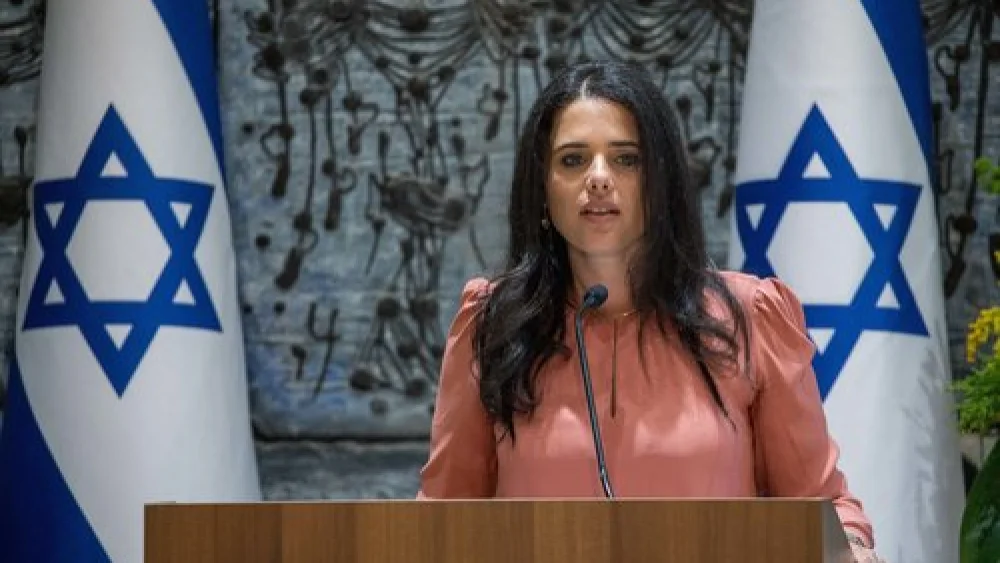
Israeli Justice Minister Ayelet Shaked speaks during a swearing-in ceremony for newly appointed High Court justices in Jerusalem, June 13, 2017. Credit: Yonatan Sindel/Flash90.

Israel has seen a sharp rise in the number of women serving on the national political stage in recent years, though the number of women in local politics is still sluggish, new statistics released for International Women’s Day have found.

According to statistics compiled by the Israel Democracy Institute, the number of women Knesset members in Israel rose sharply from nine to 34 in the last 20 years. That makes it much closer to the average in the Organisation for Economic Co-operation and Development at 28 percent.
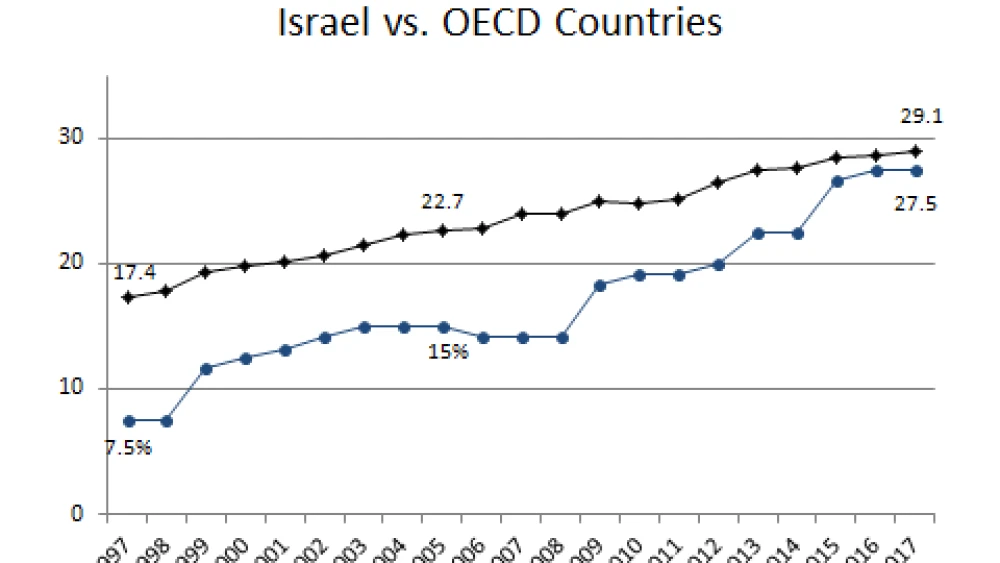
A chart showing how Israel stacks up with other OECD countries. Credit: Israel Democracy Institute.

Nevertheless, women are severely underrepresented at the local level in Israel, with only 17 percent of all municipal-council members being women, and only one female mayor, Miriam Feirberg-Ikar, in the city of Netanya.

“If women do not become council members or mayors, this makes it much harder for them to subsequently make their way into national politics,” said Ofer Kenig, one of the co-authors of the analysis, along with Avital Fridman and Shahaf Zamir.

As such, Kenig recommended that the Israeli government should create more incentives for political parties to include more women on their lists at both local and national levels. A first step of this kind is due to be taken at the upcoming local elections, and in electoral funding for parties of whom at least one-third are women, which will be eligible for a bonus of 15 percent.
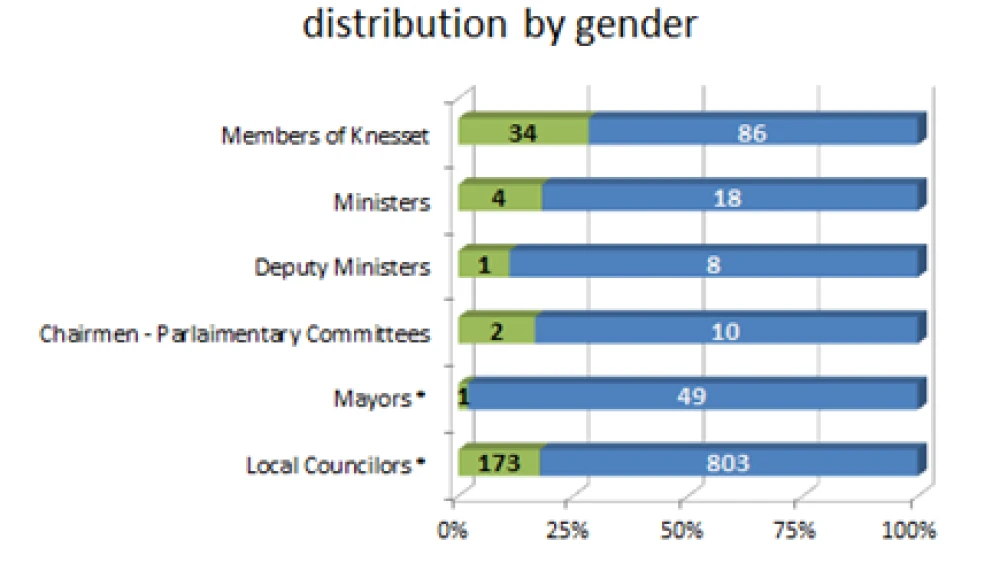
In comparison, as of 2018, 106 of the 535 members of Congress are now women, with 22 women serving in the U.S. Senate and 84 women in the House of Representatives.

“Using public funds and benefits to discriminate against religious schools is unconstitutional—period,” said Nathan Diament, of the Orthodox Union Advocacy Center.
Reza Dindar is accused of using a China-based front company to procure U.S. goods and illegally route them to Iran in violation of export controls.
“The results in Iran will be amazing,” the U.S. president wrote. “And if Iran’s new leaders are smart, Iran can have a great and prosperous future.”
The U.S.-led forum focused on how to “effectively disrupt and deter Iran’s terrorist plots and other illicit schemes,” the U.S. State Department said.
“People have every right to protest, but what’s happening here goes beyond that,” Regina Sassoon Friedland, of the American Jewish Committee, told JNS. “The Jewish people will not be intimidated to halt our events and activities.”
“The people remember. The people salute. The people are deeply grateful to the sons and daughters, thanks to whom our existence is assured,” the prime minister said.