Newsletter
Newsletter Support JNS

Israel’s Labor Party leader exits politics ahead of upcoming election

In a first since its inception in the 1960s, Labor is not expected to secure the four Knesset seats required to pass the electoral threshold.

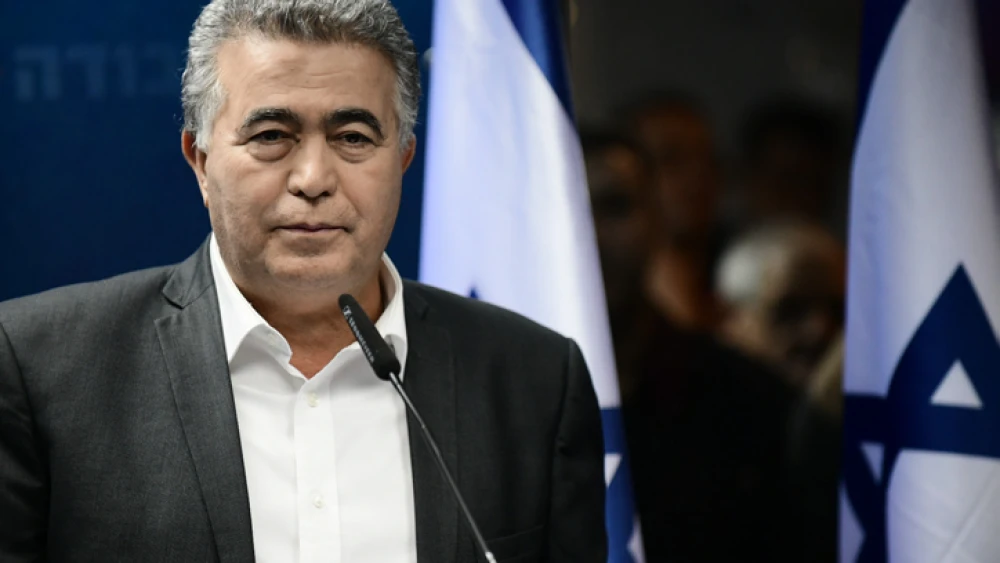
Labor Party leader Amir Peretz at an election event in Tel Aviv on Dec. 31, 2019. Photo by Tomer Neuberg/Flash90.

Israeli Labor Party leader Amir Peretz announced on Wednesday that he would be stepping down as party chairman after overseeing the political faction’s worst-ever performance in the last election.

Opinion polls show that Peretz, who currently serves as the country’s economy minister, as having lost the support of many Labor Party voters after breaking his campaign promise not to join a government led by Israeli Prime Minister Benjamin Netanyahu.

In a first since its inception in the 1960s, Labor is not expected to secure the four Knesset seats required to pass the electoral threshold.

“Out of a sense of responsibility, I am announcing that in the upcoming elections, I won’t lead the Labor Party, and I won’t head the party in the Knesset,” Peretz wrote on Facebook. “At this time, the Labor Party needs renewal and must choose a new chairman and leadership.”

This article first appeared in Israel Hayom.

Eric Dinowitz and Inna Vernikov, co-chairs of the New York City Council’s bipartisan task force on Jew-hatred, both decried the way Rep. Dan Goldman was treated.
According to the Pew Research Center, 64% of religiously unaffiliated people who participated in a recent study favored student-led group prayer in public schools.
The Education and Workforce Committee will mark up 11 bills, including measures that would require institutions receiving federal funds to strengthen responses to antisemitism complaints.
“Iran does not get to determine Lebanon’s future. The Lebanese people do,” Rep. Josh Gottheimer, co-sponsor of the measure, stated.
“Israel is not in conflict with Lebanon,” Yechiel Leiter said, warning that a new deconfliction framework could embolden Hezbollah and derail efforts to dismantle the Iran-backed terror group.
The Iran-backed terror group’s dominance in Lebanon is a “mutual problem” for Jerusalem and Beirut, the Israeli foreign minister said.
Benny Gantz, JNS editor-in-chief Jonathan S. Tobin, Gilad Erdan, Mosab Hassan Yousef, Nissim Black and leading voices in security, diplomacy, media, law and Jewish communal affairs headline the summit’s third day in Jerusalem.
