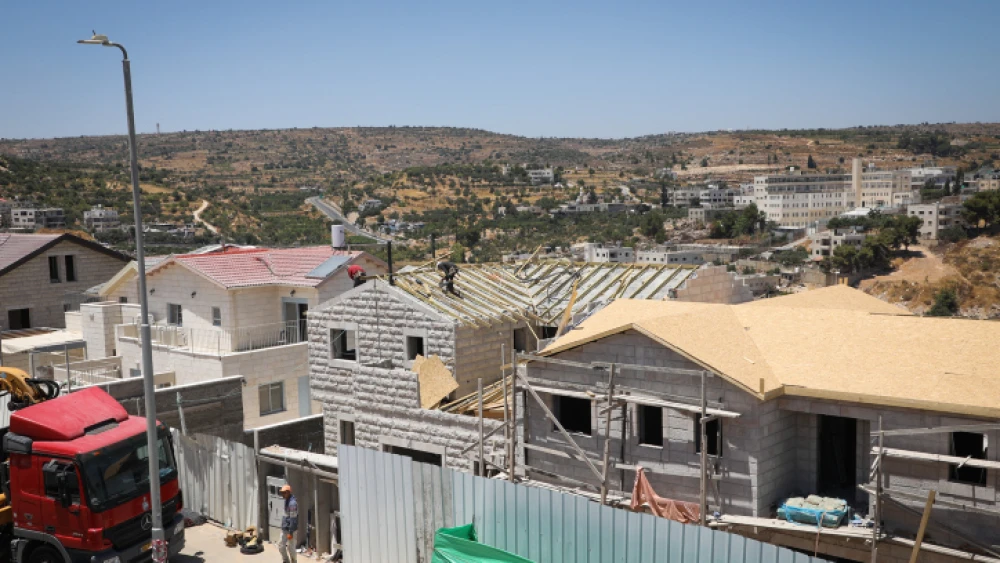
Israel’s Cabinet voted on Saturday night to recognize 13 neighborhoods of existing Judea and Samaria towns as separate communities, allowing for their expansion and development as independent localities.
Saturday’s decision recognizes 13 new villages throughout Judea and Samaria’s Binyamin, Samaria, Gush Etzion, Megilot and Jordan Valley regional councils, numbering thousands of residents.
The move, which was widely welcomed by Judea and Samaria leaders, was led by Finance Minister Bezalel Smotrich, who also manages the Defense Ministry’s civilian administration in Judea and Samaria.
“We continue, with God’s help, to lead a revolution of normalization and regulation in the settlement,” Smotrich declared. “Instead of hiding and apologizing, we raise the flag, build and settle. This is another important step on the way to actual sovereignty in Judea and Samaria.”
The minister continued, “Until now, these communities were formally considered part of their ‘mother’ communities, sometimes for decades, causing many difficulties in their daily operations. Recognizing each of them as independent communities in practice is an important step that will greatly assist in their advancement and development.”
The Yesha Council, which represents the approximate 500,000 Jewish Israeli residents of Judea and Samaria, hailed Saturday’s Cabinet move as “another step in the crucial measures taken by the government to undo the Oslo [Accords] disaster and normalize life in these areas.”
“It is time for the State of Israel to take responsibility for the more than half a million Israeli citizens living under military rule and declare sovereignty,” Yesha Council chairman Israel Ganz said.
Samaria Regional Council head Yossi Dagan said: “This recognition will enable rapid development, improved services for residents, and strengthened communities in Samaria and all of Judea and Samaria.
“For years, we have been working to advance this initiative, understanding that the independence of these communities is essential for their development and for strengthening settlement as a whole,” Dagan said.
As of Jan. 1, 2025, 529,704 Israelis live in Judea and Samaria, amounting to approximately 5.28% of the population of the Jewish state.
Nearly 70% of Israeli citizens want Israel to extend full legal sovereignty over the area, according to a poll conducted on Jan. 29.
Fifty-eight percent of Israeli Jews believe that communities in Judea and Samaria contribute to the security of the country, according to a poll the Jewish People Policy Institute (JPPI) published on March 11.