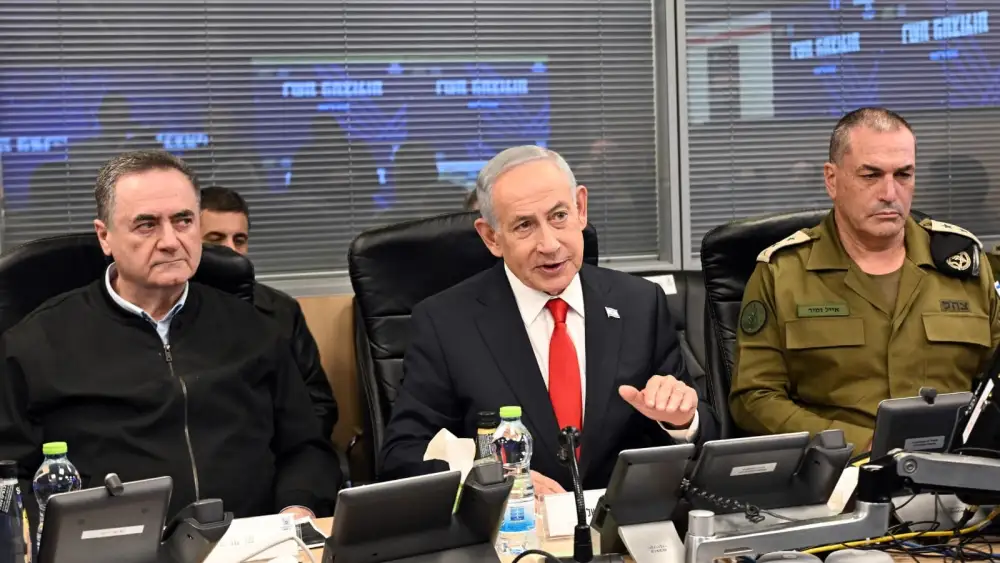
Israeli Prime Minister Benjamin Netanyahu held top-level security talks on Monday to prepare for the collapse of the ceasefire between Iran and the United States, officials told the Channel 12 News outlet on Tuesday.
Monday evening’s consultations with senior political and security officials deliberately excluded some Cabinet ministers to prevent leaks, according to the Hebrew outlet.
“We are aware of the possible implications of the American action, including renewed Iranian hostilities against Israel,” said one unnamed official, referencing U.S. President Donald Trump’s “Project Freedom” to ensure the free flow of commercial shipping through the Strait of Hormuz.
Tehran launched missile and drone attacks on the United Arab Emirates on Monday for the first time since the U.S.-brokered ceasefire took effect last month, moderately injuring three.
Also on Monday, the U.S. military sank seven Islamic Revolutionary Guard Corps boats in the Strait of Hormuz after a South Korean cargo vessel came under Iranian fire.
An anonymous Israeli security source who spoke to Channel 12 said that, “until now, the ball was in Trump’s hands—now it has moved to the Iranians.”
“If they decide to fight over passage through the Strait of Hormuz, it will mean a return to hostilities,” the source added.
Tally Gotliv, a lawmaker for Netanyahu’s ruling Likud Party, told JNS on Monday evening that Trump was “managing the situation very wisely.”
“After a 40-day joint coalition campaign against Iran, he identified the critical issue for Tehran—the Strait of Hormuz—and that is where he stepped in and maintained pressure,” said Gotliv.
“Iran is making proposals, and he is rejecting them because he understands that Iran must not be allowed to entrench a form of tyranny or maintain control that could influence the global economy. That is why he remains engaged, showing both strength and patience,” she continued.
Iran, Gotliv told JNS, is unaccustomed to the patience currently being demonstrated by its adversaries. Israel has severely damaged Tehran’s missile systems and nuclear facilities, and has shown significant intelligence capabilities in targeting the leadership of the IRGC, she continued.
“Right now, patience is required because the negotiations are being conducted with great wisdom. Iran will no longer be able to control the Strait of Hormuz at will. Trump will not allow this and is responding accordingly,” she said.
“I believe countries around the world are recognizing the need for alternative solutions, with Israel playing a role—for example, through the port of Haifa—which would further strengthen Israel’s position,” she concluded.