Newsletter
Newsletter Support JNS

Israeli child finds explosive device from Gaza in her backyard

Recent weeks have seen an uptick in “terror balloon” attacks even as Hamas had agreed to halt all violence as part of a ceasefire deal.

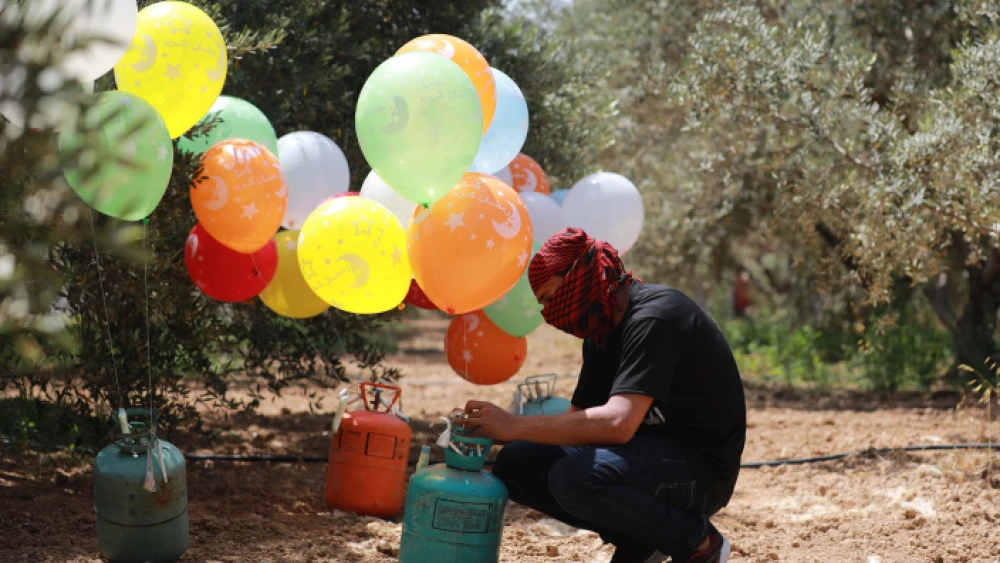
Palestinians in the Gaza Strip prepare explosive devices to be launched into Israel, on May 31, 2019. Photo by Hassan Jedi/Flash90.

An Israeli child on Sunday found an explosive device attached to a balloon in the yard of her home in Moshav Shuva in southern Israel, according to the Israeli military.

The device is believed to have been launched from the Gaza Strip some three miles to the west—one of hundreds of such devices launched from the Hamas-controlled territory since 2018. They are often designed colorfully or attached to toys, specifically to attract the attention of children.

Hundreds of incendiary devices were launched into Israel in the dry summer months of 2019, causing dozens of fires that laid waste to thousands of acres of land, including national parks and agricultural lands.

Recent weeks have seen an uptick in “terror balloon” attacks, although Israeli media reported that Hamas had agreed to halt rocket and incendiary balloon attacks as part of a ceasefire deal.

Early on Sunday, Israel Defense Forces’ fighter jets hit several targets in Gaza, after two rockets were fired into southern Israeli communities on Saturday night.

“My opponent has no history of standing up for the Jewish community. I’ve spent 30 years earning trust through substantive legal and legislative work,” Esther Panitch told JNS.
“Each incident documented in the audit meant pain, suffering and anguish for a human being, a fellow Canadian,” the Jewish nonprofit said.
“This action cuts revenue streams that fund the regime’s destabilizing activities across the Middle East,” stated Tommy Pigott, State Department spokesman.
U.S. economic pressure on Tehran targets “both traditional sanctions evasion tools like front companies as well as the exploitation of innovative technologies like digital assets,” a U.S. official said.
Elizabeth Barcohana, chair of Jewish engagement at the California Republican Party, told JNS that the statement is “abhorrent and not in touch with the concerns of California families.”
“As these incidents become more normalized, they erode public safety and our way of life as Canadians,” stated the UJA Federation of Greater Toronto.