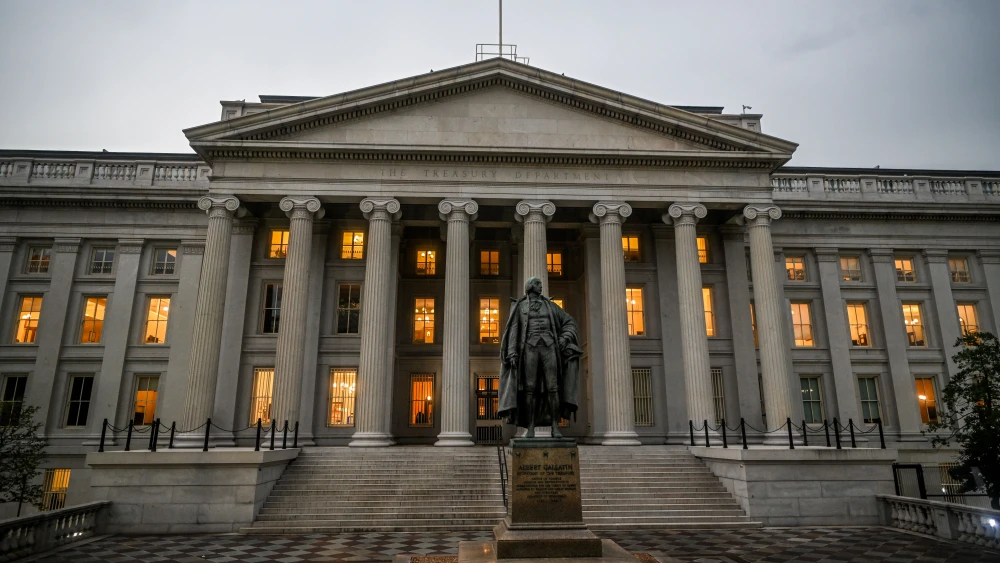
The Trump administration said last week that it is freezing nearly $350 million in cryptocurrency that it said is tied to the Iranian regime.
“We will follow the money that Tehran is desperately attempting to move outside of the country and target all financial lifelines tied to the regime,” Scott Bessent, the U.S. treasury secretary, stated.
The department hit multiple wallets as part of the administration’s so-called “Economic Fury” operation, sanctions and other financial measures taken against the Iranian regime alongside the U.S. military operation “Epic Fury.”
A U.S. official stated that “given Iran’s attempts to take global energy infrastructure hostage,” the department is “moving aggressively” and “further increasing our pressure on the Iranian regime, targeting both traditional sanctions evasion tools like front companies as well as the exploitation of innovative technologies like digital assets.”
The U.S. government has been working with blockchain analytics experts to uncover evidence of “material links” to Tehran, the official said, including “confirmed transactions with Iranian exchanges and a series of transactions routed through intermediary addresses that interact with Central Bank of Iran-associated wallets.”
Iran’s Central Bank has used “increasingly complex methods to obfuscate its involvement in cross-border transactions using digital assets, as they seek to stabilize the rial and facilitate international trade in an increasingly restricted environment,” the official said.
There is an active dialogue between U.S. and foreign financial institutions, such as digital asset exchanges, according to the official.
The department “will continue to systematically degrade Tehran’s ability to generate, move and repatriate funds,” Bessent stated.