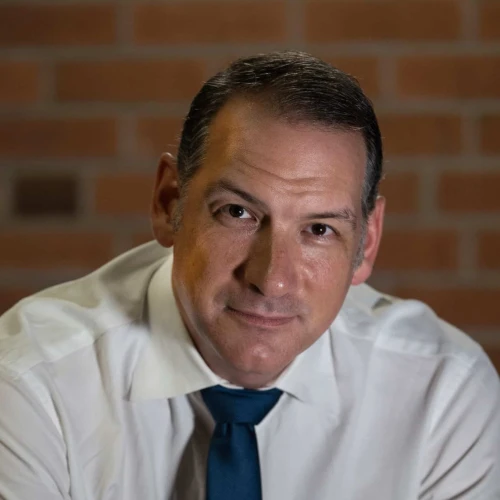
The dramatic switch came two days before Election Day, following Stevens’s growing rift with Democratic nominee Abdul El-Sayed over Israel and antisemitism.
The president has not decided whether to resume strikes, said U.S. Secretary of State Marco Rubio; Tehran warns of a “geographically unrestricted” response to any attack.
The institution in the historic Jewish quarter of Fez showcases religious artifacts, rare manuscripts, historical archives, and digital installations on synagogues, Hebrew schools and rabbinical courts.
Netanyahu’s Likud remains Israel’s largest party, the opposition lacks a clear path to power, and an enlarged Arab bloc complicates coalition arithmetic. With Trump backing Netanyahu and Iran still on the agenda, another election could carry high strategic costs.
The country’s next government will depend on whether its political leaders can reconcile their competing commitments, or whether voters will again be asked to resolve a deadlock that negotiations could not.
Political uncertainty could complicate Israel’s ability to sustain military operations, defense spending and long-term strategic commitments as threats persist from Iran to Gaza and Lebanon.
Disappointed critics rationalize support for the prime minister by demonizing him and patronizing his voters. They’d do better to rethink their denial about the intentions of Islamists.
Internal communications reveal that APA leaders dropped terrorism language after Oct. 7 and resisted Jewish psychologists’ requests for recognition, according to a report from the House Committee on Education and the Workforce.
“I’m scared of what’s going to happen now,” Miri Bar-Halpern, a Jewish psychology lecturer at Harvard Medical School, told JNS. “I can already predict the backlash.”
“Most teachers would not want to touch this with a 10-foot pole, certainly not at the middle school level,” Alisa Berger of the Harvard University Graduate School of Education told JNS.
“Individual political protest contravenes not only company policy but also our responsibility to create a more connected, caring and civil society through artistic experiences,” the opera stated.
Eldan Kaye of Ogen told JNS that the nonprofit hopes to use “capital in a way that looks at people’s needs and their potential, as opposed to what traditionally may have been deemed risky and unprofitable.”
“When people read the statistics, it’s damning, and it should be a wake-up call to university leadership, to the government and frankly to all Canadians,” Jay Solomon, chief advancement officer at Hillel Ontario, told JNS.
“You can’t fight back something you don’t really understand,” Amir Epstein, director of Tafsik, one of the organizers, told JNS. “You can’t fight back something you don’t know.”
“The data shows that Jewish, black and 2SLGBTQI+ communities remain most impacted, year after year,” stated Myron Demkiw, chief of the Toronto Police Service.
The Centre for Israel and Jewish Affairs, the advocacy agent of the Jewish Federations of Canada-UIA, said that it was “left with a deep sense of sadness.”
“There are certainly organizations with much stronger reputations within the Jewish community for actually standing up and fighting antisemitism,” the Jewish Educators and Families Association of Canada told JNS.