The Knesset Constitution, Law and Justice Committee is set to convene on April 8 to choose a lawmaker to serve on the public panel that will advise on the dismissal of Attorney-General Gali Baharav-Miara.
The election of Knesset and government delegates to the committee for appointing and dismissing the attorney general marks the next step toward a final Cabinet vote on Baharav-Miara’s removal.
On Sunday, Israel’s Cabinet voted unanimously to back a motion of “no confidence” in the attorney general, setting in motion the process of her firing.
In Israel, the attorney general does not work for the prime minister, as opposed to in the U.S., where the the holder of the office is an agent of the executive branch.
Prime Minister Benjamin Netanyahu and other ministers have often clashed with Baharav-Miara, who was appointed to the position in 2022 by the “government of change” led by Yair Lapid and Naftali Bennett, who stitched together the coalition that led Israel in 2021 and 2022.
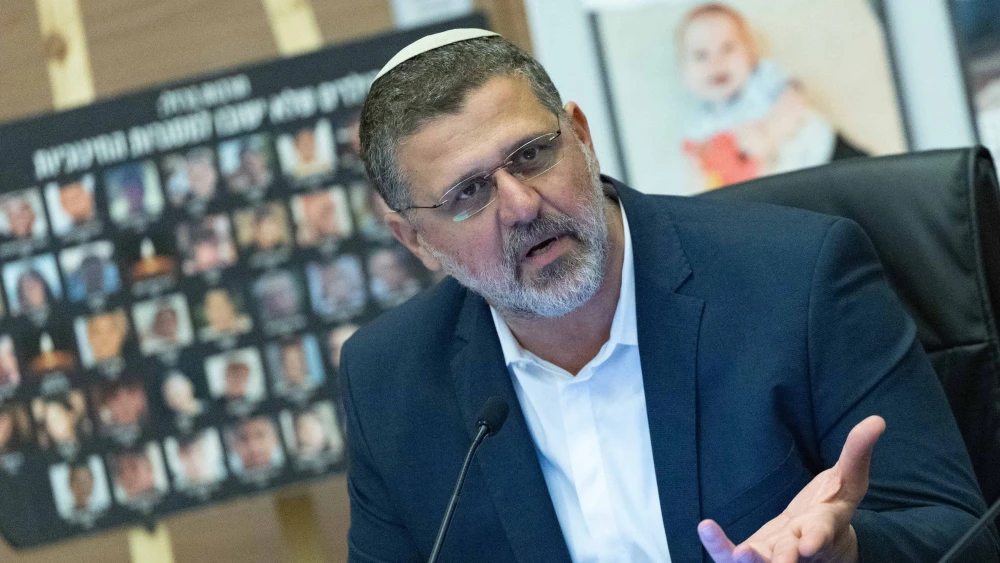
“When your lawyer tells you each and every day that you cannot do things rather than telling you what is the right way to implement your policy, you cannot work for the citizens,” Avichai Boaron, a lawmaker for Netanyahu’s ruling Likud Party, told JNS on Sunday.
“For the last two years, the government’s hands have been tied and the government and the ministers cannot do their job as their voters expect,” he explained. “It’s true to say that the attorney general’s appointment was made by the government of Yair Lapid, and her personal policy and personal ideology do not fit this conservative government.”
Boaron added, “They do not see eye to eye and after two years of frustration of the government and lots of issues where they found themselves looking in different directions, the government said it cannot work with her anymore and started the process of firing her.”
Ongoing and essential disagreements
There are four grounds that under which an attorney general may be dismissed; one is ongoing and essential disagreements between the government and the attorney general that prevent effective cooperation—the justification cited in Sunday’s motion of no-confidence.
“There is no way to restore the trust—the legal adviser must do what any person of integrity would do and resign immediately,” Justice Minister Yariv Levin said in his first public statement following Sunday’s vote.
Baharav-Miara’s “continued tenure amid the current situation severely damages the government’s ability to implement its policy, harms the citizens of Israel and undermines the standing of the institution of the legal adviser to the government,” he said, using her official title.
The statement said the justice minister would soon approach the public committee headed by former Israeli Supreme Court President Asher Grunis “for consultation regarding the termination of her tenure.”
Boaron said, “It’s a very complicated process, but we have to start it and the process says that the government has to ask a special committee to make its suggestion on whether there is cause for firing her or not.”
Israeli law stipulates that an affirmative recommendation by the committee is not required, and that the attorney general has the right to a hearing before the committee and government representatives.
“After this special committee recommends to the government what to do, the government will decide on whether she will stay or leave,” said the Likud Party lawmaker.
“The process just began, and I think in the current circumstances, it is very legitimate. Given the current level of disagreement between the government and the attorney general, we have to address this conflict, we cannot ignore it because it’s not fair to the citizens,” Boaron told JNS.