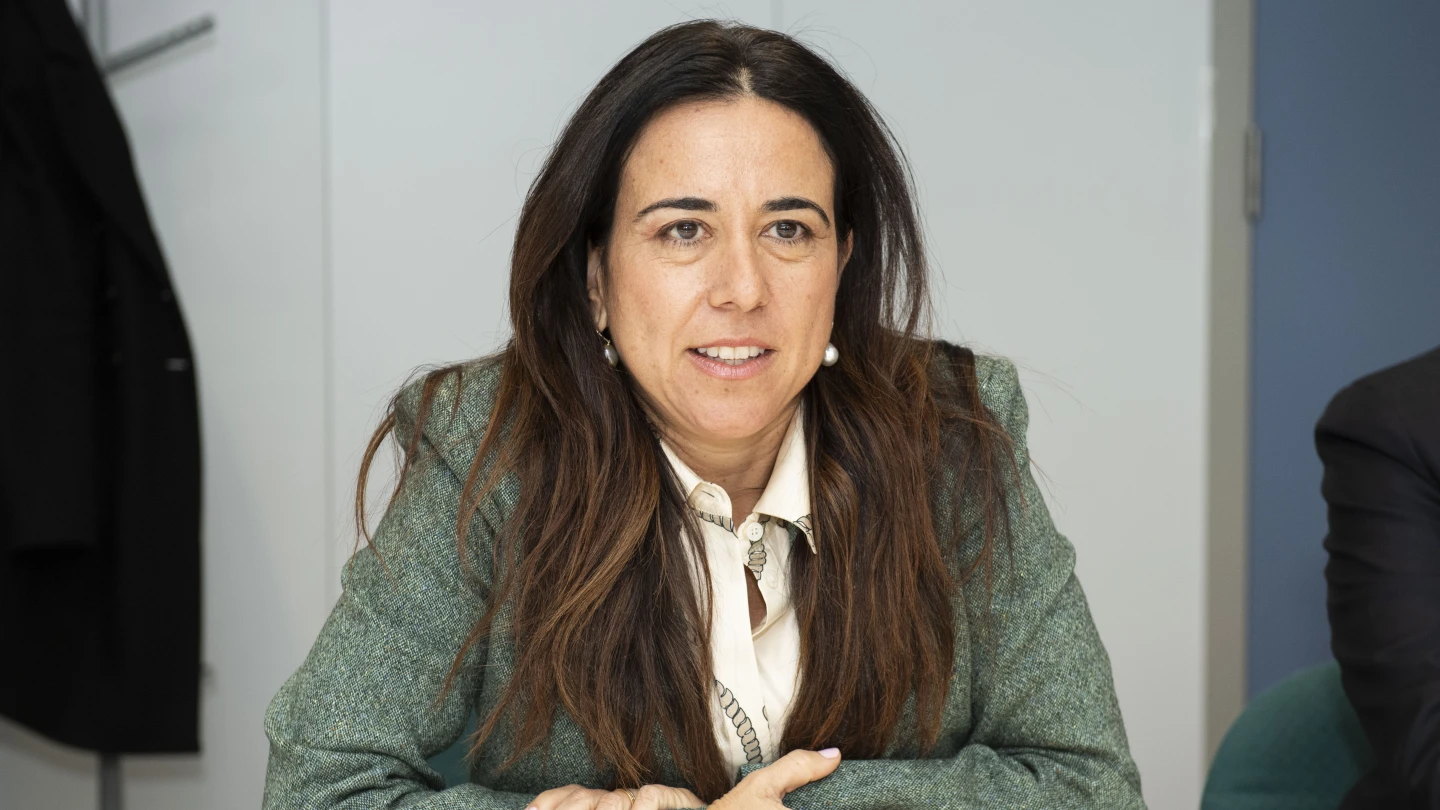
Rep. Debbie Wasserman Schultz (D-Fla.), who is Jewish, sat for the most extensive interview she has ever done about her curly hair on a new podcast, “We Are Spiraling,” the congresswoman’s staff told Priya Anand, a former journalist who launched the podcast as well as a hair-product business recently.
“I embrace who I am ethnically, biologically,” she told Anand in an episode on Nov. 24 titled “The Politics of Curly Hair.”
“It honors my ancestors, my mom, my grandparents,” she said in the interview. “You go across the globe and meet other Jewish women. That is a part of who we are.”
Wasserman Schultz told Anand about Vogue stylists softening her curls and facial features in a photoshoot for an October 2012 article in the magazine. The photoshoot was widely criticized, with many saying that the congresswoman looked “unrecognizable.”
“They didn’t make me look like I was a curly-haired Jewish girl,” Wasserman Schultz said on the podcast.
She told Anand that she was disappointed that the photo, though “beautiful,” wasn’t “whatever beauty I normally have.”
“That’s just not something I should have to overcome in order to be credible,” she said. “So I just set out to be credible, period.”
Wasserman Schultz also said on the podcast that when colleagues told her how good she looked in the photo, the implication was that they didn’t think she looked so good otherwise.
During the episode, which ran roughly 20 minutes, one exchange struck Anand in particular, the podcast told JNS.
Wasserman Schultz said that young Jewish women often thank her for keeping her curls natural. Anand was “touched” by what she told JNS was a demonstration of how “deep the sensitivity is around how one shows up in the world,” and how deeply women feel the need to be seen as themselves.
“If you don’t see representation, there’s this implicit idea that whatever the thing is that’s not being represented is not the thing to be upheld,” Anand told JNS.
“You can photograph the congresswoman from any angle, and it doesn’t matter. People can always identify her because she has curly hair,” the podcaster said. “It’s the same thing with me.”

Anand told JNS that her parents would watch her dance on stage as a child and would tell her that they “could easily find me out of a sea of little Indian girls, based on my long, curly hair.”
She worked as a journalist, including covering technology news, after graduating from George Washington University, where she was editor-in-chief of the Hatchet, a student publication.
For her entire life, strangers have approached her just to talk about her curls, she told JNS. Whether on airplanes or in coffee shops, “there’s always another curly-haired person,” she said. “We end up in conversation.”
‘Your head under a rock’
She brought her journalism experience to her new podcast, which probes the cultural significance of curly hair. That includes asking why people hide it, straighten it, politicize it, mock it and celebrate it. The name of the podcast is a nod to “spiraling,” both the anxious kind and the curls literally, she told JNS.
“I want to flip it on its head and have it be something that makes people laugh,” she said.
She dismisses the idea that the podcast might be “too niche.”
“Many people are secretly curly,” she told JNS. “I swear to God. Everyone in America knows someone who is secretly curly.”
“I’m willing to bet that if you don’t, it’s because they’re straightening their hair and you haven’t uncovered the secret yet,” she said.
JNS asked Anand why so many women straighten their hair. She pointed to Wasserman Schultz.
“There’s a record on the internet of all the insults that were hurled at her, and some that she mentioned on the show,” the podcaster said.
Anyone who says that prominent people needn’t straighten their hair must be living “with your head under a rock,” she told JNS. “There’s the world that we live in, and then there’s hope.”
Anand has also launched a curly-hair product line, Mayura Beauty, using the Sanskrit term for “peacock.” She notes that curly-haired people think of their hair as “iconic,” like peacock feathers.
“I have approached every step of building a hair care line like a reporter,” she told JNS. “You’re piecing together a puzzle every time you make a story, and it’s similar in business.”
She also hopes that hair can help bring people together.
“If there’s this idea that we can’t share hair products or hair secrets across cultures, I feel that’s very sad,” she told JNS. “That’s like saying you shouldn’t eat another culture’s food.”