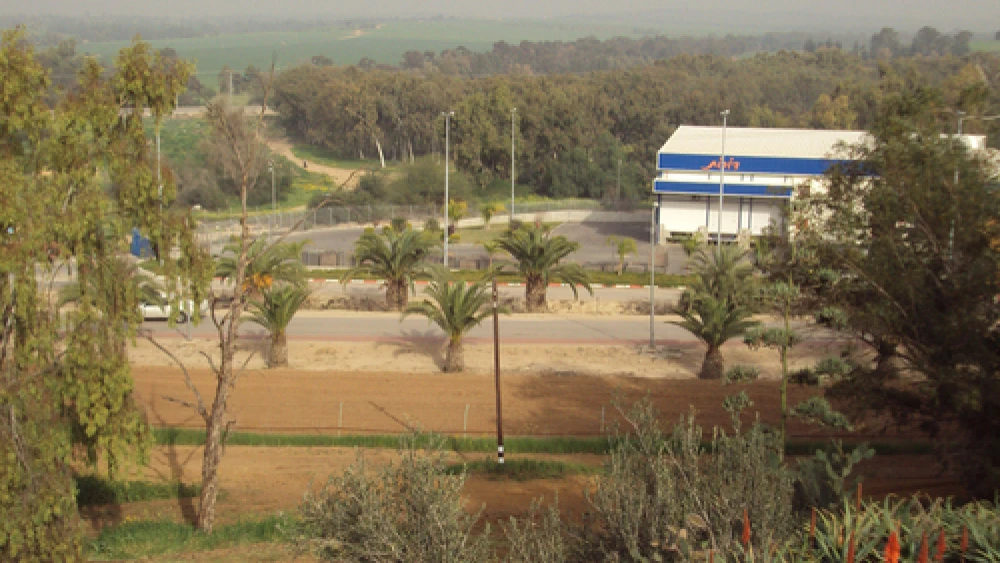
Kibbutz Dorot lies roughly 10 miles from the Gaza border, 4.5 miles from the college town of Sderot and 18 miles from the Israeli port city of Ashkelon. Strangely, the kibbutz appears to be protected from the sporadic volleys of rockets launched by terrorist groups in the Hamas-controlled Gaza Strip.
Due to the amateur craftsmanship of Qassam rockets, their trajectory is difficult to estimate. Kibbutz Dorot is safe because the rockets typically reach their zenith while flying overhead and either land in the fields beyond or, sadly, fall on nearby Sderot. During Operation Cast Lead, the 2008 Israeli military incursion into Gaza, the kibbutz was a safe haven. It has grown significantly in the past few years in part because of it’s strategic importance.
Being a peculiar safe-haven during sporadic rocket attacks is not the only thing that makes Kibbutz Dorot unique. Looking beyond the heightened IDF presence, with its planes and helicopters streaking across the sky and the sporadic nighttime police roadblocks, one can see some of Israel’s most beautiful and productive farmland.
Founded in 1941, the kibbutz compound itself is an oasis. Lush palms rise over well-kept grass plots and flowerbeds. Using state-of-the-art Israeli-engineered drip irrigation, Dorot farmers have brought over 3,700 acres under cultivation, producing a wide variety of vegetables including garlic, wheat, and carrots. This rich crop is processed right on-site.
While many kibbutzim have gone bankrupt in the wake of privatization, prosperous Dorot offers an example of adaptability and the endurance of the kibbutz movement. In the context of sustained conflict with Gaza, the kibbutz is also symbolic of the organic energy and ingenuity present at Israel’s birth. It is testimonial to Ben Gurion’s notion that the “the Negev is the true test of the Israeli people,” and evidence that Israelis continue to meet this challenge and work tirelessly to make the desert arable.
Although Dorot largely has privatized and no longer is a true kibbutz, its directors proceed in a manner that honors the old system and its community elders, but that also invites a new wave of young families and workers to the kibbutz environment.
“We call them ‘Friends,’” Shaun Deakin, Dorot’s chief gardener and irrigation engineer explains, as he proudly shows an expanse of planned housing developments and discusses the important role that new residents will play in kibbutz politics. “The idea is that everyone still comes through the same gate, feels a part of the place, and acts together. If they pay their dues, we hope they will stay and build a house.”
Since Dorot is safe, clean, and a relatively cheap place to rent an apartment, the opportunity is hard to top. Growing in all directions, Dorot is a bright spot on a map otherwise marred by political and military conflict, as well as environmental challenges.
While the techniques for settling the land and the borders of the northern Negev have changed dramatically since David Ben Gurion first offered his challenge to the Israeli people, it is clear that the dream is still alive. Southern Israelis maintain a drive toward achieving the full scope of their founder’s message as they continue to employ a sound work ethic, build infrastructure and raise families even in the midst of violence.
Jeffrey Barken, Cornell University graduate 2008, and University of Baltimore MFA student, is currently writing a collection of stories, This Year in Jerusalem, Next Time in America, based on his experiences living on a kibbutz in Southern Israel. Contact Jeffrey at jfbarken@gmail.com.