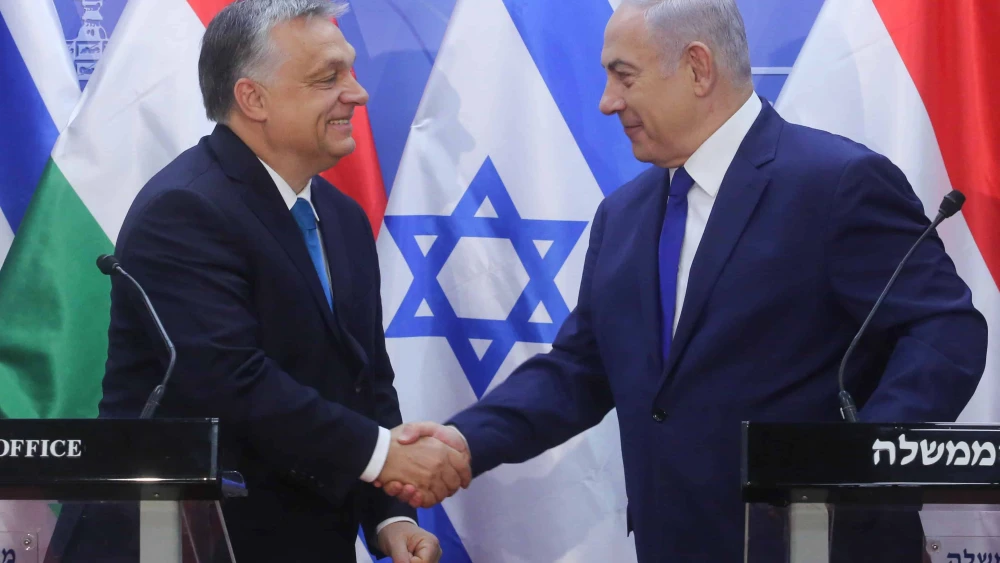
Hungary will withdraw from the International Criminal Court, a senior Cabinet minister announced on Thursday, the first day of Israeli Prime Minister Benjamin Netanyahu’s visit to Hungary.
“The withdrawal process will begin on Thursday, in line with Hungary’s constitutional and international legal obligations,” a spokesperson for Gergely Gulyás, minister of the Hungarian Prime Minister’s Office, wrote on X.
The statement did not specify the reason for the decision.
Netanyahu’s visit is his second international trip since the ICC issued an arrest warrant for him and his former defense minister Yoav Gallant on suspicion of war crimes in Gaza, where Israel is fighting Hamas.
Hungarian Prime Minister Viktor Orbán condemned the ICC’s decision and officials in his government said Budapest would not honor the warrant.
Israeli Foreign Minister Gideon Sa’ar thanked Orbán. “I commend Hungary’s important decision to withdraw from the ICC. Foreign Minister Péter Szijjártó and I dealt with this matter extensively. The so-called ‘International Criminal Court’ lost its moral authority after trampling the fundamental principles of international law in its zest for harming Israel’s right to self-defense,” Sa’ar posted on X.
All of the European Union’s 27 member states, including Hungary, are signatories to the Rome Statute, which gives the ICC its mandate. Israel and the United States are not signatories.
U.S. President Donald Trump in February imposed sanctions on the ICC, saying it had “engaged in illegitimate and baseless actions targeting America and our close ally Israel.”
The U.S. sanctions hit ICC officials, employees and their immediate family members with financial penalties and visa restrictions.
Orbán, who opposes mass immigration into Europe, is under various financial sanctions by European Union bodies for refusing to toe the E.U. line on this issue and others.
He vowed the ICC warrant would have “no impact whatsoever on the Hungarian-Israeli alliance and friendship,” and extended an invitation to Netanyahu, promising his country “will ensure your safety and freedom.”
The ICC has no enforcement arm and relies on member states to implement its warrants.