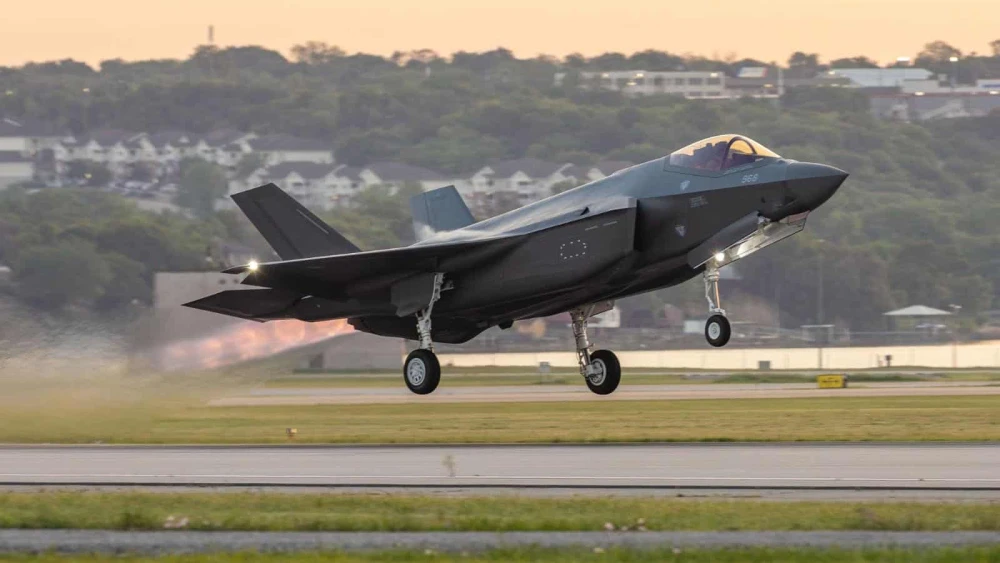
The Israel Defense Forces on Monday carried out a wave of airstrikes targeting Iranian regime assets across the Islamic Republic, including in Tehran, Shiraz and Tabriz, the army stated on Tuesday.
The Israeli Air Force strikes, which covered a distance of some 700 miles across the country, were part of the IDF’s focus on “deepening the damage to the Iranian terror regime’s core systems and weakening its capacity to threaten the State of Israel,” according to the statement.
During one of the strikes in Iran’s capital, “dozens” of bombs were dropped on command centers belonging to the regime’s internal security, including the Ministry of Intelligence and the Basij.
Additionally, military sites used to store and launch suicide drones, ballistic missiles and air defense systems were struck, the IDF said.
In the heart of Tehran, IAF jets hit “an intelligence command center of the Iranian regime that was established in the same compound as the Iranian electricity company, in the heart of Tehran,” the army stated.
In another “significant” strike in Tehran, the Israeli Air Force destroyed a Tehran site used by the regime to develop satellite attack capabilities.
“The compound was used to develop military space programs, including the development of the ‘Chamran-1’ satellite, which was built by the Iranian Defense Ministry’s electronics industries and launched into space in September 2024 by the IRGC,” according to the statement.
The site’s activities posed a threat to Israeli satellites “and space assets of other countries,” the IDF continued. “The dismantling of the compound adds to the strike carried out last week against another space-related research compound belonging to the Iranian Space Organization.”
In Shiraz, a command center of Iran’s internal security forces and a ballistic missile site were struck, while in Tabriz, regime air defense systems were bombed, “further expanding aerial superiority in the region and protecting the State of Israel,” per the IDF statement.
The IDF on Feb. 28 launched “Operation Roaring Lion” against the Islamic Republic with the aim of degrading “the Iranian terrorist regime” and removing “existential threats to the State of Israel.”
The aerial campaign has targeted hundreds of Iranian military sites as part of a broad and coordinated operation with the U.S. Armed Forces.