Israeli Foreign Policy

The forum comprises the leading elements of all the state’s public diplomacy efforts • Israel’s image is a “main component” of its national security, says Prime Minister Naftali Bennett.
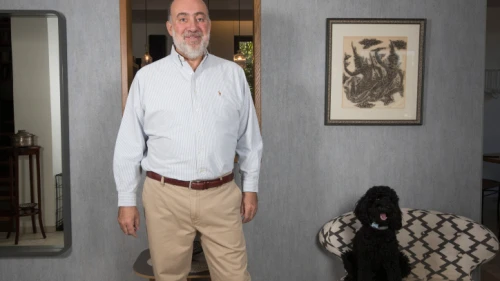
“Prosor’s extensive experience and familiarity with the Israeli foreign service will greatly contribute to the challenges in the international arena,” says Israeli Foreign Minister Yair Lapid.

Jake Walles, the U.S. consul general and chief of mission in Jerusalem from 2005-2009, recently said that, for almost all practical matters, it makes little difference in the end whether the sign above the door reads, “U.S. Consulate” or “Palestinian Affairs Unit.”
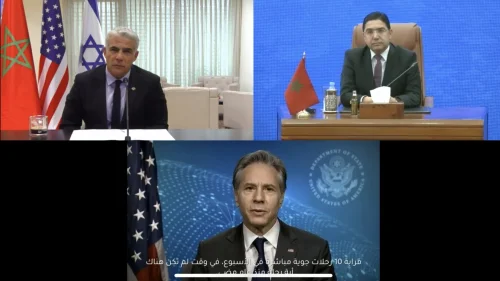
During a videoconference, the foreign ministers of the three countries welcomed “an achievement that has deepened ties, partnerships, and avenues to pursue shared goals.”

“We know what it means to defend one’s own state and land with weapons in hand at the cost of our own lives,” said Ukraine’s President Volodymyr Zelensky. “Both Ukrainians and Jews value freedom, and they work equally for the future of our states to become to our liking and not the future others want for us. Israel is often an example for Ukraine.”

Israel’s Counsel General to the Southeast U.S. Anat Sultan-Dadon, whose post includes Kentucky and the Southeast, said she wanted to convey Israel’s support for the people of Kentucky, and “our love and friendship during these difficult days.”

Ukrainian President Volodymyr Zelensky has preconditions regarding security and defense cooperation to be worked out first.

“Education is the foundation of everything, and this goes hand in hand with the quality. In this era, you can’t talk about quality while excluding technology,” said Israeli Ambassador to Rwanda Ron Adam.

Carice Witte, founder and executive director at SIGNAL, adds: “Considering America’s growing concerns about technology and critical infrastructure, contrasted with Jerusalem’s need to carry out massive infrastructure projects over the next decade, now may be the time for Israel to develop a strategy for managing relations with Beijing.”
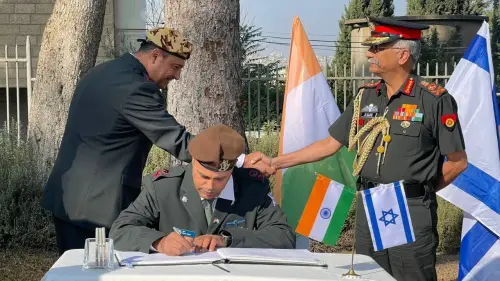
“India is interested in a multilateral world, in which [it] is an important country. Israel fits in with this vision,” said Professor Efraim Inbar of the Jerusalem Institute for Strategy and Security.
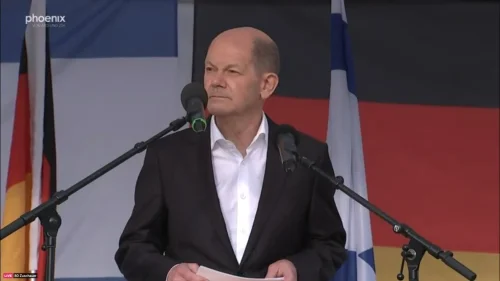
The two leaders emphasized the necessity of strong ties between Jerusalem and Berlin, agreeing to continue deepening economic, diplomatic and security efforts.

“Jews and Ukrainians are united by more than a thousand-year history, and this history has a lot to teach us about the challenges we face today,” said president of the Jewish Confederation of Ukraine Boris Lozhkin, specifically noting anti-Semitism and the COVID-19 pandemic.