



Much of the current discourse surrounding the war between the United States, Israel and the Islamic Republic of Iran reflects a persistent analytical failure: the conflation of Islamic regime messaging with battlefield reality.
That failure is not simply a matter of disagreement. It reflects a deeper misunderstanding of how modern conflicts operate—particularly when one of the central actors is a theocratic authoritarian regime that treats information as an extension of warfare.
The Islamic Republic of Iran has declared victory. At the same time, it has threatened escalation, disputed ceasefire conditions, and warned of broader regional and economic consequences. Islamic regime officials have described continued negotiations as “unreasonable,” even as hostilities persist and maritime access remains contested, and they continue to attack Israel, U.S. interests, Gulf states and Arab neighbors, while directing their international terror proxies.
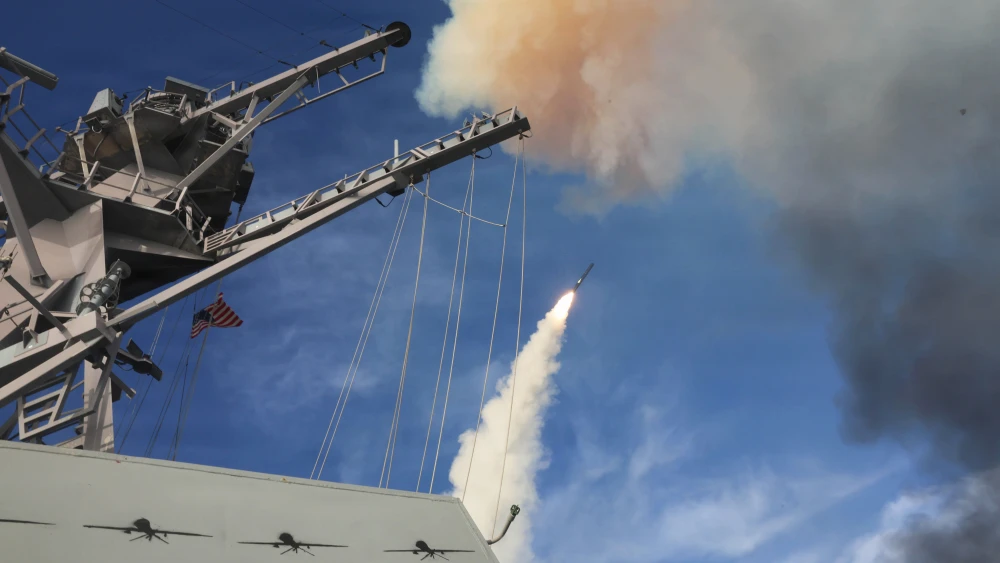
The United States and Israel, by contrast, are describing a campaign defined by measurable outcomes. U.S. officials have emphasized that operations degraded Iran’s missile systems, naval capabilities and broader military infrastructure, forcing Tehran into a ceasefire position under sustained pressure. Reporting on those claims, including statements from defense leadership, indicates that Washington views the campaign as a decisive shift in the balance of power.
Israel has aligned with that assessment while clarifying that the ceasefire does not extend to Hezbollah or other Iranian-backed forces. Israeli Prime Minister Benjamin Netanyahu affirmed Israel’s support for the U.S.-brokered agreement while explicitly stating that operations against Iranian proxies would continue.
Both narratives now circulate simultaneously. And in limited respects, both contain elements of truth.
U.S. and Israeli operations have materially degraded Iran’s conventional military capacity. At the same time, Iran retains key strategic levers: regime continuity, influence over proxy networks and the ability to exert pressure on global chokepoints—most notably, the Strait of Hormuz.
That distinction is essential.
What is being described as a ceasefire is, in operational terms, a fragile and contested pause. Hostilities have continued in parallel theaters, and the terms of the agreement remain disputed. Both Washington and Tehran are operating under different interpretations of what the ceasefire requires, while Israel continues to be attacked by Iran, Hezbollah and Hamas, and Israeli strikes on Hezbollah targets persist.
The instability surrounding the Strait of Hormuz further underscores the point. The waterway—through which roughly one-fifth of the world’s oil supply flows—remains partially restricted, with shipping activity slowed and global markets reacting accordingly. U.S. officials have pushed for its full reopening, while Iran continues to assert control and leverage over maritime access.
This is not a stable peace. It is a pressured equilibrium.
At the same time, developments inside Iran reveal a stark contrast between external messaging and internal reality. Civilian reporting describes a climate of danger and uncertainty, with increased militia presence, checkpoints in urban areas and widespread concern about repression, as well as economic instability. The Islamic Revolutionary Guard Corps continues to hunt for and kill Iranian dissidents and protesters. These internal conditions stand in tension with the regime’s outward claims of strength.
That contrast is not incidental. It is characteristic of how authoritarian systems operate. Regimes that rely on ideological legitimacy do not concede weakness. They project resilience, especially in moments of strategic pressure.
The challenge, however, is no longer limited to what Iran is saying. It is how that messaging is being received.
A growing portion of Western discourse reflects what can only be described as an analytical asymmetry: rigorous scrutiny is applied to U.S. and Israeli actions, while Iranian claims are often treated as an alternative perspective rather than as state-directed messaging. Mainstream media in the United States is divided along political lines, with coverage of the war often shaped by ideological perspectives. Social media is a sea of information, fueled by propaganda, misinformation, disinformation and conspiracy theories—with many of these campaigns sponsored by the Islamic Republic and their Islamist proxies themselves.
Washington and Tehran are operating under different interpretations of what the ceasefire requires.
In this polarized environment, distortions have emerged from across the ideological spectrum. Certain left-leaning outlets and commentators portray the conflict primarily through the lens of opposition to the Trump administration, framing a strategic confrontation as reckless escalation. At the same time, far-right conspiracy theorists have spread isolationist narratives and disinformation that undermine American interests and echo adversarial propaganda.
Though originating from opposing political extremes, both interpretations misrepresent the stakes of the conflict and obscure the strategic realities confronting the United States and its allies. This asymmetry is amplified by the modern information environment.
In online and social-media ecosystems, narratives originating from Iranian state messaging—and from networks aligned with it—are frequently consumed with less skepticism than reporting from democratic governments and established institutions. The result is a reversal of traditional credibility standards.
Sources operating within closed, state-controlled systems, where dissent is suppressed and information is curated, are often perceived as more “authentic.” Meanwhile, sources from open societies, where transparency, verification and internal debate are built into the system, are increasingly dismissed as unreliable or politically compromised.
This inversion does not reflect stronger evidence. It reflects the growing effectiveness of disinformation.
The question is not whether all governments have bias, and whether their information systems allow for correction, accountability and verification. This distinction also clarifies which sources merit trust. Democratic nations such as the United States and Israel operate within transparent systems subject to public scrutiny, independent media and institutional accountability.
Authoritarian regimes such as the Islamic Republic of Iran do not. Their state-controlled narratives are designed to preserve power rather than inform the public. Treating these sources as morally or evidentiary equivalents does not reflect balance; it reflects a failure of analytical judgment.
In that environment, the objective is not simply persuasion. It is destabilization.
When audiences begin to treat all narratives as equally credible, the distinction between verified reporting and strategic messaging collapses. And when that distinction collapses, the information battlefield begins to favor those most willing to manipulate it.
Understanding this war, therefore, requires more than following headlines. It requires evaluating which claims align with observable conditions.
U.S. and Israeli positions—focused on degrading Iran’s military capabilities and limiting its ability to project power—are consistent with reported operational outcomes. Iranian statements, by contrast, remain structured around regime preservation and ideological continuity, often independent of battlefield realities.
This does not eliminate the need for scrutiny of U.S. or Israeli policy. But it does require acknowledging that not all narratives carry equal evidentiary weight. It also requires placing the current conflict within its broader strategic context.
Iran’s regional posture is the result of decades of investment in asymmetric warfare—developing missile programs, expanding naval reach and building proxy networks across the region. What is unfolding now is not a sudden escalation, but a delayed confrontation with that system.
In practical terms, the conflict cannot be considered resolved while the IRGC continues to function as an operational arm of state-sponsored terror. Any outcome that leaves this structure intact is not resolution but delay. Lasting stability will remain elusive so long as the Islamic Republic sustains its apparatus of regional aggression and ideological extremism. A durable peace will ultimately require the dismantling of the IRGC’s operational capabilities and the end of the regime that enables them.
A clear analysis must also distinguish between the Iranian regime and the Iranian people. Opposition to the Islamic Republic has been a persistent feature of Iranian society, despite sustained repression. Iranians and Persians—inside the country and across the diaspora—have demonstrated repeated resistance to the system that governs them. They are not represented by the regime’s ideology or its messaging.
Finally, any serious assessment of the conflict must account for those directly engaged in it. American and Israeli service members continue to operate in complex and high-risk environments, carrying out missions tied to broader strategic objectives. Their role is often framed politically, but its significance is structural. They are part of the deterrence architecture that underpins regional and global stability.
The current conflict spans military, economic and informational domains, each reinforcing the others.
But one conclusion is already clear. In a war where narrative is used as a strategic tool, understanding depends on the ability to distinguish between messaging and measurable reality.
That is not a matter of perspective. It is a matter of consequence, because misreading this conflict does not simply distort understanding. It shapes policy, public opinion and the willingness to confront or ignore the conditions that made this war inevitable.


