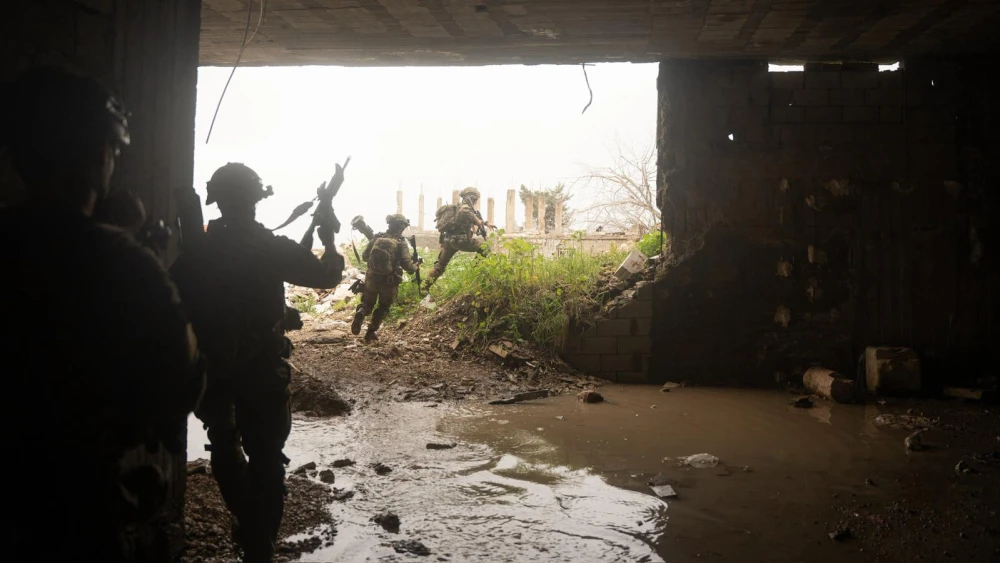
Two Israel Defense Forces soldiers were wounded, one seriously, by a Hezbollah drone in Southern Lebanon on Monday, the military said on Tuesday.
The casualties were evacuated to hospital and their families were notified, according to the statement. The latest attack “constitutes a violation of the ceasefire understandings by the Hezbollah terrorist organization,” added the IDF.
The Iranian-backed terror group throughout the day on Monday launched multiple explosive-laden UAVs toward troops in Southern Lebanon, according to the military. No injuries were reported in these incidents.
On Tuesday morning, the army said it had launched interceptors at two “suspicious aerial targets” in areas where soldiers were operating in Lebanon, adding that the results of the interception were “under review.”
Hezbollah began firing rockets, missiles and drones at Israel on March 2, in retaliation for the Jewish state’s targeted killing of Iranian Supreme Leader Ali Khamenei. Khamenei was eliminated in the opening strikes of “Operation Roaring Lion/Epic Fury” against the Islamic regime on Feb. 28.
In response to the terrorist organization’s violation of the U.S.-brokered Nov. 27, 2024, truce agreement, Jerusalem launched an aerial campaign against Hezbollah and ordered the IDF to advance and take control of additional areas in Southern Lebanon to halt cross-border attacks.
Jerusalem and Beirut on April 16 agreed to a 10-day ceasefire following mediation by U.S. President Donald Trump. Last week, the two countries agreed to extend the ceasefire for three more weeks following historic direct talks in Washington, D.C.
Israeli Prime Minister Benjamin Netanyahu told senior IDF commanders at a military conference on Monday that the Jewish state has “the freedom of action to thwart immediate and emerging threats; this is the agreement we made with the U.S. and also with the Lebanese government.”
“There are still two major threats from Lebanon, from Hezbollah: The threat of 122mm rockets, and the threat of drones and UAVs,” the premier continued, saying the Israeli Defense Ministry and IDF were making “a very large technological effort” to eliminate these.
Netanyahu in his speech praised the IDF’s “monumental achievements” in Lebanon, including the elimination of Hezbollah’s long-range rocket array and the creation of the security zone, which he said prevents a cross-border invasion, as well as anti-tank fire.
“They have roughly 10 percent of the missiles they had at the start of the war,” noted the prime minister. “However, these still trouble the residents of the north, and I greatly appreciate their resilience and their standing steadfast.”
Throughout the day on Monday, the IDF struck some 20 terrorist sites in the Beqaa Valley and “additional locations across Southern Lebanon,” the military said.
In the Beqaa Valley, the IDF targeted a Hezbollah weapons manufacturing and storage facility after “recent reconstruction activity” was identified as the site. “Likewise, additional weapons storage facilities were struck in the area,” it added.
The IDF also hit multiple weapons storage facilities, Hezbollah “military” structures and rocket launchers in additional attacks throughout Southern Lebanon, it stated.
Ground troops located two underground Hezbollah structures, as well as an anti-tank position and numerous explosives intended to be used by the terror group, according to a second statement on Tuesday.
“The IDF will continue to operate to remove threats to Israeli civilians and IDF troops,” the statement concluded.