Jewish communal leaders from across New York City met with members of the New York City Council’s Jewish Caucus on Friday to discuss rising Jew-hatred, Holocaust education and the challenges that face Jewish service organizations in the city.
The hourlong meeting brought more than a dozen Jewish nonprofits and communal organizations together with city lawmakers for what Eric Dinowitz, chair of the caucus, said was a discussion about how he and fellow councilors can better support Jewish institutions and strengthen education efforts in public schools.
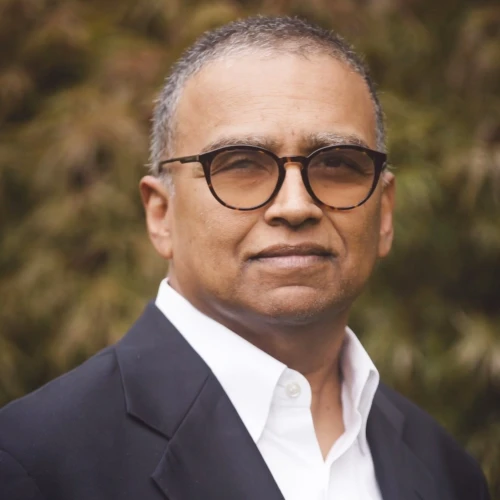
“We focused on the needs and challenges facing our service providers in the city,” Dinowitz, a Democrat who represents a Bronx district that includes Riverdale, told JNS.
“It was the first time in a long time that we had all of them sitting down together, sharing ideas, talking with one another and having us as members all hear directly from them at the same time,” he said.
Representatives came from the UJA-Federation of New York, Jewish Community Relations Council of New York, Blue Card, Met Council, New York Jewish Agenda, 92nd Street Y, Rabbi Sacks Legacy, Project Witness, Ohel Children’s Home and Family Services, and Hatzolah.
Much of the conversation centered on education, particularly Holocaust education in New York City schools and wider efforts to teach students about antisemitism and Jewish history.
“Whether it relates to antisemitism or to helping students in our city understand different cultures and histories, there is a real need for more robust education, particularly around the Holocaust and the diversity of the Jewish community,” Dinowitz told JNS.
The council’s Jewish Caucus, made up of its Jewish members, works on issues affecting Jewish communities across the city, including rising antisemitism. Its members include Julie Menin, the council’s first Jewish speaker, Lynn Schulman (caucus vice chair), Harvey Epstein, Lincoln Restler, Simcha Felder and Inna Vernikov.
Dinowitz said that the meeting opened with a discussion of the council’s five-point plan to combat antisemitism, which includes creating a hotline for reporting antisemitic incidents and expanding funding for Holocaust education programs in New York City public schools.
The goal of the meeting was to hear directly from organizations already working on these issues and identify ways the city can support their efforts.
“We’re there to support these groups,” Dinowitz told JNS. “We’re grateful that these organizations are so hardworking and have already demonstrated really positive results.”

“You have groups like JCRC and the Auschwitz Jewish Center Foundation, which were there with different programs but a shared goal of bringing students from different backgrounds together,” he added.
As elected officials, members of the City Council are there to “support good work, elevate it, push back against negativity in our city and cut through the bureaucracy,” Dinowitz said.
With Vernikov, Dinowitz also co-chairs the New York City Council Task Force to Combat Antisemitism, a bipartisan body launched in 2026 as part of the five-point plan to combat Jew-hatred. Vernikov, a former Democrat who is now the lone Republican on the caucus, is an outspoken supporter of U.S. President Donald Trump and has been a sharp critic of New York City Mayor Zohran Mamdani, who has taken a firm anti-Israel stance.
The task force is willing to work with the mayor’s antisemitism office, Dinowitz told JNS.
In February, Mamdani announced that Phylisa Wisdom, who has drawn criticism for what many see as an anti-Chassidic stance, was the new executive director of the Mayor’s Office to Combat Antisemitism, which the former New York City mayor, Eric Adams, created.

Moshe Davis, who previously held that position, told JNS that he learned that he was fired on social media. Mamdani “signaled that they would be taking a different approach that didn’t align with mine,” said, who was widely liked in the role. “I was hoping they wanted to make this office something that rose above politics,” he told JNS at the time. “But they decided to go in a new ideological direction.”
Wisdom, who is Jewish, once wrote that she was “floored” by a social-media post condemning Hamas for firing rockets at Israeli civilian population centers.
“I’m willing to work with anyone who wants to tackle the crisis of antisemitism in our city,” Dinowitz told JNS. “The mayor is continuing the office that was created under the previous administration, and I look forward to working with anyone, including the mayor’s office, if it means addressing antisemitism.”
JNS asked Dinowitz what his message is for Jewish New Yorkers who are concerned about anti-Israel policies and statements from City Hall. Mamdani has said that he would have the Israeli prime minister arrested in the Big Apple, and his spokeswoman said that synagogues shouldn’t hold events in violation of international law, including pro-Israel gatherings.
“There are people in the New York City Council fighting day in and day out to make sure New Yorkers are safe and feel safe,” Dinowitz told JNS.
Friday’s meeting was just the beginning, he said.

“We’ll certainly be having more conversations with individual groups about the more detailed elements of their concerns,” he said.
Dinowitz said that the organizations represented at the meeting reflect the wide range of services Jewish groups provide across the city. Some focus on educational initiatives, including internships and exchange programs, while others raise concerns related to human services, such as cost-of-living price adjustments, retaining qualified staff and food insecurity.
The caucus’s next steps include working to pass a city budget that can better sustain and support the nonprofit sector and bringing what Dinowitz called “tried-and-true educational methods” into more New York City schools.
“We want to make sure the groups in the Jewish community that are doing good work, not just for the Jewish community but for all New Yorkers, are uplifted and supported,” he told JNS.
“Whether that means securing funding for these organizations, providing logistical support as they work with city agencies, passing a city budget that includes increases for human-service providers or working with the Department of Education to embrace the rich diversity of New York City,” he said. “Those are all part of the work we are doing as a caucus.”