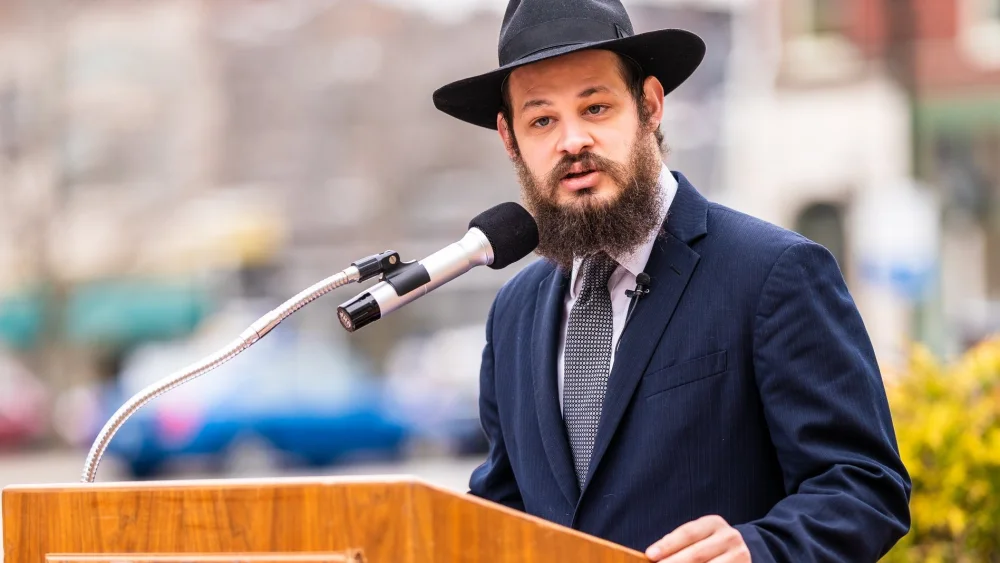
A Kentucky state bill would require local government and coroners to contact Chabad of Bluegrass before approving cremation for an unclaimed body known to be of Jewish descent, part of a broader proposal that shortens the waiting period that coroners must take to locate next of kin.
SB 27, introduced by Republican state Sen. Greg Elkins, dictates that “if the dead body or a part thereof is known to be of Jewish descent, contact the Chabad of the Bluegrass or any successor entity to inquire if it wants to pay for the burial expense.”
A similar provision applies to other religious groups that have provided written notice of willingness to cover burial costs for their members.
Rabbi Shlomo Litvin of the Chabad of Bluegrass in Lexington told JNS that “cremation is now almost 50% of burial plans in America.” He said that coroners face significant costs when someone dies without family to claim the body.
“From a fiscal standpoint, I understand the bill completely,” Litvin said, though warned it could be harmful to Jews because “being cremated is a tremendous affront to our religion.”
He told JNS that Chabad and the Kentucky Jewish Council reached out with an offer to prevent unintended cremation. “We don’t only have a problem, we have a solution,” he said, adding that Chabad “would be happy to pay for an internment for any such person.”
“As a preemptive move, we have already reached out to every single coroner in Kentucky,” he said. “And offered if they ever have such a situation, we are willing to step in and pay for all costs, for transport, for internment, for funeral services, etc., to ensure members of the Jewish community, regardless of their religiosity, regardless of their synagogue affiliation, are able to have a Jewish burial.”
Litvin advises Jewish leaders in other states to take similar preemptive action. “I absolutely would encourage Jewish leaders to get involved beforehand because doing it afterwards is far more work,” he said.
He noted that the chairman of the Senate committee made the same point at the Jan. 21 hearing. “He said: Thank you, rabbi, for reaching out—not after the fact, being like, hey, we don’t like this, but getting involved right away.”