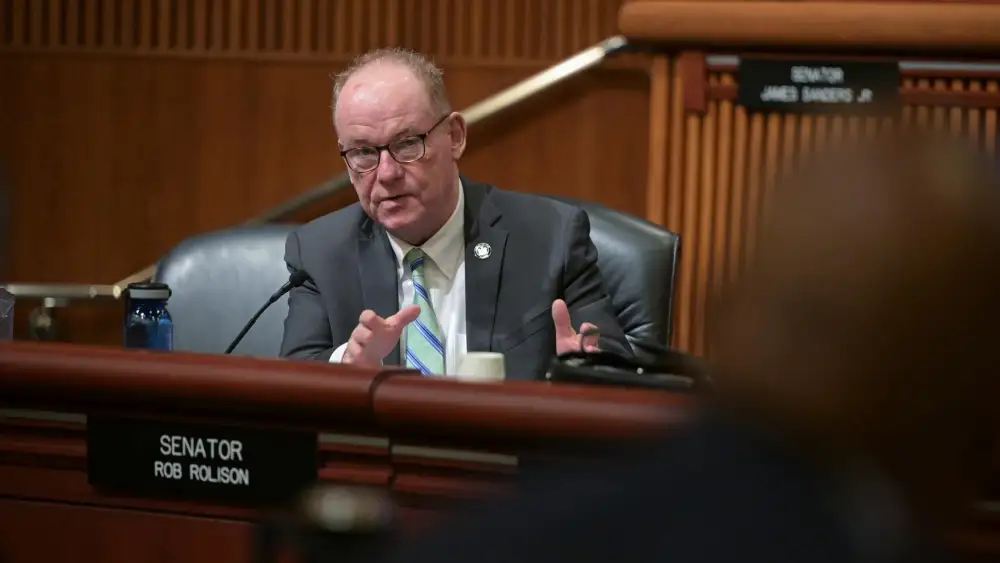
For more than two decades, Rob Rolison, a Republican state senator who represents New York’s 39th District in the Hudson Valley, has focused on fighting crime across the state. Now, the retired police officer and ranking member of the state Senate’s crime victims, crime and correction committee says that he intends to devote greater attention to fighting Jew-hatred.
On Feb. 5, Rob Ortt, the minority leader of the state Senate, announced that Rolison had joined the Senate Republican Conference’s Antisemitism Working Group. Rolison told JNS that it was his idea to join the panel.
“I kept very abreast of the group, and I spoke to conference leadership,” he said. “I told them I think this would be a good place for me, especially with my background as a police officer and on the crime victim side. They agreed.”
Founded in 2023, before Oct. 7, in response to what it said was “a dramatic rise in antisemitic hate crimes across the state, the working group issued its first report with legislative proposals in March 2024, after it met with Jewish community leaders, law enforcement officials and elected representatives.
Its recommendations included incorporating a formal definition of Jew-hatred into New York’s human rights law, increasing penalties for certain acts of vandalism and limiting public funding to institutions that allow recognized terror groups to operate on campus.
Rolison called the proposals “common-sense solutions.”
“When people are targeted and threatened because of their faith, that’s unacceptable,” he told JNS. “This type of threat needs to be looked at closely by people who want to make it better, hold people accountable, and speak out so other levels of government understand this is real and people need to be heard.”
Jack Martins chairs the working group, whose other members are Patricia Canzoneri-Fitzpatrick, Joseph Griffo, Peter Oberacker and Bill Weber.
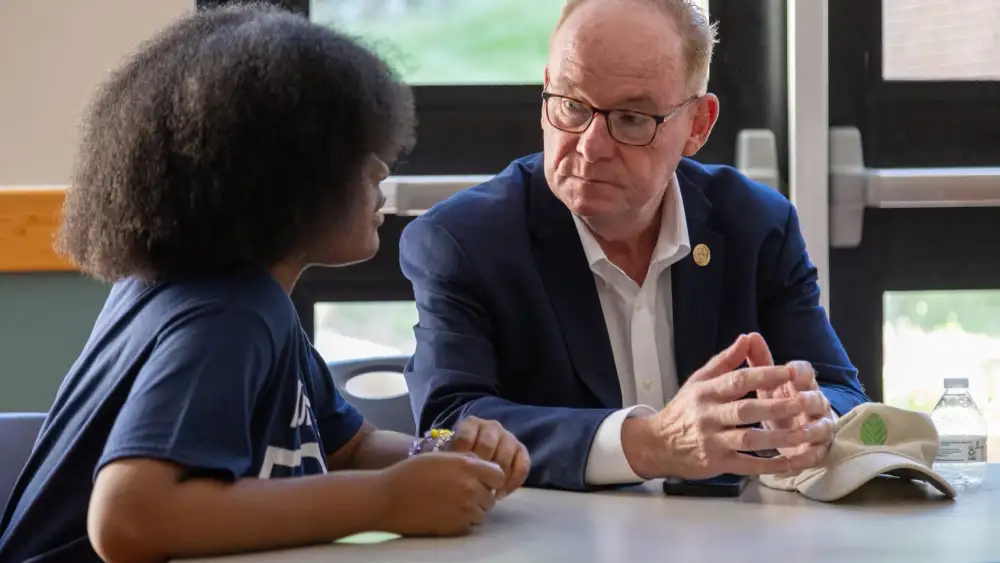
According to Rolison, the Democratic majority has not advanced most of the group’s proposals.
“We’ve had a hard time moving it forward, but we’re going to think of other ways,” he told JNS. He added that he plans to meet with Jewish leaders and interfaith groups in his district “to get their input on what I need to know, what I need to understand and what we can do to make people feel safer.”
JNS asked Rolison about rising Jew-hatred and about how the working group works with Zohran Mamdani, the new mayor of New York City, whose anti-Israel policies and statements have many Jews in the Big Apple worried.
The state senator said that he has confidence in the New York City Police Department’s operational capacity but questioned whether political leaders are sending a consistent message.
“The question on many minds is leadership from the top—not the top of the NYPD but the top of government,” he said. “What tone is set?”
Rolison told JNS that Mamdani rolled back several executive orders issued by former mayor Eric Adams aimed at combating antisemitism, although he noted that Mamdani has said that those policies are “under review.”
“OK. I’ll hold you to that,” he said. “But we need to continue.”

Mamdani recently announced the appointment of Phylisa Wisdom as executive director of the Mayor’s Office to Combat Antisemitism. Wisdom, who is Jewish, once wrote that she was “floored” by a social media post condemning Hamas for firing rockets at Israeli civilian population centers.
“As an American Jew and a New Yorker, I am floored by this tweet, although never surprised,” Wisdom stated. “New York City deserves a mayor who will stand up for Palestinians in the face of state-sanctioned violence.”
“We can all say things, but when something happens, you see where somebody stands,” Rolison told JNS. “That will develop during his term.”
Ahead of the working group’s meeting in the coming weeks, Rolison said another priority is holding state officials accountable for what he views as failures to protect public safety in recent years.
“It’s been very frustrating seeing the state get away from accountability,” he said. “No one can say with a straight face that the action taken by this state government, when it relates to public safety and holding people accountable, hasn’t contributed to a decline in accountability and public safety.”
“I’ll have that argument, and I don’t care what the statistics say, because that’s what people feel,” he said. “It’s everything from what people say to one another, to the way people drive, to communities where everything becomes an automatic protest and disruption of people’s lives. Even people who aren’t connected to the issue.”
Combating Jew-hatred, Rolison said, requires action beyond just law enforcement.
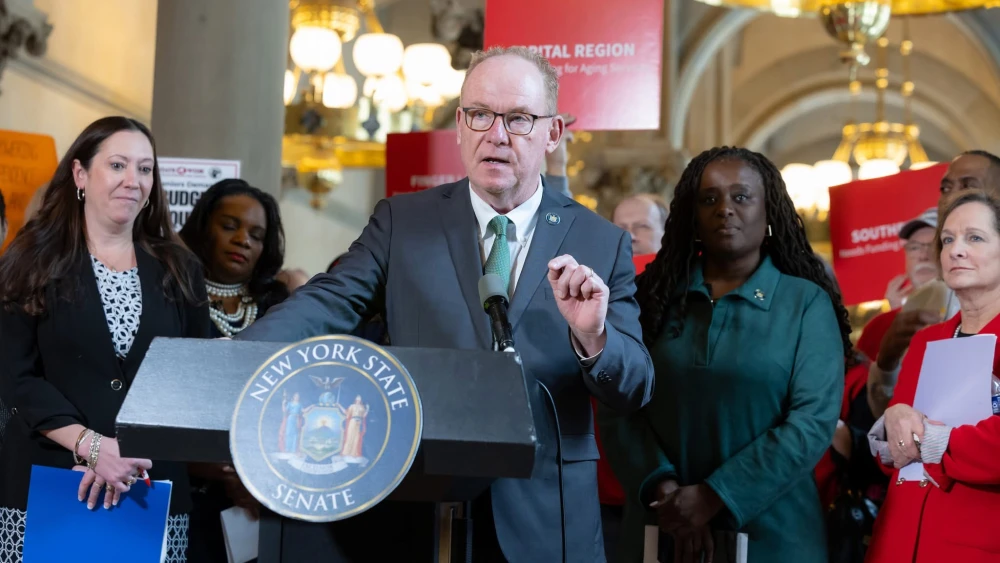
“It’s everything. It’s everywhere,” he said. “I don’t think anything should ever be taken off the table. That doesn’t mean one has to be more than the other.”
“You need public safety operationally, but to change a culture or mindset isn’t something you do just with new rules or regulations,” he told JNS. “It needs to be done thoughtfully.”
Rolison pointed to the surge of campus protests after Oct. 7 as an example of how quickly tensions can escalate. Though many demonstrations have subsided, concerns remain, he said.
“It settles from the public eye, but that doesn’t mean it’s gone away,” Rolison told JNS. “Our responsibility isn’t just to be reactive. We should have things in place legally, and also as citizens, so we’re not waiting for something bad to happen and then trying to make it not happen again.”
Rolison, who is not Jewish, told JNS that he considers himself “part of the community.”
“I’m a very emotional guy,” he said. “I feel things. I see things, and it affects me deeply.”
“I personally deeply care about all of you, many people I’ve never met, and I take the responsibility of being an elected official very seriously,” he said, of the Jewish community. “I’m honored and fortunate that the leader put me on this group to be another representative for you.”