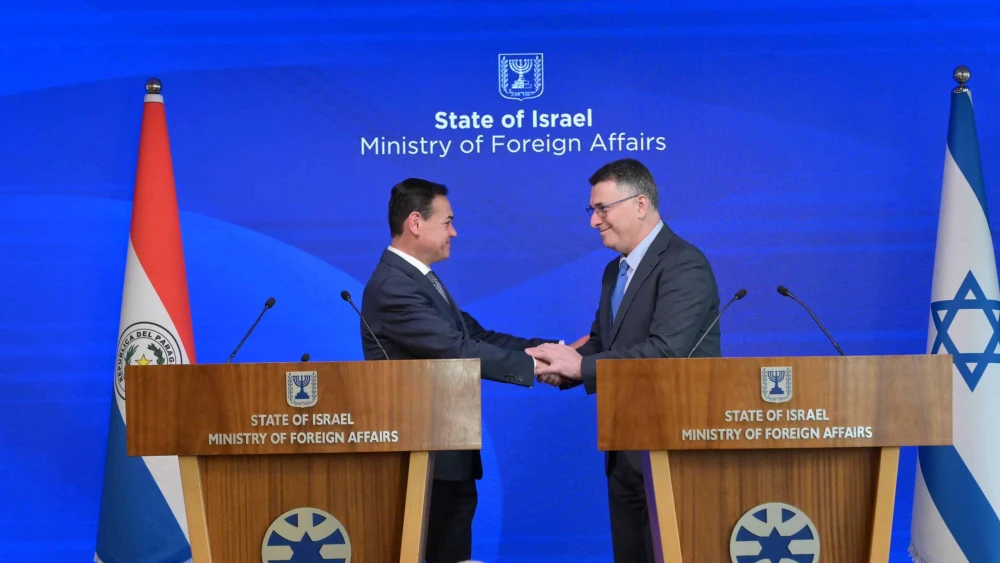
Paraguay filed a legal brief with the International Court of Justice, the main United Nations judicial body in The Hague, stating that the court must not use a broad definition of “genocide” in its case against Israel for alleged misconduct in Gaza.
“There is no legal or normative basis for accommodating expansive interpretations of the elements of genocide,” Paraguay stated on Wednesday.
It added that the Genocide Convention sees “genocide” as having “unique and exceptional charachter” and that it adopted that understanding “in the immediate aftermath of the Second World War, in response to the Holocaust, during which 6 million Jews were annihilated, in an unprecedented scale and systematic nature.”
Paraguay said that it doesn’t support the claims of either party in the case, South Africa or Israel.
All of the other 15 states that have intervened in South Africa’s case have filed material against the Jewish state. Paraguay is the first to file in support of Israel.
“The crime of genocide has a singular position within international law as the most serious of all crimes,” Paraguay stated. Proposals to the Genocide Convention “to include broader forms of group harm, in particular cultural or social destruction, were expressly considered and ultimately excluded,” it said.
“Any attempt to equate operational or security motives with genocidal intent constitutes a mischaracterization of the crime of genocide,” it added. “It risks criminalizing legitimate military actions or conflating lawful conduct with genocidal intent.”
Attempts were made “in some contexts to lower the standard for establishing genocidal intent, suggesting for instance that this intent could coexist with other intents, without requiring that the intent to destroy the group be the only reasonable explanation for the conduct,” Paraguay said.
Such an approach, it said, “would de facto lower the threshold for the convention’s most serious crime and would risk conflating genocide with other serious violations of international law, including crimes against humanity and war crimes.”