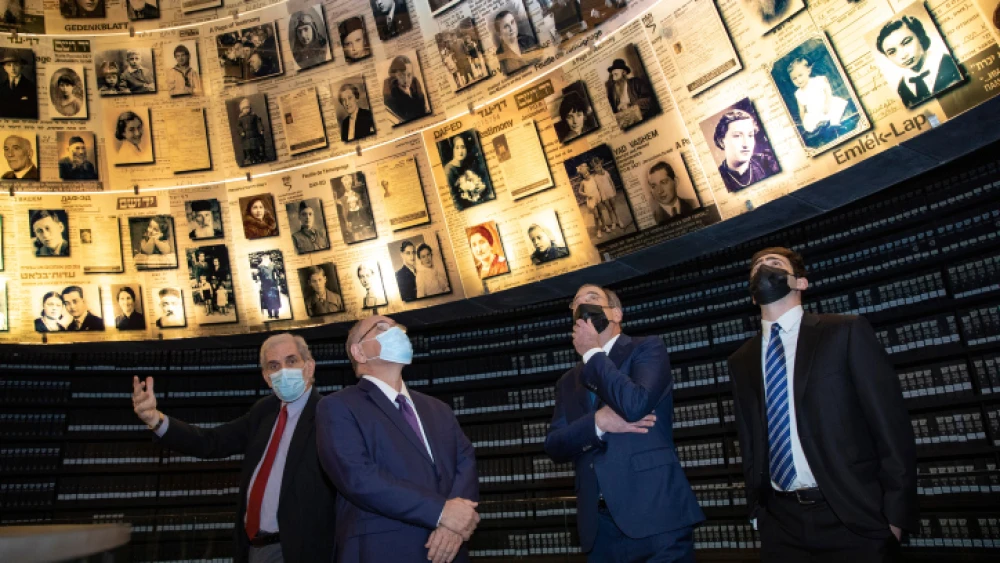
Israel’s Cabinet on Sunday approved a proposal to increase the Yad Vashem Holocaust memorial museum’s budget by 29 million shekels ($9.2 million), according to a statement from the Prime Minister’s Office.
The decision was taken ahead of International Holocaust Remembrance Day, which occurs this Thursday, Jan. 27, and will commemorate the 77th anniversary of the liberation of the Auschwitz-Birkenau extermination camp.
“While the entire world has an obligation to remember and deal with the significance of the Holocaust, a tragedy that is unparalleled in the annals of human history, the main obligation is cast on us, the Jewish people and the State of Israel,” said Israeli Prime Minister Naftali Bennett in his opening remarks to Sunday’s Cabinet session.
“Therefore, the government will increase the state’s participation in the budget of Yad Vashem by approximately NIS 30 million in the coming year,” he added.
In addition, said Bennett, in the aftermath of the Texas hostage crisis and amid reports of increasing anti-Semitism worldwide, the government is expected to direct additional resources toward the fight against BDS.
“Contemporary antisemitism comes in many guises,” said Bennett. “Today, this energy of Jew-hatred is frequently directed at the state of the Jews. Our obligation as the State of Israel is to expose it, even when it is disguised, and fight it.”
Foreign Minister Lapid called Holocaust remembrance “our moral imperative as a nation.” The government’s decision to increase Yad Vashem’s funding, he said, “is part of the last will and testament of the six million and mainly a message to the survivors, to the families and to the entire world: The State of Israel will not forget and will do everything in its power to preserve the memory.”
Yad Vashem was of “national significance” to the State of Israel and should not have to pursue funding from donors, said Social Equality Minister Cohen. The goal of the Cabinet’s decision on Sunday was, among other things, to help documenting survivors’ stories while they are still alive.
“We do not have many years left and we need to take advantage of the time at our disposal for the survivors and for the coming generations,” said Cohen.