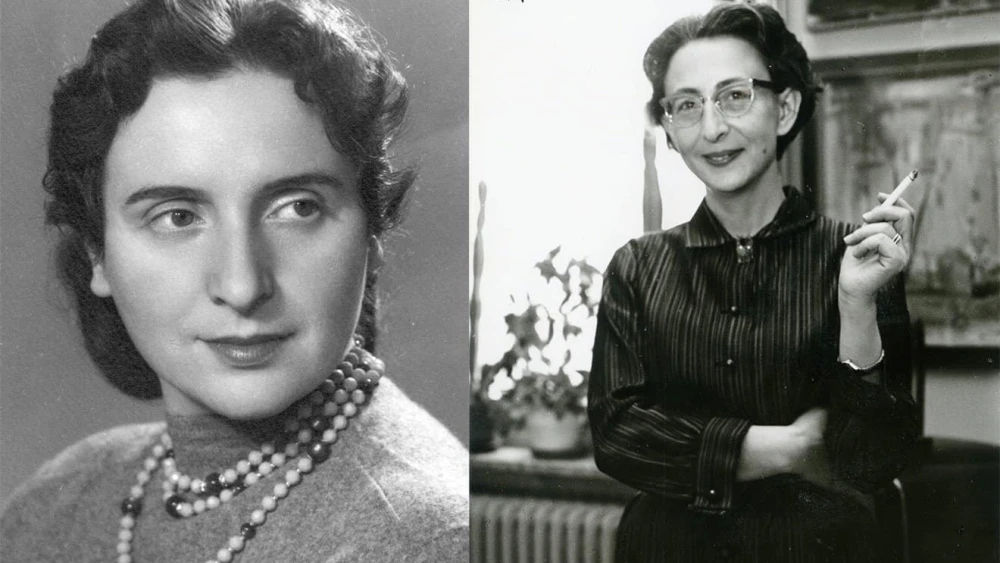
Goldie Morgentaler was going through her late mother Chava Rosenfarb’s belongings in 2011 when she found a package of letters in Polish. When Morgentaler opened them, she was surprised to see that they weren’t addressed to her mother. Rosenfarb had penned them to her friend and fellow Holocaust survivor, Zenia Larsson.
Rosenfarb and Larsson, both from Lodz and who both launched literary careers—the former in Canada and the latter in Sweden—corresponded across continents from December 1945 until December 1971. At some point in the early 1970s, Larsson sent back all of Rosenfarb’s letters, without explanation.
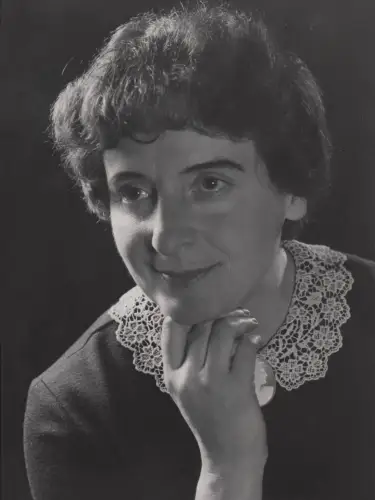
“It caused hurt and was painful,” Morgentaler, professor emerita of English literature at the University of Lethbridge in Alberta, told JNS.
“It almost broke up the friendship, because my mother thought that this was Zenia’s way of saying that she didn’t want to be friends anymore,” Morgentaler stated, recalling what her mother said at the time. “Whereas Zenia had other ideas in mind.”
Out of a sense of obligation, Rosenfarb returned Larsson’s letters. Larsson planned to publish a book based on her own letters, which she did in 1972. She sent a copy to Rosenfarb with an inscription.
In a new book about her mother’s letters to Larsson, Morgentaler writes that Larsson’s book drew on Rosenfarb’s letters but altered details, including Rosenfarb’s physical description, and changed many names.
“Once I had the two sides of the correspondence, I thought I could put it together and it might make an interesting book,” Morgentaler told JNS, of her book Letters from the Afterlife: The Post-Holocaust Correspondence of Chava Rosenfarb and Zenia Larsson, which was published in June.
Larsson wrote novels in Swedish and Rosenfarb penned books in Yiddish, but they corresponded in Polish, their shared tongue. The letters reveal a range of emotions.
“My mother is describing her joy at being a mother and having a baby, and she’s constantly kissing me and she can’t get over what a wonder it is to have a child,” Morgentaler told JNS. “I found that very moving.”
Rosenfarb and Larsson survived Nazi ghettos and concentration camps, including the Lodz ghetto, Auschwitz and Bergen-Belsen.
Larsson’s novels in the early 1960s about the Lodz ghetto and her experiences in the Holocaust were widely sold in Sweden, according to Morgentaler. “They made a huge impact, because they were available in Swedish, and it was one of the first accounts of the Holocaust that the Swedes had read about,” she said.
Morgentaler’s book chronicles her mother’s and Larsson’s efforts to navigate life in unfamiliar countries with new languages and cultures.
“What moved me the most was how unsettled Chava felt when she was living in Brussels,” Morgentaler told JNS. “She and my father had no right to stay in Belgium, so they were essentially stateless, and they spent almost five years trying to figure out how to make the future happen for them.”
At first, Morgentaler’s parents thought they would return to Germany. Then they thought about Argentina, where her mother’s family lived. “Maybe the United States will accept them, as it accepted my father’s younger brother, who was considered a war orphan,” she said. “That doesn’t work either.”
“The early letters describe one plan after another,” Morgentaler told JNS. “In fact, most countries wouldn’t accept them.”
Canada did eventually, when Rosenfarb’s Yiddish publisher, based in Montreal, sponsored her immigration. Morgentaler’s father, Henry, had distant cousins living in Montreal, one of whom lied on the application, stating that she was Henry’s sister.
“I think the letters bring home how unsettling it can be not to have a country of one’s own and to be constantly knocking on doors to be let in and accepted,” Morgentaler said. “I knew some of this intellectually before I read Chava’s letters, but the letters really brought it home.”

The letters capture powerful personal moments, including when Rosenfarb described her anguish seeing the body of Larsson’s father, who committed suicide in the ghetto so that his wife and daughter could inherit his food rations.
Larsson confessed to Rosenfarb that she felt lonely after losing her stepmother just after liberation. “I am totally, utterly alone,” she wrote, recounting a near-tragic accident in Stockholm that made her question the value of her survival.
Rosenfarb agonizes in the letters about refusing even a comforting word to a poet named Shayevitch, who was in love with her, during their transport to Auschwitz. Shayevitch was later killed in the gas chambers at Dachau.
The letters also underscore the two women’s different experiences after the war.
Rosenfarb was lucky to have survived with her mother and sister and settled in Brussels with the help of socialist Bund activists. She initially lived in a cramped attic but gradually rebuilt her life within a supportive community.
Larsson’s path was lonelier and more fraught. She distanced herself from family and tried to sever ties with “war-torn” Europe. She resolved not to correspond with Rosenfarb in 1945 while she was displaced in Germany. “The only thing I want is revenge,” she said.
In 1969, the two women and their families met on a vacation to Mallorca, Spain.
Morgentaler hopes the book will serve as a “historical document” that captures “history on the fly,” illuminating both the immigrant and survivor experiences, she told JNS.