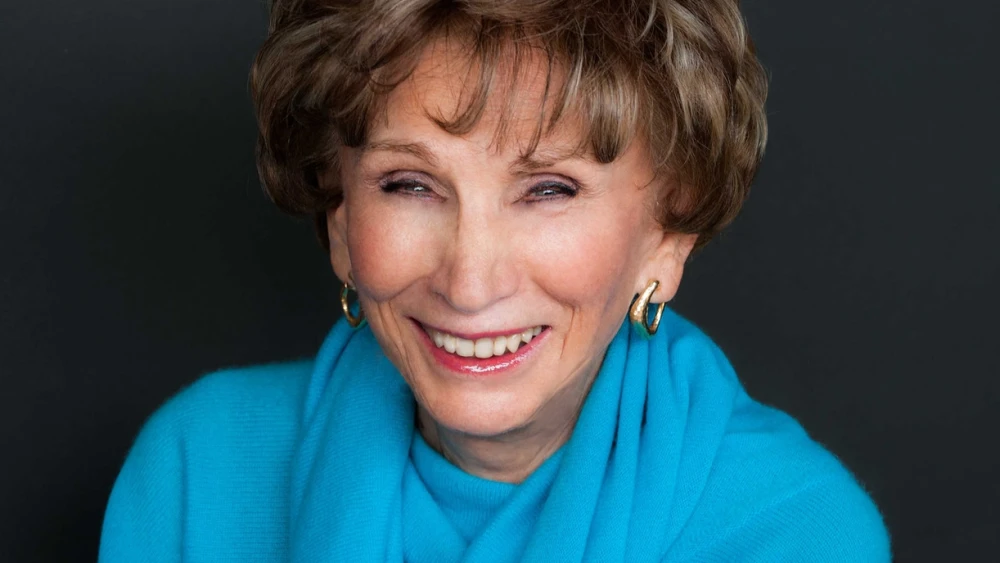
Edith Eger, a Hungarian American Holocaust survivor who became a renowned clinical psychologist and bestselling author, died in San Diego on April 27 at the age of 98.
Her family announced her death on social media, describing her final moments as peaceful and surrounded by loved ones. “Today our dearest Edie left her earthly body. She slipped away with all the grace she lived with. Like an angel returning home,” the family told her many followers. “We have all been so touched by her life, and will keep her memory alive with our actions.”
Born into a Jewish family in 1927 in Košice (then Czechoslovakia), Eger was the youngest of three sisters, becoming a talented gymnast and ballet dancer before being deported to Auschwitz in 1944. She endured the horrors of the Nazi concentration camp, where her parents, Ilona and Lajos Elefànt, were murdered in the gas chambers and she was forced to dance for Josef Mengele, known as “the angel of death.”
Eger survived Auschwitz along with her sister Magda and was liberated by American forces in 1945. After the war, they learned that their middle sister, Klara, had miraculously survived as well. Edie married fellow survivor Béla Eger in 1946 and they immigrated three years later to the United States, where she built a new life, raised a family and pursued a successful career in psychology.
After initially settling in Baltimore, they then moved to El Paso. Eger befriended Viktor Frankl, author of the influential book Man’s Search for Meaning, based on his experiences in Nazi concentration camps, earned a doctorate in clinical psychology from the University of Texas, writing her thesis on how some children who experience trauma grow up to thrive, and became an expert in the treatment of PTSD.
The Egers and their three children later moved from Texas to California, where she opened a clinical practice in La Jolla, joined the psychology faculty at UC San Diego, and became widely known for her message of healing and personal choice.
Her memoir, “The Choice: Embrace the Possible,” published in 2017 when she was 90, became an international bestseller. She later authored “The Gift: 12 Lessons to Save Your Life,” and a young-adult adaptation titled “The Ballerina of Auschwitz.”
“In Auschwitz, I never gave up hope,” Eger said in a 2024 interview. “It’s temporary, and you take one day at a time. Every moment is an opportunity for an opportunity. You change your mind; you change your life. Don’t give up hope.”
Reflecting on the essence of her philosophy, she said, “We can choose how we live now. You can’t heal what you don’t feel. I can’t change the past, but I can use this moment to make the world a better place. There is a life that I can change, and it’s mine.”
Eger maintained a strong connection to her Jewish identity and to the Jewish state throughout her life. “I love Israel,” she said. “We Jews survived so much, and we’re still surviving. I am a very proud Jew and a very, very proud Jewish woman.”
Eger’s grandson, Jordan Engle, with whom she appeared often, said her primary message centered on resilience in the face of adversity. “What Edie does is she gives you a way to look at the traumatic event that happens to you as something that can make you stronger,” he said.
Eger’s husband died in 1993. Their daughter, Marianne, is married to Robert Engle, a 2003 Nobel laureate in economics. She is survived by three children, five grandchildren and seven great-grandchildren.
Eger’s message and legacy endure through The Edith Eger Foundation, which she and her family established “to carry her wisdom and teachings forward to new generations and expand them to diverse communities.”
“I can’t heal you—or anyone—but I can celebrate your choice to dismantle the prison in your mind, brick by brick,” Eger wrote in “The Choice,” adding: “You can’t change what happened. You can’t change what you did or what was done to you. But you can choose how you live now. My precious, you can choose to be free.”