“We’re not seeing any indication that a large part of the Jewish community supports anti-Zionism,” Jonathan Schulman, of Jewish Majority, which conducted the survey, told JNS.
“I assume this is a different Zarah Sultana MP to the one who was recently filmed clapping along to loudspeaker chants for intifada, on a street in Surrey,” Rowling wrote.
Calls are mounting for the University of Portsmouth to act after a history professor posted on social media that “blowback is bad, but it is also inevitable.”
“It is unbelievable that in the 21st century, arguments worthy of the dark ages are being used to blame the victims of their own Holocaust,” the Jewish Association of Peru stated.
“I assume this is a different Zarah Sultana MP to the one who was recently filmed clapping along to loudspeaker chants for intifada, on a street in Surrey,” Rowling wrote.
“If we had produced anything like this, I would have been fired the next day,” Benny Polatseck, who worked in the creative communications department at City Hall under the former mayor, told JNS.
“People shouldn’t think that, ‘Oh this is not going to happen to me,’” the 32-year-old Judaic studies teacher told JNS. “It can happen to anyone walking the streets, anyone with their groceries.”
At a Park Slope Food Coop meeting about boycotting Israel, a member, who reportedly compared Jews to Nazis, was applauded for saying that “Jewish supremacism is a problem in this country.”
The growing distaste for the Jewish state isn’t the fault of Netanyahu or Israeli behavior. It’s driven by forces seeking the destruction of the West and beyond the control of Jerusalem.
“Ambassador Mike Huckabee is a true hero and friend of the United States, the State of Israel, the Jewish people and all people,” said Rabbi Ari Berman, president of Yeshiva University
Given enough time, a combination of economic and military pressure may be enough for Trump to topple the Islamist terrorists. The question is whether he has it.
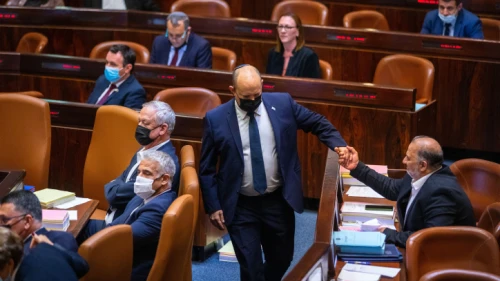
Israelis with contradictory views on crucial matters are never going to cease battling one another ideologically, and no constellation of musical chairs in the Knesset is going to alter that reality.
“We’re not seeing any indication that a large part of the Jewish community supports anti-Zionism,” Jonathan Schulman, of Jewish Majority, which conducted the survey, told JNS.
“I assume this is a different Zarah Sultana MP to the one who was recently filmed clapping along to loudspeaker chants for intifada, on a street in Surrey,” Rowling wrote.
Calls are mounting for the University of Portsmouth to act after a history professor posted on social media that “blowback is bad, but it is also inevitable.”
“It is unbelievable that in the 21st century, arguments worthy of the dark ages are being used to blame the victims of their own Holocaust,” the Jewish Association of Peru stated.
“I assume this is a different Zarah Sultana MP to the one who was recently filmed clapping along to loudspeaker chants for intifada, on a street in Surrey,” Rowling wrote.
“If we had produced anything like this, I would have been fired the next day,” Benny Polatseck, who worked in the creative communications department at City Hall under the former mayor, told JNS.
“People shouldn’t think that, ‘Oh this is not going to happen to me,’” the 32-year-old Judaic studies teacher told JNS. “It can happen to anyone walking the streets, anyone with their groceries.”
At a Park Slope Food Coop meeting about boycotting Israel, a member, who reportedly compared Jews to Nazis, was applauded for saying that “Jewish supremacism is a problem in this country.”
The growing distaste for the Jewish state isn’t the fault of Netanyahu or Israeli behavior. It’s driven by forces seeking the destruction of the West and beyond the control of Jerusalem.
“Ambassador Mike Huckabee is a true hero and friend of the United States, the State of Israel, the Jewish people and all people,” said Rabbi Ari Berman, president of Yeshiva University
Given enough time, a combination of economic and military pressure may be enough for Trump to topple the Islamist terrorists. The question is whether he has it.
Israelis with contradictory views on crucial matters are never going to cease battling one another ideologically, and no constellation of musical chairs in the Knesset is going to alter that reality.
“Ra’am is getting its just reward with the increased budget for the Arab sector and has justified its historical participation in an Israeli government,” says past parliamentary consultant Shaheen Sarsur.
Continuing the friction is “not in the interest of Iran or Azerbaijan,” said Meir Javedanfar, a lecturer on Iranian politics at IDC Herzliya in Israel.
“In a society that makes strong in-group/out-group distinctions, bringing in outside agencies that cross ethnic boundaries is likely to stoke resentment and resistance,” says Philip Carl Salzman, emeritus professor of anthropology at McGill University in Montreal.
“Algeria was indeed dismayed at Morocco’s decision to resume diplomatic relations with Israel, and more recently, Algeria criticized Morocco for advocating on Israel’s behalf in gaining observer status in the African Union,” said Sarah Feuer, an expert on Arab politics and fellow at The Washington Institute for Near East Policy.
“Suppose Iran flaunts U.S. conditions for the nuclear deal, and the Biden administration still insists on folding and concluding this transaction. It will further undermine its stature and credibility and damage America’s reputation with allies and foes alike,” says Ariel Cohen at the Atlantic Council think tank.
Despite intelligence-sharing between the neighboring countries, Cairo has not invited an Israeli prime minister to visit since 2013, the year Egyptian President Abdel Fattah el-Sisi came to power.
“I believe that Iran will have concluded the Biden team is not first-rate and wants to avoid confrontations, so Iran is more likely to test them now than it was six months ago,” said Elliott Abrams, who served as Special Representative for Iran and Venezuela during the Donald Trump administration.
“If this pro-Taliban rhetoric is a harbinger of things to come, it’s not unreasonable to expect that jihadist networks will be established in the West once again,” said Sam Westrop of the Middle East Forum.
The collapse of the Afghan military could serve as further motivation for Iran to target U.S.-allied Gulf states such as Saudi Arabia and the United Arab Emirates, as well as countries like Jordan.
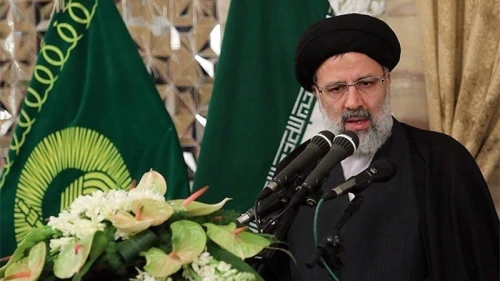
“The political discourse in Iran since 2017 has shifted from reform to revolution,” said Saeed Ghasseminejad, an Iran expert and senior adviser at the Foundation for Defense of Democracies.
“From Ankara’s side, while strategic imperatives have long been pushing Turkey to mend its ties with Israel, bashing Israel has become instrumental in mobilizing the constituency at the domestic level,” said Selin Nasi.