“It is a great honor to welcome home a New Yorker who fought and died for our country, and the freedom and rights we have today,” said New York Gov. Kathy Hochul.
“We’re not seeing any indication that a large part of the Jewish community supports anti-Zionism,” Jonathan Schulman, of Jewish Majority, which conducted the survey, told JNS.
“I assume this is a different Zarah Sultana MP to the one who was recently filmed clapping along to loudspeaker chants for intifada, on a street in Surrey,” Rowling wrote.
Calls are mounting for the University of Portsmouth to act after a history professor posted on social media that “blowback is bad, but it is also inevitable.”
“It is unbelievable that in the 21st century, arguments worthy of the dark ages are being used to blame the victims of their own Holocaust,” the Jewish Association of Peru stated.
“I assume this is a different Zarah Sultana MP to the one who was recently filmed clapping along to loudspeaker chants for intifada, on a street in Surrey,” Rowling wrote.
“If we had produced anything like this, I would have been fired the next day,” Benny Polatseck, who worked in the creative communications department at City Hall under the former mayor, told JNS.
“People shouldn’t think that, ‘Oh this is not going to happen to me,’” the 32-year-old Judaic studies teacher told JNS. “It can happen to anyone walking the streets, anyone with their groceries.”
At a Park Slope Food Coop meeting about boycotting Israel, a member, who reportedly compared Jews to Nazis, was applauded for saying that “Jewish supremacism is a problem in this country.”
The growing distaste for the Jewish state isn’t the fault of Netanyahu or Israeli behavior. It’s driven by forces seeking the destruction of the West and beyond the control of Jerusalem.
“Ambassador Mike Huckabee is a true hero and friend of the United States, the State of Israel, the Jewish people and all people,” said Rabbi Ari Berman, president of Yeshiva University
Given enough time, a combination of economic and military pressure may be enough for Trump to topple the Islamist terrorists. The question is whether he has it.
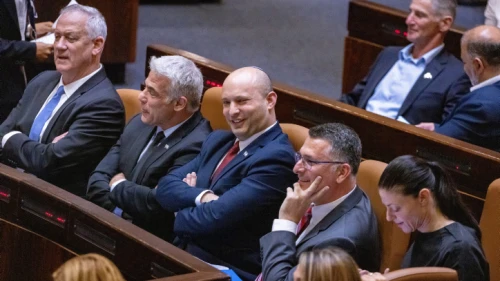
Israelis with contradictory views on crucial matters are never going to cease battling one another ideologically, and no constellation of musical chairs in the Knesset is going to alter that reality.
“It is a great honor to welcome home a New Yorker who fought and died for our country, and the freedom and rights we have today,” said New York Gov. Kathy Hochul.
“We’re not seeing any indication that a large part of the Jewish community supports anti-Zionism,” Jonathan Schulman, of Jewish Majority, which conducted the survey, told JNS.
“I assume this is a different Zarah Sultana MP to the one who was recently filmed clapping along to loudspeaker chants for intifada, on a street in Surrey,” Rowling wrote.
Calls are mounting for the University of Portsmouth to act after a history professor posted on social media that “blowback is bad, but it is also inevitable.”
“It is unbelievable that in the 21st century, arguments worthy of the dark ages are being used to blame the victims of their own Holocaust,” the Jewish Association of Peru stated.
“I assume this is a different Zarah Sultana MP to the one who was recently filmed clapping along to loudspeaker chants for intifada, on a street in Surrey,” Rowling wrote.
“If we had produced anything like this, I would have been fired the next day,” Benny Polatseck, who worked in the creative communications department at City Hall under the former mayor, told JNS.
“People shouldn’t think that, ‘Oh this is not going to happen to me,’” the 32-year-old Judaic studies teacher told JNS. “It can happen to anyone walking the streets, anyone with their groceries.”
At a Park Slope Food Coop meeting about boycotting Israel, a member, who reportedly compared Jews to Nazis, was applauded for saying that “Jewish supremacism is a problem in this country.”
The growing distaste for the Jewish state isn’t the fault of Netanyahu or Israeli behavior. It’s driven by forces seeking the destruction of the West and beyond the control of Jerusalem.
“Ambassador Mike Huckabee is a true hero and friend of the United States, the State of Israel, the Jewish people and all people,” said Rabbi Ari Berman, president of Yeshiva University
Given enough time, a combination of economic and military pressure may be enough for Trump to topple the Islamist terrorists. The question is whether he has it.
Israelis with contradictory views on crucial matters are never going to cease battling one another ideologically, and no constellation of musical chairs in the Knesset is going to alter that reality.
Partly driving the shift “is the weakness the United States is showing towards Iran in its efforts to reduce its presence in the Middle East and bolster its position in the Far East against the growing Chinese challenge,” said Bar-Ilan Professor Hillel Frisch, a Middle East expert at the BESA Center.
Jonathan Spyer tells JNS, “What is happening in Lebanon is what happens when a country allows itself to be taken over by a franchise of the Iranian Islamic Revolutionary Guard Corps, with all the corruption and eventual collapse and impoverishment which follows.”
“The United States knows that the Iranian government cares first and foremost about staying in power. If that means sacrificing its non-Iranian allies—Lebanese, Iraqi, Syrian and Yemenite Shi’ites—so be it,” said former U.S. Department of Defense official Harold Rhode.
The demise of the Soviet Union mirrors the collapse of the Ottoman Empire following World War I and the development of separate independent states in the Mideast.
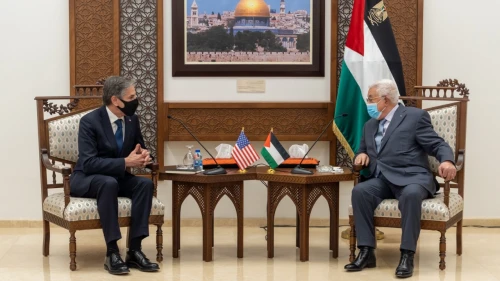
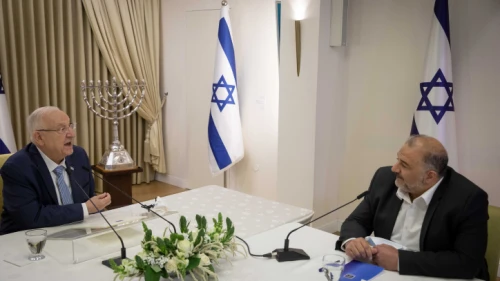
“The fragile government does not have a mandate from the public to deal with the peace process,” said Ido Zelkovitz, head of the Middle East Studies program at the Max Stern Yezreel Valley College and a research fellow at the University of Haifa.
Clashes between Jewish and Arab Israelis in towns throughout the country were worse than the public believed, bordering on anarchy, said Border Police Commissioner Maj. Gen. Amir Cohen.
“The signs at this stage are positive, but more than just nice words will be required,” says Simon Henderson of the Washington Institute for Near East Policy.
“This has nothing to do with the Arab-Israeli conflict, but is about money and power. Why are no Arab politicians in Jerusalem protesting? It is because they are focused on gaining power and prestige,” said Rodayna Badir, an expert on Arab society in Israel.
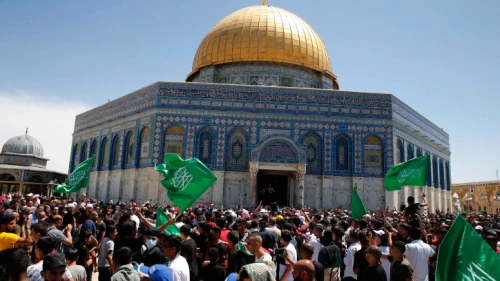
The terror group that runs Gaza “created a new equation by bringing the issue of Jerusalem and the holy sites into the public discussion and showing itself to be their defender,” said Kobi Michael, a senior researcher at Israel’s Institute for National Security Studies.
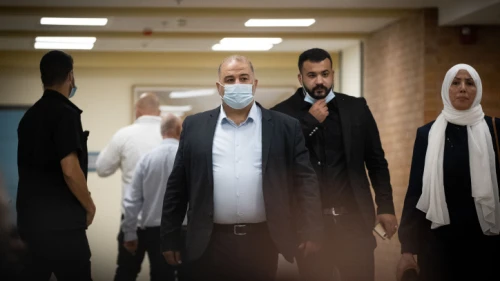
Experts argue that Arabs are tired of slogans and looking for a change; their voters want to see a party that has influence and not just sits in the Knesset without achievements for the Arab sector.
Behnam Ben Taleblu, a senior fellow at the Foundation for Defense of Democracies, also noted that the recordings “underscore what has long been known about the Islamic Republic: The foreign ministry is not where foreign policy is made.”