“It is a great honor to welcome home a New Yorker who fought and died for our country, and the freedom and rights we have today,” said New York Gov. Kathy Hochul.
“We’re not seeing any indication that a large part of the Jewish community supports anti-Zionism,” Jonathan Schulman, of Jewish Majority, which conducted the survey, told JNS.
Calls are mounting for the University of Portsmouth to act after a history professor posted on social media that “blowback is bad, but it is also inevitable.”
“It is unbelievable that in the 21st century, arguments worthy of the dark ages are being used to blame the victims of their own Holocaust,” the Jewish Association of Peru stated.
Since Oct. 7, 2023, the Toronto Police Service has made “over 517 arrests and laid over 1,275 charges in connection with demonstrations, protests and hate‑motivated offenses,” its chief said.
“I assume this is a different Zarah Sultana MP to the one who was recently filmed clapping along to loudspeaker chants for intifada, on a street in Surrey,” Rowling wrote.
“If we had produced anything like this, I would have been fired the next day,” Benny Polatseck, who worked in the creative communications department at City Hall under the former mayor, told JNS.
“People shouldn’t think that, ‘Oh this is not going to happen to me,’” the 32-year-old Judaic studies teacher told JNS. “It can happen to anyone walking the streets, anyone with their groceries.”
At a Park Slope Food Coop meeting about boycotting Israel, a member, who reportedly compared Jews to Nazis, was applauded for saying that “Jewish supremacism is a problem in this country.”
The growing distaste for the Jewish state isn’t the fault of Netanyahu or Israeli behavior. It’s driven by forces seeking the destruction of the West and beyond the control of Jerusalem.
“Ambassador Mike Huckabee is a true hero and friend of the United States, the State of Israel, the Jewish people and all people,” said Rabbi Ari Berman, president of Yeshiva University
Given enough time, a combination of economic and military pressure may be enough for Trump to topple the Islamist terrorists. The question is whether he has it.
Israelis with contradictory views on crucial matters are never going to cease battling one another ideologically, and no constellation of musical chairs in the Knesset is going to alter that reality.
America’s pro-Israel lobby has been written off before. The next chapter—built on technology, defense industrial integration and shared strategic competition—should be its most consequential.
“It is a great honor to welcome home a New Yorker who fought and died for our country, and the freedom and rights we have today,” said New York Gov. Kathy Hochul.
“We’re not seeing any indication that a large part of the Jewish community supports anti-Zionism,” Jonathan Schulman, of Jewish Majority, which conducted the survey, told JNS.
Calls are mounting for the University of Portsmouth to act after a history professor posted on social media that “blowback is bad, but it is also inevitable.”
“It is unbelievable that in the 21st century, arguments worthy of the dark ages are being used to blame the victims of their own Holocaust,” the Jewish Association of Peru stated.
Since Oct. 7, 2023, the Toronto Police Service has made “over 517 arrests and laid over 1,275 charges in connection with demonstrations, protests and hate‑motivated offenses,” its chief said.
“I assume this is a different Zarah Sultana MP to the one who was recently filmed clapping along to loudspeaker chants for intifada, on a street in Surrey,” Rowling wrote.
“If we had produced anything like this, I would have been fired the next day,” Benny Polatseck, who worked in the creative communications department at City Hall under the former mayor, told JNS.
“People shouldn’t think that, ‘Oh this is not going to happen to me,’” the 32-year-old Judaic studies teacher told JNS. “It can happen to anyone walking the streets, anyone with their groceries.”
At a Park Slope Food Coop meeting about boycotting Israel, a member, who reportedly compared Jews to Nazis, was applauded for saying that “Jewish supremacism is a problem in this country.”
The growing distaste for the Jewish state isn’t the fault of Netanyahu or Israeli behavior. It’s driven by forces seeking the destruction of the West and beyond the control of Jerusalem.
“Ambassador Mike Huckabee is a true hero and friend of the United States, the State of Israel, the Jewish people and all people,” said Rabbi Ari Berman, president of Yeshiva University
Given enough time, a combination of economic and military pressure may be enough for Trump to topple the Islamist terrorists. The question is whether he has it.
Israelis with contradictory views on crucial matters are never going to cease battling one another ideologically, and no constellation of musical chairs in the Knesset is going to alter that reality.
America’s pro-Israel lobby has been written off before. The next chapter—built on technology, defense industrial integration and shared strategic competition—should be its most consequential.
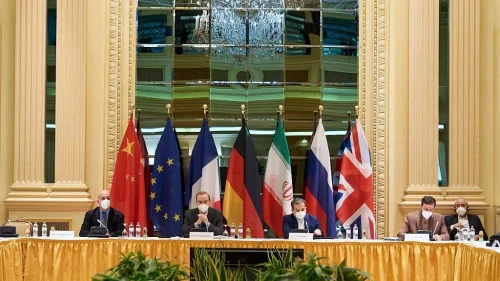
“The core of the administration’s Iran strategy is a devil’s bargain that will funnel billions into Iran’s imperial project across the Middle East in exchange for a temporary reprieve from Iran’s relentless march towards nuclear-weapons capability,” said John Hannah, a senior fellow at the Jewish Institute for National Security of America.
For the past several years, Jordan has come under increasing strain due to wars in bordering Iraq and Syria, which has led to many refugees resettling in Jordan. Combine a population holding divergent loyalties with a poor economic situation, and the result has been unrest.
“The new agreement reflects Jordan’s increasing importance as a logistical and operative center in anticipation of further U.S. troop withdrawal from Iraq and Syria at a time when the need for a U.S. military presence increases rather than decreases,” said Hillel Frisch.
According to the survey, the most qualified candidate for prime minister in the Arab sector is Benjamin Netanyahu, with 24.9 percent support, followed by Ahmad Tibi of the Joint Arab List with 14.3 percent.
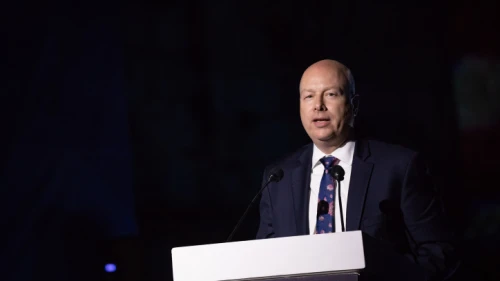
“These deals are complex and take a great deal of time, but any one thing could spark the right opportunity for a deal to actually be announced and quickly consummated, as we have seen,” former White House special envoy Jason Greenblatt told JNS.
Exiled writer Ramin Parham says that Tehran is engaged in brinkmanship with the United States, where its position is influenced primarily by domestic existential threats.
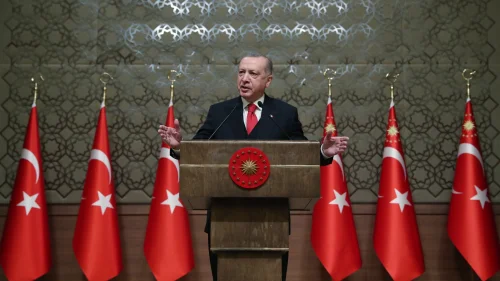
It’s unlikely that Jerusalem will jettison its new Arab allies after a wave of normalization agreements, bolstered by its relations with Greece, Cyprus and Egypt in the Eastern Mediterranean, in exchange for some recent warm words from the Turkish president.
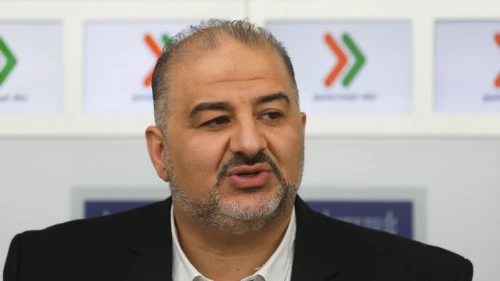
Veteran Arab political observer Shaheen Sarsour said even though the Joint Arab List has 15 members in the Knesset, “it does not influence the government. Mansour Abbas’s move was meant to change that.”
Independent Iran researcher Amir Toumaj said there is both a “general call for immediate retaliation and others pushing for a delayed response, arguing Tehran shouldn’t fall into a trap ahead of talks with the Biden administration.”
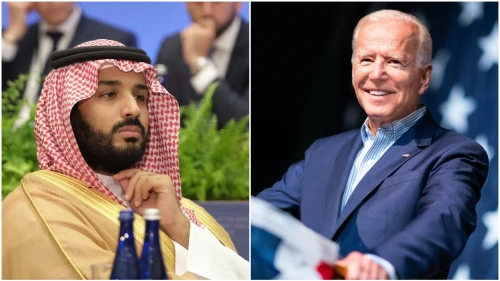
“I think Gulf states are hoping that Joe Biden will govern as a centrist with an experienced team and will address the weaknesses of the JCPOA,” said Ali Shihabi, an author and commentator on the Middle East with a focus on Saudi Arabia.
“The Gulf states are not considered ‘kosher’ for leading the Sunnis,” according to Hay Eytan Cohen Yanarocak, an expert on Turkey at the Moshe Dayan Center at Tel Aviv University.
Some Arab Knesset members quietly support Israel’s new agreements with the United Arab Emirates and Bahrain, but were forced to vote against them and follow the Joint List leadership.