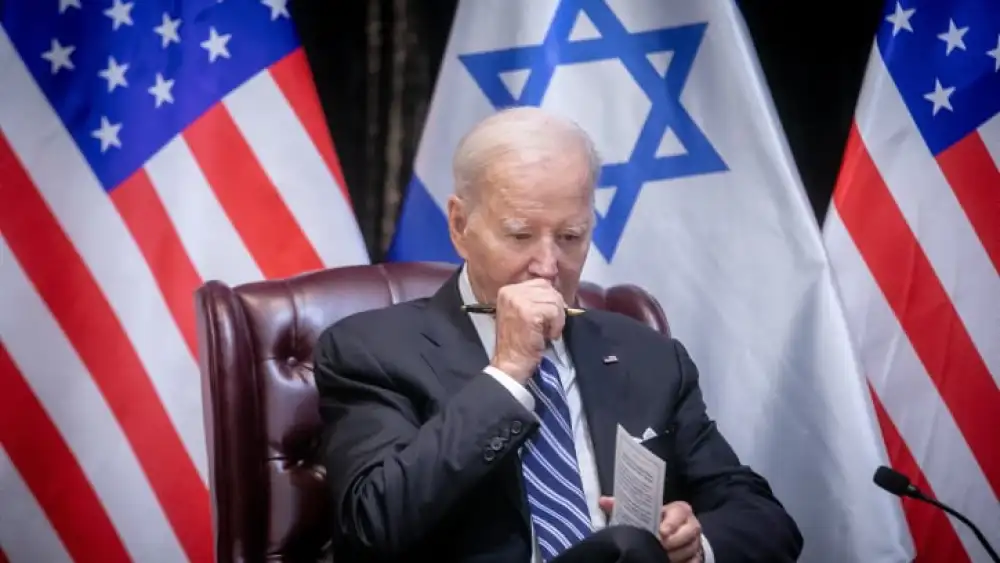
U.S. President Joe Biden on Wednesday called on Israel not to “move on Haifa,” apparently confusing the northern Israeli city with Rafah, Hamas’s final terror stronghold in the Gaza Strip.
“I made it clear to the Israelis: Don’t move on Haifa. It’s just not ... I mean ... anyway,” Biden said on Wednesday.
The 81-year-old president made the error while being questioned by Nexstar Media’s Reshad Hudson about his strategy to regain support from pro-Palestinian voters amid the Israel-Hamas war.
Biden stated, “I’ve been meeting with them, number one. Number two, I made it clear that we have to vastly increase the amount of food, water, healthcare going into Gaza.”
He then added, “And I made it clear to Israelis—don’t move on Haifa,” seemingly intending to refer to Rafah instead.
However, unnamed Egyptian officials told the Qatari Al-Araby Al-Jadeed news outlet on Wednesday that Biden has agreed to back an Israeli operation in Rafah in exchange for Jerusalem forgoing a major strike on Iran.
Israel’s Kan public broadcaster reported on Wednesday that Israeli Prime Minister Benjamin Netanyahu had backtracked on a pre-approved military response to Tehran’s massive drone and missile attack due to pressure from Biden.
BIDEN: "I made it clear to the Israelis — don't move on Haifa!"
— RNC Research (@RNCResearch) April 18, 2024
Haifa is a major city *IN* Israel. pic.twitter.com/BdNgoDlGkM