


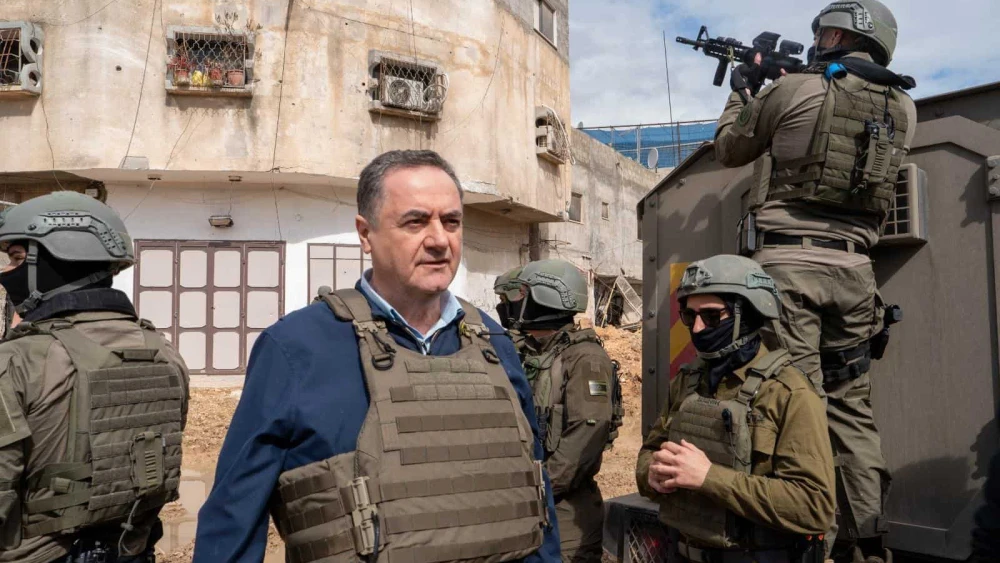
Israeli Defense Minister Israel Katz announced on Tuesday the imposition of new sanctions on terrorists and their families who receive payments from the Palestinian Authority.
The sanctions specifically target released prisoners who are also Israeli citizens, according to Channel 12 News.
The decision follows recommendations from the Israeli Defense Ministry’s Counter Terrorist Financing Taskforce and was implemented in coordination with the Israel Security Agency (Shin Bet).
Police raided the terrorists’ homes, seizing cash and property worth hundreds of thousands of shekels.
Over the past year, Israel has frozen 470 million shekels ($131.5 million) meant for the P.A., redirecting the funds to families of terror victims.
P.A. leader Mahmoud Abbas recently issued a decree modifying payments to terrorists’ families, but later reaffirmed that all available funds would continue to support prisoners and martyrs.
“The blood money paid by the P.A. to terrorists fuels terrorism. Israel is engaged in an all-out war on terror—on the battlefield, in the economic sphere, and in every necessary arena,” stated Katz on Tuesday. “The P.A.’s payments to terrorists will be met with an uncompromising response. The frozen funds will be used to compensate victims of terrorism instead of rewarding murderers.”


