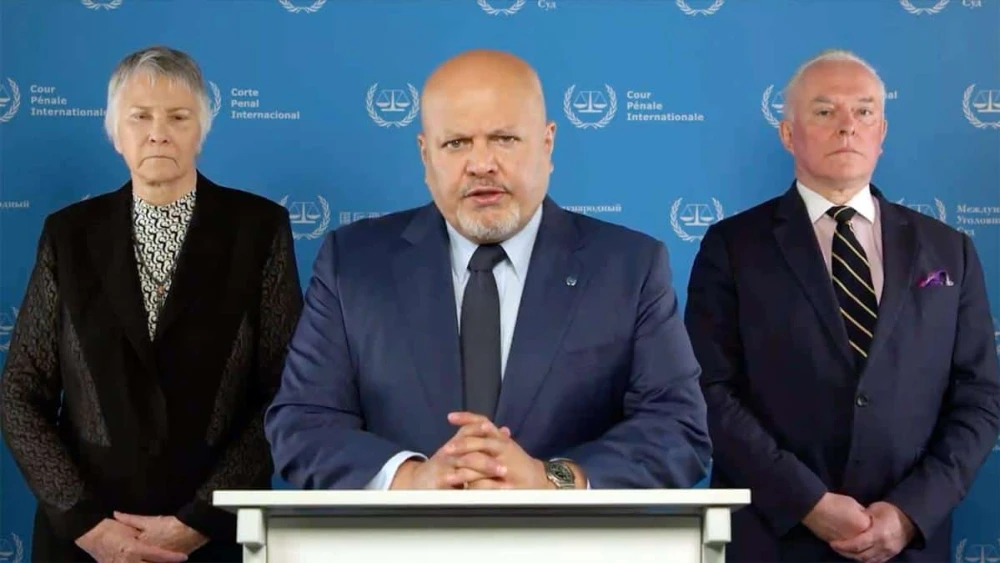
Israel last week again appealed to the tribunal last week to terminate its arrest warrants for Israeli Prime Minister Benjamin Netanyahu and former defense minister Yoav Gallant.
The document cites procedural issues, namely that the warrants against Netanyahu and former defense minister Yoav Gallant are invalid due to the absence of a conclusive jurisdictional determination by the Pre-Trial Chamber.
That organ of the ICC handles the initial assessment of a case, decides whether to issue warrants or summonses and ultimately confirms charges before a case proceeds to trial.
Last month, ICC judges reviewing an earlier Israeli appeal ordered a lower panel to reconsider Israel’s objections to the court’s claim of jurisdiction. The latest appeal cites that ongoing procedure as the reason for dropping or suspending the warrants.
Israel also maintains that the ICC does not have jurisdiction over it, since it is not part of the Rome Statute, the international treaty that gives the court its mandate.
“Withdraw, vacate, or declare of no force or effect the arrest warrants that it has issued against Mr Netanyahu and Mr Gallant,” the May 9 appeal reads, and: “Declare that the Prosecution must suspend its investigation into the Situation in Palestine until the Court has given its substantive ruling” on Israel’s jurisdiction challenge.
The appeal does not mention the allegations that have recently surfaced against Karim Khan, whom a female employee of the tribunal has accused of sexually assaulting her on several occasions.
Last week, the Wall Street Journal reported that Khan had tried to persuade the woman to drop the charges so as not to jeopardize his prosecution of Israel for alleged war crimes, which Israel denies.
The timing of the arrest warrants, issued in November 2024, have given rise to suspicions that Khan’s decision to request them was calculated to deflect attention from the sex scandal, which came to light internally a few weeks earlier, the Journal reported.