Parasites have always had a bad reputation, and health professionals have warned the public for years about taking preventive measures to avoid mites, lice, ticks, mosquitoes, tapeworms and more.
But an Israeli study is challenging the conventional wisdom, highlighting parasites’ potential positive impact on ecosystems and animal survival. According to a team of Tel Aviv University researchers, parasites can play a crucial role in habitat design and the maintenance of biological diversity, even contributing to the structural balance and vitality of an ecosystem.
The researchers said that their findings, which were recently published in the peer-reviewed Frontiers in Microbiology journal, could guide strategies for protecting endangered species and managing biological invasions.
In healthy ecosystems, a diverse array of species coexist, with closely related species thriving together when they interact differently with natural resources and predators. This delicate balance ensures that no single species dominates and drives others to extinction, the researchers explained.
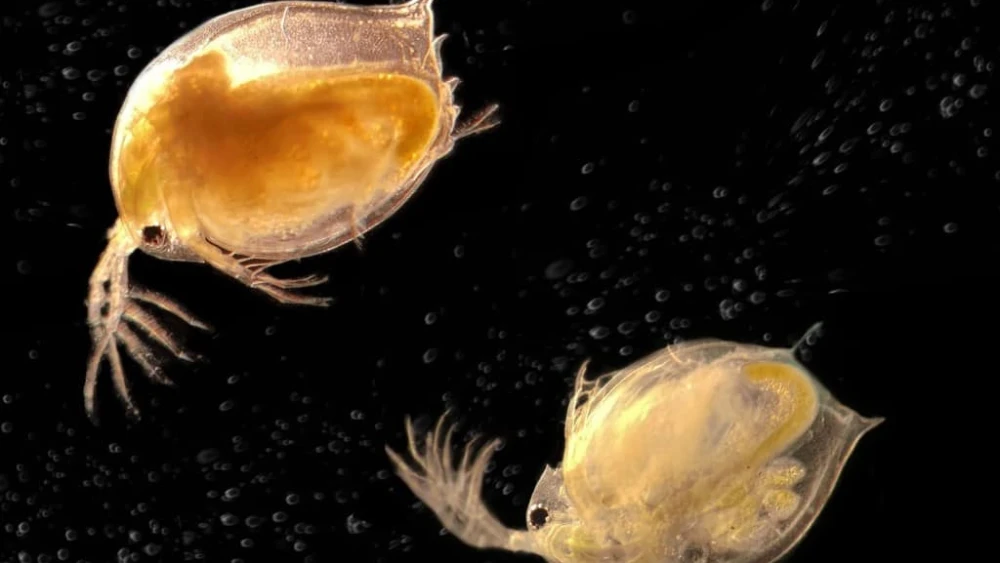
To explore these ideas, the team, led by Professor Frida Ben-Ami and Sigal Orlansky, focused their attention on Daphnia water fleas, tiny aquatic organisms inhabiting winter ponds in Israel.
These creatures, approximately three millimeters (0.11811 inches) in length, feed on single-celled algae and bacteria, serving as essential prey for fish. Winter ponds, due to their enclosed nature, experience pronounced competition among species, significantly affecting their biological diversity.
The research found that even though some water flea species exhibited almost complete resistance to parasites, they did not emerge as dominant in the ponds. The most prevalent species, Daphnia magna, displayed susceptibility to a range of parasites. This paradox led the researchers to explore the role of parasites in maintaining species diversity.
Through controlled experiments in a laboratory setting, the researchers observed the interactions between parasite-resistant and parasite-sensitive Daphnia species when sharing the same habitat. In parasite-free environments, the parasite-sensitive Daphnia species dominated, while the parasite-resistant “Super Daphnia” struggled.
However, in habitats with parasites, the situation shifted. Parasite-sensitive Daphnia populations declined, allowing the parasite-resistant “Super Daphnia” to thrive alongside them, suggesting that parasites mediate coexistence between species.
Explained Orlansky: “Parasites and pathogens, despite their negative reputation, are integral components of ecosystems. They play a pivotal role in shaping population dynamics, community structure and biodiversity by influencing the interactions between species within an ecosystem.”
She stressed that “our experiments highlight the vital role of parasites in shaping biodiversity. Parasites mediate competition between Daphnia species, enabling coexistence between a parasite-resistant species and a competitive yet parasite-sensitive species. This coexistence is only possible through the presence of parasites.”