A debate has erupted in Israel between the country’s current Ashkenazi chief rabbi and the former Sephardi chief rabbi over whether Jewish weddings may be held this summer during a traditional three-week period of mourning for the ancient temples in Jerusalem, amid the country’s ongoing seven-front war.
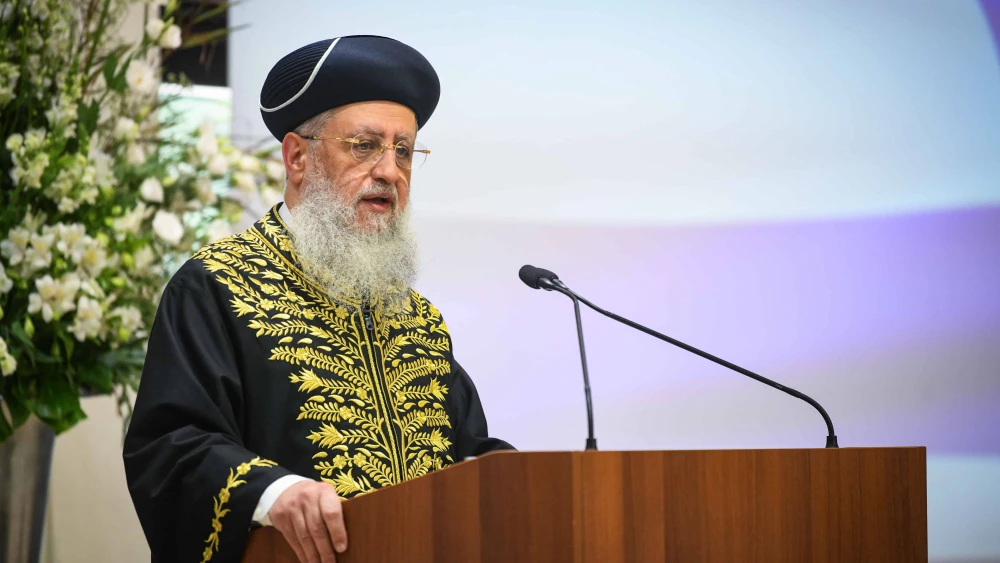
While former Sephardic Chief Rabbi Yitzhak Yosef issued a religious decree allowing both Sephardic and Ashkenazi Jews to wed during the mourning period in light of the regional conflict, Ashkenazi Chief Rabbi Rabbi Kalman Ber has published a formal halachic response presenting the opposite view, according to the haredi Kikar HaShabbat news site.
Yosef made his decision after some couples were forced to postpone or cancel their wedding celebrations as venues were closed by military order during Israel’s 12-day war with Iran.
“There is no greater pressing circumstance than this,” Yosef wrote in his decree, encouraging even those who generally follow stringent customs to be lenient this year so as to not further postpone the celebrations. He added: “One who is stringent will end up losing more than he gains.”
“Mourning and joy,” Rabbi Kalman Ber countered in a response, “are inherently contradictory. One cannot combine the two.”
Furthermore, he said, “Danger is treated more seriously than a simple prohibition,” emphasizing that no Ashkenazi rabbinical authority had permitted weddings during this time, especially not with celebratory feasts.
Rabbi Moshe Isserles (1529-1572), one of the top Ashkenazi codifiers of Jewish tradition, prohibited weddings during the three-week period between the Hebrew dates of the 17 Tammuz and the 9 Av, two Jewish fast days.
The custom of many Sephardic Jews, particularly in Jerusalem, is to permit wedding celebrations until Rosh Chodesh Av (the start of the month).
The “Three Weeks” or Bein HaMetzarim period, which falls between July 13 and August 3 this year, commemorates the destruction of the First and Second Temples in Jerusalem two millennia ago.