


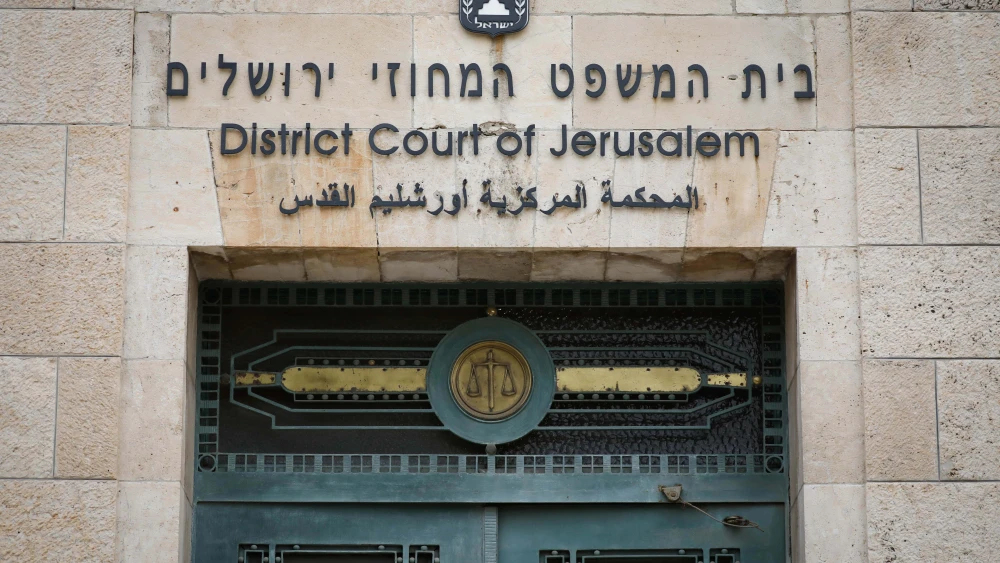
The Jerusalem District Court issued a provisional order on Wednesday allowing a group of Israeli families who have lost members to terrorism to seize 160 million shekels ($43 million) in Palestinian Authority funds frozen by Jerusalem pending proceedings against the P.A., according to Ynet.
If the families win the lawsuit, the funds will be distributed among the dozens of plaintiffs, amounting to 10 million shekels ($2.7 million) per family.
The 210 million-shekel claim was filed in early July by dozens of Israeli families whose relatives were killed in recent years, including in the ax attack in the central city of Elad on Independence Day in 2022 and the Oct. 7 Hamas slaughter at the Supernova festival near the Gaza border.
The lawsuit marked the first action taken since the Knesset passed the “Compensation for Terror Victims Bill.” The law requires courts to award punitive damages of at least 10 million shekels per fatality.
To ease the collection of the punitive awards by victims and their heirs, judgments may be enforced against “any property of the defendant, including any property seized or frozen by the State of Israel.”
The families included in the class action base their claim on the fact that Ramallah “encouraged, supported and sanctioned” the attacks in which their loved ones were murdered, their attorney told Ynet in July.
“The war on terror is currently focused in two areas: in the Gaza Strip and in the courtrooms,” said attorney Barak Kedem of the Jerusalem-based Arbus, Kedem, Tzur law firm in a statement cited by the website.
“In Gaza, our soldiers are fighting terrorism. In the courtrooms, we fight the encouragement of terrorism by the Palestinian Authority, which pays vast monthly salaries to terrorists in exchange for the blood they shed, the blood of righteous and pure men, women and children,” he added.
The remarks referred to the P.A.'s “pay for slay” policy, under which it disburses monthly stipends to convicted terrorists and to the families of slain terrorists. The so-called Martyrs’ Fund is enshrined in P.A. law, granting terrorists or their next of kin the right to receive payments as long as they live.
Since the Oct. 7 massacre in Israeli communities near Gaza, the P.A. has added thousands of Palestinians to its list of those who qualify for terror stipends, an Israeli watchdog reported in January.
P.A. officials announced that 3,550 more terrorists imprisoned in Israel would qualify for payouts, as will the families of more than 20,000 slain “martyrs,” according to Jerusalem-based Palestine Media Watch.



