Newsletter
Newsletter Support JNS

Israeli doc on Nova music festival massacre

"#NOVA” has become the most watched film in the history of Israel’s Yes Studios.

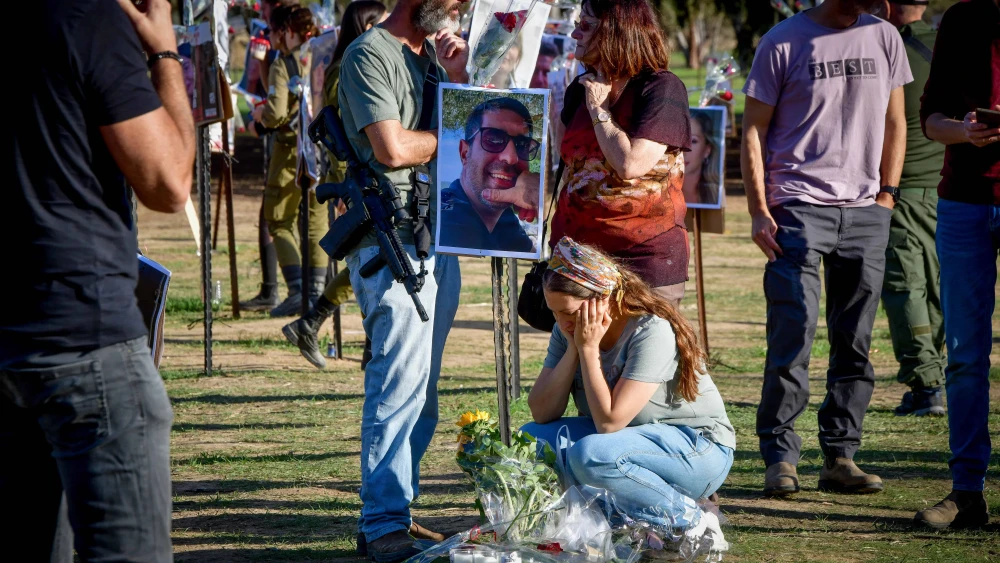
People visit the site of the Supernova music festival massacre near Kibbutz Re'im, Nov. 30, 2023. Photo by Avshalom Sassoni/Flash90.
People visit the site of the Supernova music festival massacre near Kibbutz Re’im, Nov. 30, 2023. Photo by Avshalom Sassoni/Flash90.

A nearly one-hour documentary comprising firsthand video and audio footage from the Nova music festival massacre on Oct. 7 has become the most viewed film in the history of Israel’s Yes Studios.

Some 364 people were murdered at the outdoor event near Kibbutz Re’im attended by 3,500 partygoers—nearly one-third of the 1,200 people killed by Hamas terrorists during their mass invasion of the northwestern Negev. Many were wounded, and at least 40 were taken back to Gaza as hostages. There were widespread reports of rape and sexual abuse, including gang rape.

Directed by Dan Pe’er, Yes offered the "#NOVA” documentary to all Israeli outlets to air for free, and the company is working on international distribution. It is currently available in the Hebrew language of the victims and Arabic of the perpetrators.

Another documentary, “Supernova: The Music Festival Massacre,” has already been picked up by worldwide broadcasters. That film premiered on Dec. 23 on Israel’s Kan News.

She helped turn JINSA into the “very significant face of the American Jewish community to the US military,” the JNS publisher said.
The 15 still appear on the AIPAC website in a section about candidates it supports, but users are no longer offered links with which to donate to the candidates.
The Washington Democrat told JNS that contrary to media reports, he did not cave to pressure from anti-Israel activists.
The Chah Bahar Shahid Kalantari Port surveillance tower was used to track and target commercial ships in the Strait of Hormuz, according to CENTCOM.
The New York City mayor compared himself to the South African icon in a keynote address for a Nelson Mandela Foundation event.
“What we are seeing is an ecosystem in which extremist communities, influential commentators, platform dynamics and, in some cases, state-backed information operations can all reinforce one another,” Alina Bricman of B’nai B’rith told JNS.