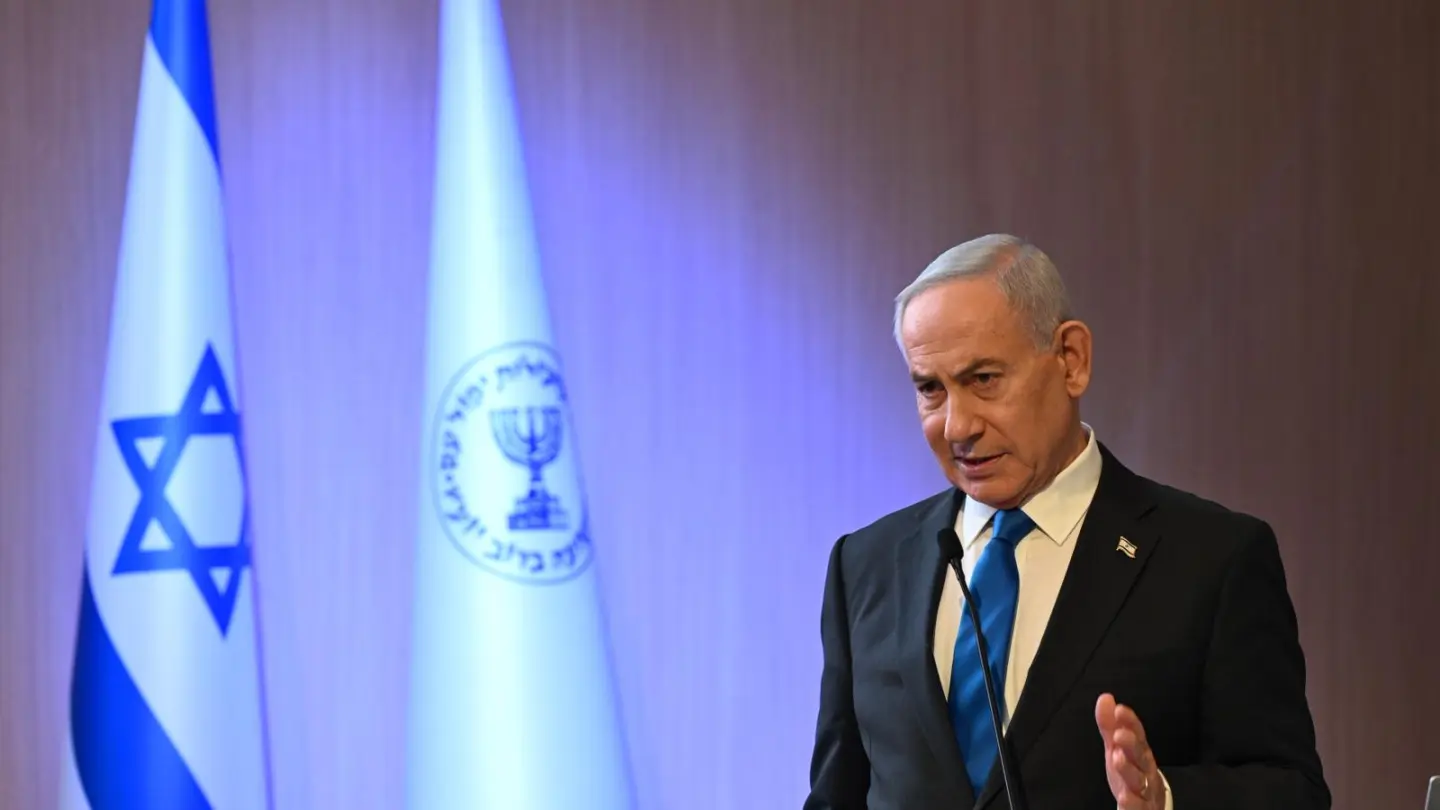
“The future belongs to those who innovate, and Israel and India are bent on innovation,” Israeli Prime Minister Benjamin Netanyahu said during a press conference in Jerusalem on Thursday with Indian Prime Minister Narendra Modi, in which previously negotiated agreements on economic cooperation and trade were exchanged.
Memorandums of Understanding were announced on everything from artificial intelligence to agricultural innovation.
“We are proud ancient civilizations, very proud of our past, but absolutely determined to seize the future, and we can do it better together,” Netanyahu said.
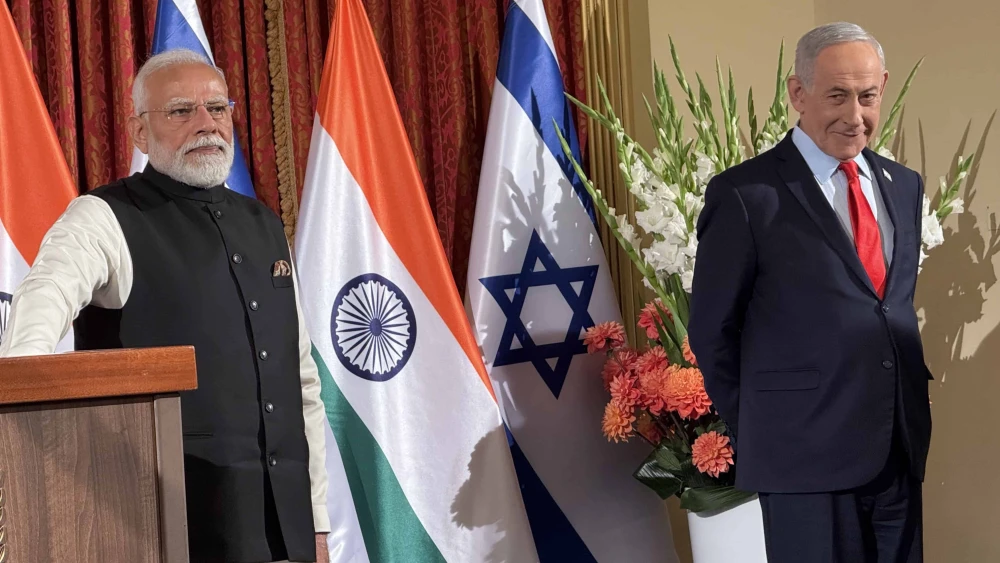
Israel’s prime minister announced that a Government-to-Government (G2G) meeting will be held in India to continue deepening the cooperation, though a date has yet to be set.
Israel-India cooperation will provide benefits not only to each other but to humanity at large, he said.
Israeli Innovation, Science and Technology Minister Gila Gamliel, who signed a Memorandum of Understanding in the field of horizon scanning, a method for the early detection and assessment of emerging technologies, told JNS that just in terms of agriculture and water desalination projects alone, “the sky is the limit. We’re talking about potential in the billions of dollars.”
In a joint statement, the prime ministers welcomed the diverse array of MOUs, among them the ongoing collaboration between the Israel Space Agency (ISA) and the Indian Space Research Organization (ISRO), which offers significant cooperation for Israeli space-based startups and companies to engage more deeply with their Indian counterparts.
Gamliel told JNS: “In the future, I believe it will be like what we used to imagine as kids watching ‘Star Wars,’ a reality of space-based defense and intelligence operations.”
“Immense progress” has been made in numerous areas, including emerging technologies, cyber, agriculture, water management, health, entrepreneurship, and defense, she said.
Modi arrived in Israel on Wednesday for a two-day trip. It is his second state visit to the Jewish state. He was accompanied by a high-level delegation composed of senior ministers and officials.
Netanyahu greeted Modi warmly, saying, “This is a bond of true friendship.” Modi last visited Israel in July 2017. Netanyahu then visited India in January 2018. Those trips together “laid the foundation for a new era of partnership and collaboration,” the leaders said.
Indian and Israeli capabilities complement one another perfectly, they said. Israel is a global technology and innovation powerhouse, while India serves as a hub of talent, manufacturing excellence and entrepreneurial energy.
During his visit, Modi became the first Indian leader to address the Knesset. The Israeli opposition parties, angry over the coalition’s decision not to invite Supreme Court President Yitzhak Amit to attend, left the plenum in protest during Netanyahu’s introduction of Modi, but returned to hear the Indian premier’s speech.
Israeli opposition leader Yair Lapid of the Yesh Atid Party briefly took the podium before Modi’s remarks to explain to him that the decision to leave the hall was unconnected to his visit, and that he was admired by both sides of Israel’s political aisle.
Modi has shifted his country’s foreign policy to a pro-Israel stance from a historically pro-Palestinian one. Israel and India only established full diplomatic relations in 1992.
The visit has ushered in “a new phase” in bilateral relations, said officials, with a focus on cooperation in advanced technology.
The trip also contains a security component. Netanyahu said one of his goals was to advance Israel’s broader vision to build alliances to thwart Shi’ite and Sunni Muslim radicalism by building an axis to counter it, which includes India.
During the visit, significant advances in scope and scale have been made since the signing of a Defense Cooperation MOU on Nov. 4, 2025, the leaders noted.