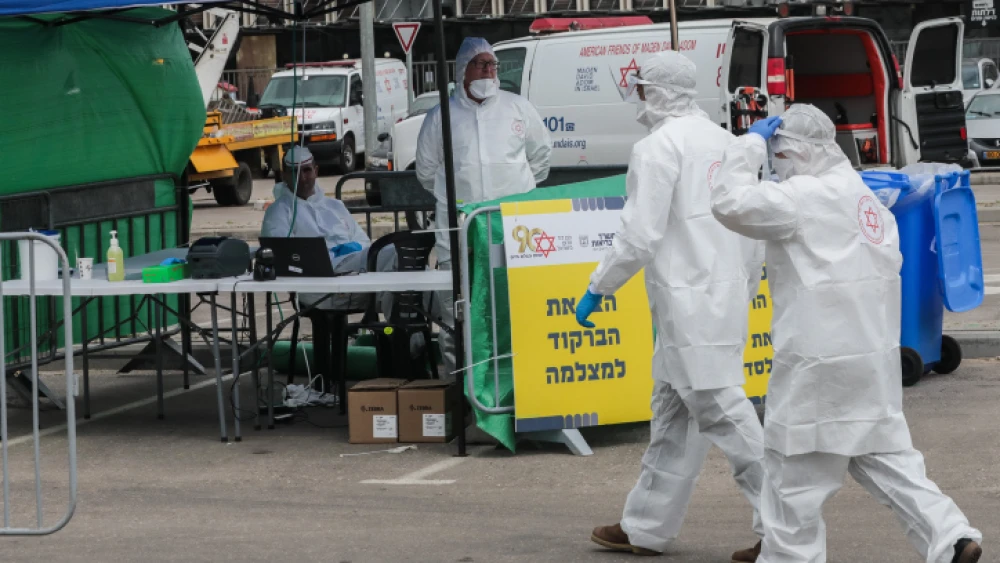
Israel’s coronavirus death toll stood at 298 on Monday, with 17,915 confirmed cases of infection in total since the start of the pandemic, though serological testing indicates that the true figure may be much higher.
According to the Health Ministry, 13 people have died of COVID-19 in Israel in the past week, but the number of daily new cases has remained steady at about 100 for the past eight days.
Of the 2,481 known active cases, 28 people were reported to be in serious condition with another 39 people in moderate condition.
Officials have urged the public to remain vigilant with hygienic and social-distancing measures to stem a possible second wave of infection.
“Part of the clear increase that we have seen in the last eight days in the rate of infection in Israel is due, as was expected, to the easing of restrictions we have made in order to open our economy,” Israeli Prime Minister Benjamin Netanyahu said on Sunday. “But some also stems significantly from a serious slackening in adhering to the rules on masks, social distancing and hygiene.”
So far, the rash of new cases has been centered around schools and preschools. The Education Ministry said on Sunday that 130 schools and kindergartens have been closed in the past 10 days, and 17,000 students and faculty sent into quarantine.
The government has said that it will keep schools open, closing only those where cases crop up.
On Sunday, Israel announced that it would use machines imported from China to manufacture millions of N-95 masks in preparation for a possible surge in new infections.
The factory will be opened in the town of Sderot on the Gaza border. The announcement came after Israel discovered that millions of shekels’ worth of masks imported from China did not offer the advertised level of protection.