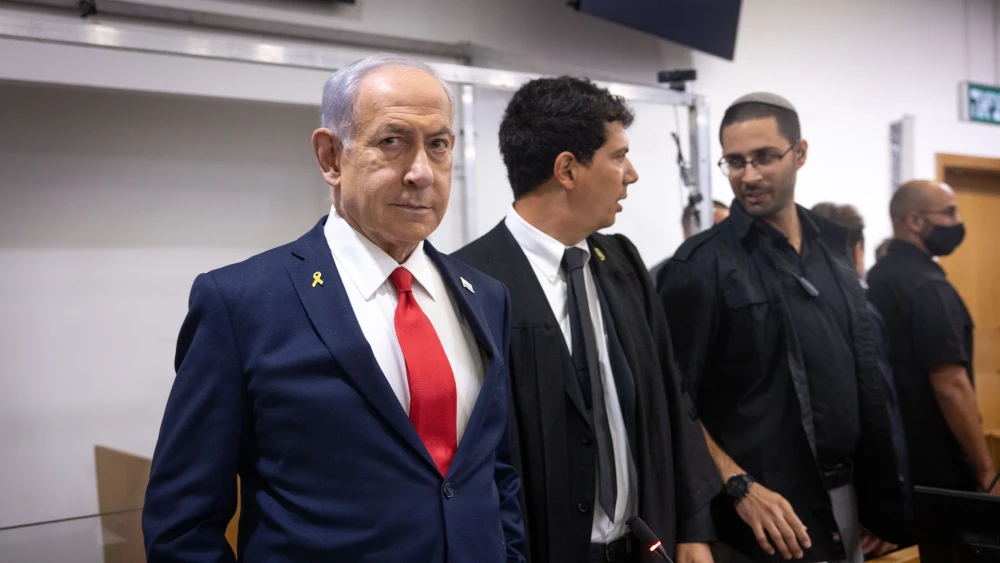
Israeli Prime Minister Benjamin Netanyahu on Tuesday renewed his call for judicial reform, saying recent developments in his corruption trial had bolstered public support for reshaping the country’s legal system.
“We will continue with judicial reform,” Netanyahu told Yinon Magal, host of Channel 14‘s flagship “The Patriots” program, in a rare interview with a Hebrew-language broadcaster, four months before a scheduled general election.
Judges at the Jerusalem District Court reiterated earlier this week that prosecutors should consider dropping bribery charges against Netanyahu while leaving the lesser breach of trust charges in place across the three criminal cases against him.
The premier dismissed all allegations, saying the cases that have been making their way through the courts since 2020 were collapsing. “There is no bribery here. Wait and see—there is no fraud and breach of trust either,” he said. “It’s all one big bluff. There is nothing here.”
According to Netanyahu, many Israelis, including those outside his political camp, now recognize the need for judicial reform.
“People want a fair judicial system. They want a judicial system that operates according to the principles of the law. And that is possible,” he said.
The prime minister described the criminal proceedings against him as politically motivated and said they had divided Israeli society.
“This trial tore the nation apart. It was the basis for the boycotts. It led to the boycotts,” he said.
Despite insisting the charges against him would ultimately be dismissed, Netanyahu said he wanted the proceedings brought to an end so the Jewish state could focus on broader national priorities.
“We are facing much bigger missions. We need to unite the people,” he said. “The rift can widen. The divide can grow. I know what missions lie before us. I know what opportunities lie before us. I know what I want to do to move the country forward.”
The Netanyahu government largely shelved its judicial reform agenda as the Jewish nation united following the Oct. 7, 2023, Hamas-led terror attacks and the ensuing seven-front war.
In December 2025, Israeli Finance Minister Bezalel Smotrich threatened to “trample” Supreme Court President Yitzhak Amit, accusing him of trying to harm Israeli democracy.
According to the top Cabinet minister, Jerusalem’s High Court of Justice was “violently trampling and silencing the voice of the majority” and has stolen “the will of the people and the freedom of the people of Israel.”
He added that while the government wished it could reach a compromise with the court, “when one side becomes so extreme, it leaves you no option but to fight back with everything you’ve got.”