



Every democracy eventually faces the same temptation: Problems that once appeared manageable become entrenched, public trust erodes, institutions lose credibility, and political divisions deepen. At precisely that moment, politics becomes intensely personal. Elections cease to revolve primarily around competing ideas and increasingly become a search for an individual who can finally restore what seems to have been lost.
There is nothing irrational about that hope. Leadership matters, and history has repeatedly been shaped by extraordinary individuals whose courage and judgment altered the course of nations. Winston Churchill could not have led Britain through its darkest hour without those qualities, just as David Ben-Gurion’s leadership was indispensable to the founding of the State of Israel.
The problem begins when societies expect leaders to accomplish what politics was never designed to achieve.
Governments can defend borders, enforce laws and build institutions, but they cannot manufacture the civic character upon which such policies depend. They cannot legislate responsibility or substitute for families, communities and citizens willing to assume responsibility for the society in which they live. Yet as these foundations weaken, our expectations of politics seem only to grow.
This is fertile ground for populism. Simple solutions are an easy sell because they satisfy the instinct to locate both the problem and its solution outside ourselves: Find the right leader, defeat the right opponent, change the right institution, and everything will be fine. The simplicity its appeal but also its weakness, because problems rooted in history, culture and human behavior rarely yield to quick fixes.
Long before democracy acquired its modern vocabulary, the Torah confronted a remarkably similar issue.
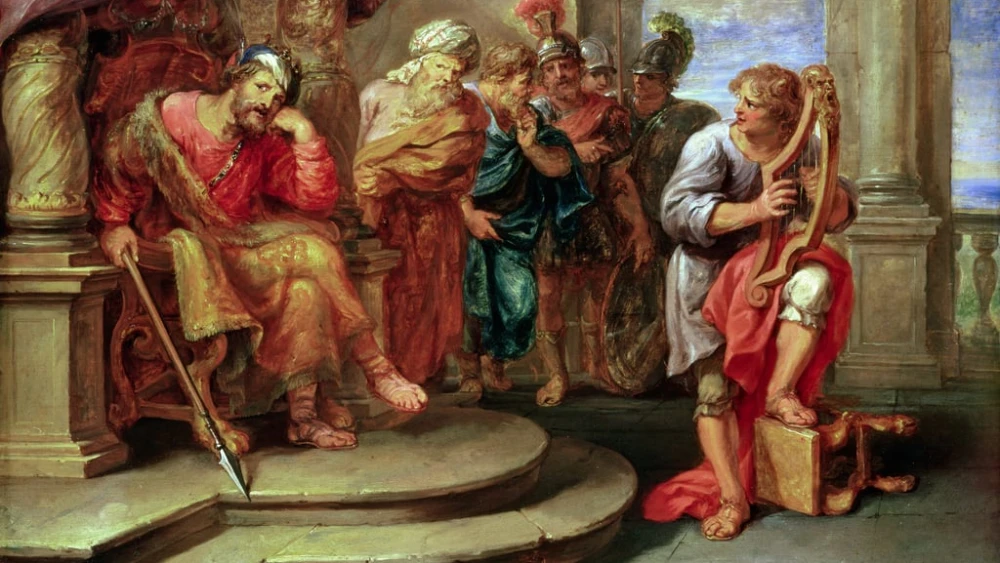
It appears in an unexpected place. When the elders of Israel approach the prophet Samuel and ask him to appoint “a king to judge us like all the nations,” God responds with the striking declaration, “It is not you they have rejected, but Me as their king.”
What follows may be even more significant. Rather than explaining what is wrong with the people’s proposed political solution, God tells Samuel to remember “all the deeds they have done from the day I brought them up out of Egypt until this day.”
Perhaps that is an invitation to us as readers as well. If the request for a king can only be understood by looking back to Egypt, then the biblical discussion of political leadership does not begin with kingship at all, but with the difficult transition from dependence to responsibility.
When Moses disappears on Mount Sinai, the people respond to the loss of the leader upon whom they have depended by demanding something tangible that can “go before us.” The Golden Calf follows.
At the threshold of the Promised Land, the spies’ report confronts the people with the frightening task of fighting, settling and building. Their response is to propose appointing a leader and returning to Egypt.
These are different situations; still, in both cases, the challenge of moving forward compelled the people to seek something beyond themselves to help them navigate.
Generations later, the same instinct assumed a particularly revealing form.
After Israel was defeated by the Philistines, the elders asked, “Why has the Lord defeated us today?” Yet almost immediately, introspection gave way to an external remedy. They brought the Ark of the Covenant into battle so “It may come among us and save us from the hand of our enemies.” The holiest object in Israel was treated as though its presence could substitute for the reckoning its holiness demanded. Israel was defeated again, and the ark itself was captured.
In the context of these verses, the people’s request for a king seems different. The problem cannot be monarchy itself, because Deuteronomy explicitly anticipates its establishment. The issue is what the people expect political leadership to accomplish for them.
This may illuminate the unusually personal language of the original command. The Torah does not merely say to appoint a king; it says, “You shall surely appoint over yourself a king.” Before describing the ruler, it addresses the person who will live under his rule.
The king is then immediately constrained: He may not accumulate excessive wealth, horses or wives, and must keep the Torah scroll with him throughout his life. Thus, biblical kingship is neither a rejection of leadership nor an invitation to surrender responsibility to it. It is leadership constructed within a culture of obligation.
This distinction holds significance far beyond the context of biblical monarchy.
Modern democracies rightly devote enormous attention to the people who govern them, and consequential leaders can alter the direction of history. But political leadership cannot substitute for the cultural foundations upon which healthy political life depends. Laws and institutions matter enormously, but they operate within a society whose habits, commitments and willingness to assume responsibility cannot simply be imposed from above.
Perhaps, then, we have reversed the order. We expend enormous energy searching for a leader capable of creating the society we want, when the more enduring task is to create a society capable of producing the leaders it needs. A culture of responsibility does more than make better citizens. Over time, it shapes the expectations, institutions and human character from which leadership itself emerges.
The Torah does not ask us to choose between strong leadership and individual responsibility. It suggests that the latter is what ultimately makes the former possible. A worthy society does not wait for worthy leaders to build it. It builds the foundations upon which worthy leaders can stand.


