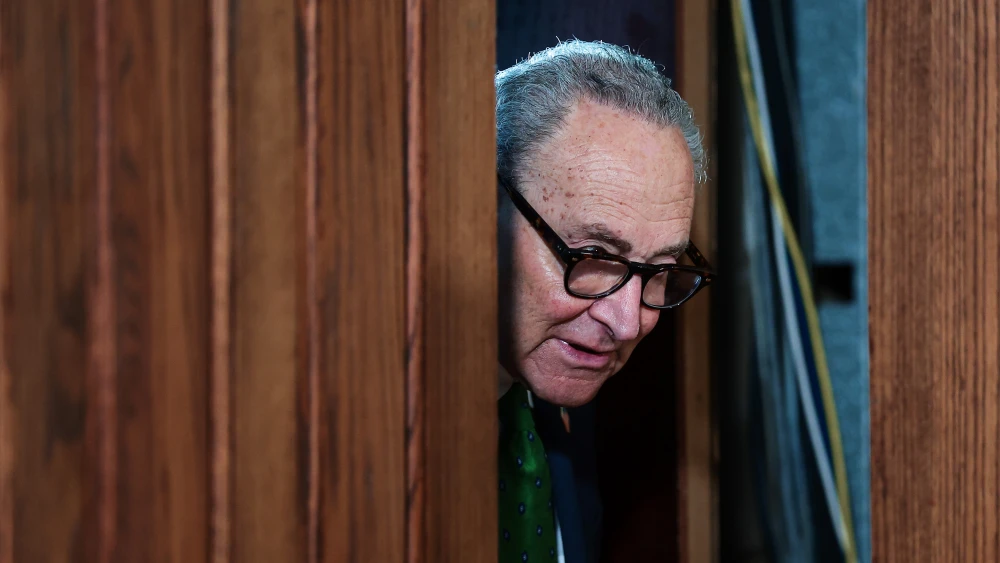

Members of the Jewish community, as well as Democrats and Republicans of all backgrounds with a moral compass, have been expecting too much of Sen. Charles Schumer (D-N.Y.).
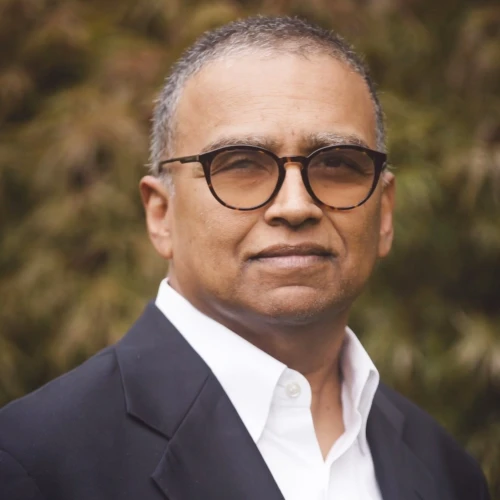
Decent people who oppose the normalization of Jew-hatred may have hoped that the Senate Minority Leader would have moved heaven and earth to stop Dr. Abdul El-Sayed from winning his party’s nomination for the U.S. Senate in Michigan. And once El-Sayed narrowly won that primary this week, principled political observers might have hoped that Schumer would have refused to endorse a man whose campaign centered on an effort to stigmatize and drive American Jews out of the public square in the general election.
A victory for antisemitism
Adding another left-wing populist allied to the Democratic Socialist faction who seeks to revive destructive ideologies of the past is one thing. So, too, is the accession to a position of influence of yet another politician who has been steeped in the toxic leftist ideas of the present, such as critical race theory, intersectionality and settler-colonialism, all to exacerbate racial divisions. Several already represent the Democrats in the U.S. House of Representatives. Once you officially accept that the progressive extremists that comprise “The Squad” in that legislative body are legitimate colleagues, the start of a Senate version isn’t much of an innovation.
But El-Sayed is more than just another leftist.
At a time when there is an unprecedented surge of antisemitism around the globe and in the United States, the notion of simply shrugging off the possibility of someone who rationalizes terror against Jews and seeks to demonize the State of Israel and its people (who make up half of the world’s Jewish population) ought to be unacceptable for any decent person. For a person with Islamist beliefs of his own, El-Sayed has the chutzpah to seek to redefine Judaism so as to eliminate a key element of faith and Jewish peoplehood—the love of and devotion to the land of Israel, and the obligation to support its Jewish citizens. That alone would be reason enough to oppose him.
With respect to Schumer, that was never going to happen.
There are two reasons for this. One is simply a matter of the nation’s political organizational chart. Schumer, for better or worse, is the Senate Minority Leader. The responsibilities that go with that position make it impossible for him to stand aside from the battle for the open Michigan seat that Democrats desperately need to take back control of the Senate.
The other reason is personal. It would have been entirely out of character for a man whose entire adult life has been singularly devoted to partisan politics, rather than principled advocacy or good governance, to suddenly grow a conscience and say he will have nothing to do with El-Sayed.
A life of partisanship
After all, politics is Schumer’s life. He has literally never had any other job, having won a seat in New York’s State Assembly right after graduating from Harvard Law School in 1974. He won election to the House in 1980, where he served for 18 years before winning a Senate seat. He spent his first 18 years in the Senate (1999-2017) working assiduously to climb to the top of his party’s Senate caucus and the last decade busily defending that position. And he knows he will have a battle on his hands to retain it next January, whether or not the Democrats gain a majority.
Over the course of his 52 years in elective politics, he has employed every piece of partisan artifice and skill imaginable—not to mention every dirty trick in the book—to get ahead. As such, there was simply no way for him to say that El-Sayed’s open antisemitism was a bridge too far and that he would oppose his election. It didn’t matter that the 41-year-old political hopeful had pronounced claims to defend Jewish safety, which are as disingenuous as the ones touted by another Islamist, New York City Mayor Zohran Mamdani.
Doing so would not only have made it impossible for him to retain his leadership position when the 120th Congress convenes next year and organizes itself. The drift to the left among congressional Democrats is painfully obvious to a person who is as single-minded as Schumer about obtaining every advantage on Capitol Hill, as opposed to pursuing ideological goals. Indeed, it’s entirely possible that a Senate Democratic caucus, whose membership voted 40-7 in April of this year to block arms sales to Israel, might have ousted him sooner than that, had he openly opposed El-Sayed.
Sen. Chris Van Hollen (D-Md.), another relentless foe of Israel, is already making noises about deposing Schumer as leader. And New York’s progressive activists and Democratic Socialists, who elected Mamdani nine months ago, are already chomping at the bit to unseat him when his term is up in 2028. “Squad” ringleader and fellow New Yorker Rep. Alexandria Ocasio-Cortez is a possible challenger, if she doesn’t run for president that year.
Once you grasp these facts, his decision is easy to understand.
The same is true for New York’s junior senator, Sen. Kirsten Gillibrand. She is the chair of the Democratic Senatorial Campaign Committee (DSCC). And it’s her job to elect Democrats.
It’s true that Schumer privately opposed El-Sayed during the primary. But fearing the anger of his party’s base—not to mention Senate colleagues like Sens. Elizabeth Warren (D-Mass.) and Chris Murphy (D-Conn.), who warned him to stay out of the race—he confined his efforts to private conversations with donors.
Much like his “private” opposition to former President Barack Obama’s disastrous Iran nuclear deal in 2015, Schumer wouldn’t stick his neck out even on a matter of life and death. He may have spent his career boasting to Jewish audiences that he was the shomer, or “guardian,” of the State of Israel in Congress.
But that was never true—or at least not when it might have required some courage or a willingness to pay a political price for defending Jewish security in the Middle East or the United States. In 2024, Schumer did it again with a speech attacking Israeli Prime Minister Benjamin Netanyahu to give cover to his party’s leaders, former President Joe Biden and Vice President Kamala Harris, for their retreat from a position of support to a Jewish state fighting for its life.
Gillibrand and Schumer see their task as being concerned about picking people who can win elections and help them obtain power, not to judge their moral character. That’s why they were prepared to stand by Graham Platner—the Nazi-tattooed, Israel-bashing Maine oysterman—after he won the Maine primary earlier this year until allegations of sexual misconduct finally ended his run for the Senate.
As Schumer said in an interview with Punchbowl News this week when explaining his decision on El-Sayed: “The issue isn’t me. It’s about winning.”
A Democratic majority and the ability to thwart, if not impeach, President Donald Trump is the only thing that matters to Democrats. And that is the agenda that Schumer will follow.
A new ‘Profiles in Courage?’
Nobody expects Schumer to write a new chapter in President John F. Kennedy’s book Profiles in Courage about courageous senators who paid a heavy political price for voting as their conscience, rather than their party, dictated. But this is no ordinary moment in American politics.
At no previous time in American history has antisemitism been such a potent factor in public discourse.
Since the Hamas-led Palestinian-Arab terror attacks in southern Israel on Oct. 7, 2023, the volume of Jew-hatred in the American academy, media, culture, the arts, politics and online chatter has grown to a level unknown in living memory. The demonization of Israel and the Jewish people by toxic leftist ideologies that falsely labeled them as “white” oppressors didn’t just lead to all those demonstrations on campuses and city streets, where mobs openly called for Jewish genocide (“From the river to the sea”) and terrorism against Jews everywhere (“Globalize the intifada”).
It has created an atmosphere where blood libels against the Jewish victims of an intended genocide were falsely accused of implementing genocide against the Palestinians. Such lies became normalized in newspapers like The New York Times and in political debates. Liberal Democrats who wouldn’t bend their knees to the new Jew-hatred have been ousted from their seats in the House. And now, Jews have good reason to fear that the incitement against them from people in power like Mamdani is putting them in imminent danger of physical violence.
At such a moment, business and politics as usual of the sort that Schumer has practiced during a half-century of his grubby and grasping efforts to win political prizes is simply insufficient to the challenge of the moment.
The ‘shomer’ that wasn’t
Perhaps Schumer never thought that he’d be required to behave in a manner that would conform to his Jewish stump speech about being a shomer. His own life story exemplified the classic 20th-century American Jewish success story, in which a member of the community rose to great heights while not having to shed his Jewish identity. Had he left politics a decade ago when he finally achieved his ambition to be the Democrats’ Senate leader, he would have been able to escape that charge. But it was the 75-year-old’s fate to last long enough to be in a position of great influence when his fellow Jews were in danger.
We have already seen how uninterested he has been in defending Jewish security. That was amply demonstrated when Americans learned in 2024 that he had advised the Board of Trustees of New York’s Columbia University that “only Republicans” were concerned about their toleration and encouragement of antisemitism on their Morningside Heights campus after Oct. 7. He may have dared to write a book about antisemitism that was published in 2025 as part of his ongoing efforts to pose as a defender of the Jews. But by the time it came out, revelations about his communications with Columbia, as well as the atmosphere of Jew-hatred simmering within his own party, forced him to cancel his book tour.
Characteristically, that humiliation left him undaunted. Indeed, Schumer may well imagine that he can go on indefinitely as one of the nation’s most powerful men without being held accountable for being as bereft of principles as he is of shame.
A moral test
Yet the El-Sayed candidacy isn’t just another embarrassment for the country’s most prominent liberal Jew. Along with every other element of the current surge of vile bigotry that is changing the face of American politics in ways we are only beginning to understand, it is the kind of moral test that comes along once every generation or two.
It’s a moment when lifelong legislators are required to step up and respond to the challenges of history. And we know that most Democrats, including almost all of those who seek their party’s presidential nomination in 2028, are siding with the antisemites like El-Sayed—or staying silent.
Republicans have done better, but if they allow someone like Vice President JD Vance to succeed Trump, then they, too, will fail.
Fair or unfair, public figures are judged not so much on the sum of their lifework but on how they respond to those singular moments in time, whether it is the debate about slavery and the Civil War in the 19th century or the rise of the totalitarians in the 20th. We don’t know what will happen in the coming years, but it is becoming apparent that the explosive growth of antisemitism will, in one way or another, create yet another pivotal chapter in history. Many people will likely emerge from this struggle with their reputations either destroyed or enhanced.
At such a time, it is a pity that rather than a person of courage and character, American Jews are stuck with the likes of the feckless Schumer to represent them.
Jonathan S. Tobin is editor-in-chief of JNS. Follow him: @jonathans_tobin.