The international jury of the Venice Biennale resigned on Thursday after a dispute with organizers over the inclusion of Israel and Russia in this year’s event.
The five-member panel, headed by Brazilian curator Solange Farkas, had announced last week that it would not consider works from countries whose leaders face allegations at the International Criminal Court, a position widely understood to target Israeli Prime Minister Benjamin Netanyahu and Russian President Vladimir Putin.
Biennale President Pietrangelo Buttafuoco rejected the move, insisting the festival must remain “a space of coexistence for the whole planet” without censorship and allowing both countries to participate.
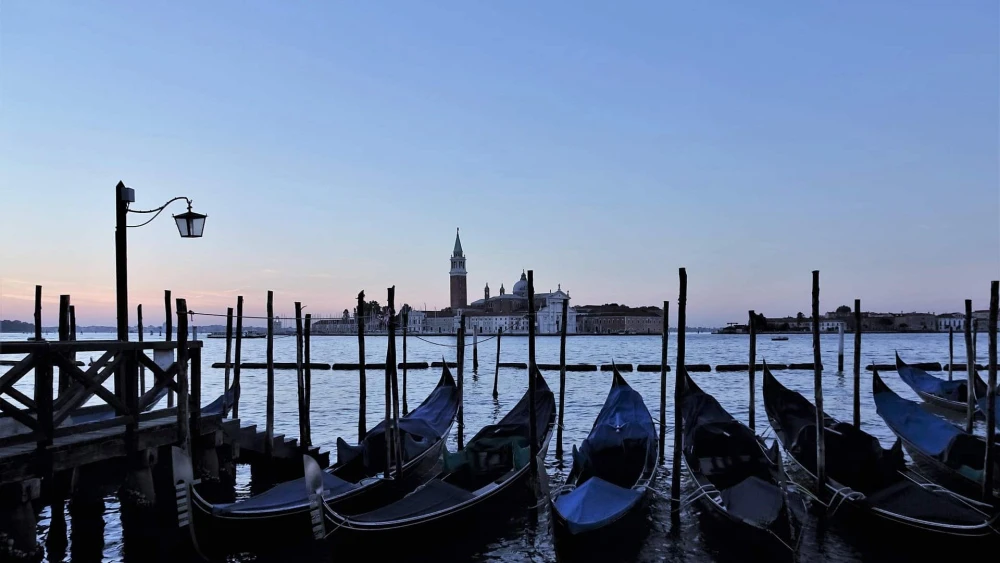
Following the standoff, the jury stepped down effective April 30, just days before the exhibition’s opening. The Biennale, founded in 1895, is one of the world’s most prominent cultural institutions, drawing more than 600,000 visitors during its seven-month run. Participating countries present national pavilions, and Israel is expected to take part as planned when the exhibition opens on May 9.
The decision to sideline Israeli and Russian artists had drawn sharp criticism. Israeli sculptor Belu-Simion Fainaru, who is representing Israel at the exhibition, accused the panel of discrimination and considered legal action.
Israel’s Foreign Ministry also condemned the move, describing it as a politicization of culture and accusing the jury of promoting “anti-Israeli political indoctrination.”
The boycott of Israeli artist Belu-Simion Fainaru by the International Jury of the Venice Biennale is a contamination of the art world.
— Israel Foreign Ministry (@IsraelMFA) April 26, 2026
The political jury has transformed the Biennale from an open artistic space of free, boundless ideas into a spectacle of false, anti-Israeli…