
For quite some time now—at least since Oct. 7, 2023—lies about Jews and Israel have become the dominant public discourse, drowning out every other description of reality.
Here are three examples:
Regarding Lebanon, we read and hear in the media that Israel seeks to occupy part of the country, and that its soldiers continue fighting in the south despite a ceasefire, while the Lebanese population suffers. Little to nothing is said about Hezbollah or the very real suffering of Israelis.
The truth is this: Israel is trying to prevent Hezbollah from terrorizing its population in the north, as it has done for years—especially since Oct. 7—despite repeated agreements. Iran gives the orders; Hezbollah acts, violating ceasefires.
Israelis, living under constant threat, cannot remain in their homes. Children do not go to school. Sirens sound incessantly. Drones and missiles destroy, wound and kill. Entire communities have been paralyzed—economically and socially.
Lebanese President Joseph Aoun, though invited to engage, does not confront Hezbollah or move to disarm it, as Israel demands. Meanwhile, Israel continues to act with restraint, awaiting a response from Beirut, as residents of northern Israel plead for the restoration of normal life.
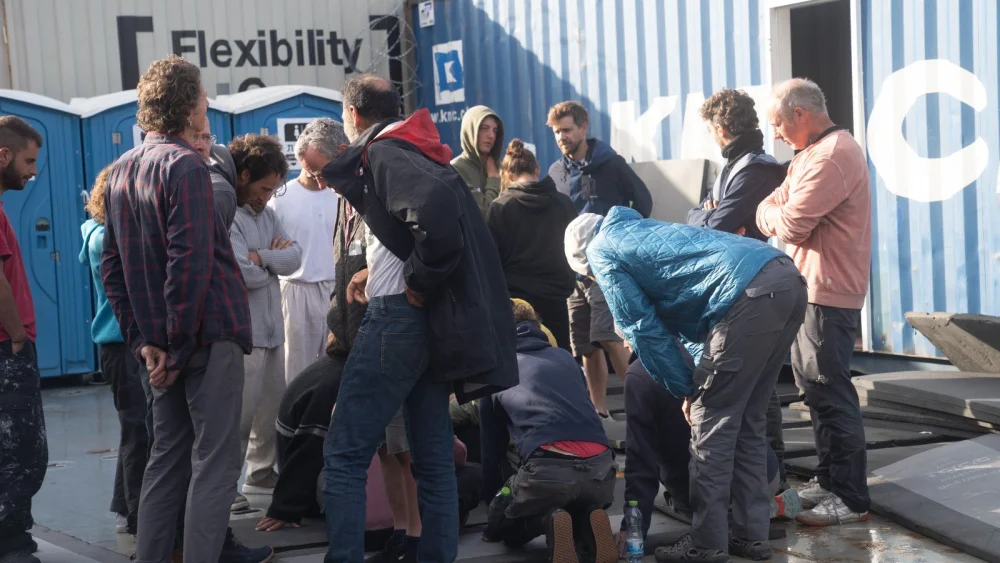
A second falsehood: that intercepting the Global Sumud Flotilla constituted a violation of international law. A bit of common sense is in order. Imagine dozens of vessels filled with sympathizers of terrorism from Spain, France and Italy—not delivering aid, but intent on confrontation—attempting to land on your shores.
Any country would act to prevent such a scenario for obvious security reasons. In Gaza, such a flotilla could also conceal weapons and enable maritime infiltration toward the Israeli ports of Ashkelon and Ashdod.
As for legality, the San Remo Manual—addressing armed conflict at sea—makes clear that a declared naval blockade is lawful in international waters when the law of armed conflict applies.
This is unquestionably the case with Hamas, an organization with military capabilities, arsenals and territorial control. Under such conditions, vessels may be intercepted, seized and diverted to a controlled port. Indeed, failing to enforce a declared blockade would render the law itself meaningless.
A third case: A Jewish youngster named Eitan, who on April 25 fired a pellet gun at two members of the Italian National Partisans Association (ANPI) during a Liberation Day rally in Rome. The boy was accused of attempted murder, vilified and described as a logical consequence of Israeli brutality, but now the accusation has been dropped.
Still, media coverage and television debates went so far as to criminalize the “Jewish Brigade”—no longer portrayed as the heroic group of Jewish anti-fascists who came from pre-state Israel to help liberate Italy, but instead recast as something akin to a criminal organization.
The implication was clear: Jews are portrayed as aggressive, overbearing actors—an assumption now applied broadly to everything Israel does. The boy was portrayed as a sniper and accused of attempted murder.
Yet no connection was made in the Italian media between this incident and the spreading antisemitism that, on April 29, targeted two Jewish victims in London’s Golders Green.
Three cases of the criminalization of Jews? Hardly. There are hundreds every day, in schools, across media platforms and within political discourse in Europe and around the world.
Too often, it doesn’t end with words, but with violence.