
More than a million Americans live in the Middle East today. They reside, work and raise families in a region where the Iranian regime has openly threatened the United States for more than four decades.
This hostility is not theoretical. It includes the 444-day hostage crisis in Tehran and the murder of 243 U.S. Marines in the Beirut barracks bombing on Oct. 23, 1983. I know this personally. I was there with the U.S. Marine Corps at the time.
Since then, the regime and its proxies have carried out dozens of attacks against U.S. interests while chanting “Death to America!” and branding America the “Great Satan.” There have even been credible plots to assassinate the president of the United States.
Iran’s aggression is not new. What is new is the scale of the stakes.
At the heart of the “America First” movement is the principle that made America exceptional: freedom.
In the 1995 Mel Gibson movie “Braveheart,” the cry for freedom becomes a rallying call for an oppressed people. Today, young Persians have echoed a similar cry in the streets of Iran. For demanding liberty, more than 30,000 have reportedly been killed by their own regime.
“America First” does not mean isolation. It means defending the ideals that define us and protecting those who share our longing for liberty.
“America First” also means security.
No serious strategist believes that the United States can remain secure if a radical theocratic regime acquires nuclear weapons and publicly threatens to use them. Deterrence requires strength, clarity and resolve.
This week’s dramatic developments underscore how high the stakes have become.
According to Israelis reports, the Israel Defense Forces targeted a building in Tehran where Iran’s 88-member Assembly of Experts was reportedly meeting to choose a successor to the slain Supreme Leader Ayatollah Ali Khamenei. Iranian news agencies stated that the structure was flattened during the airstrike.
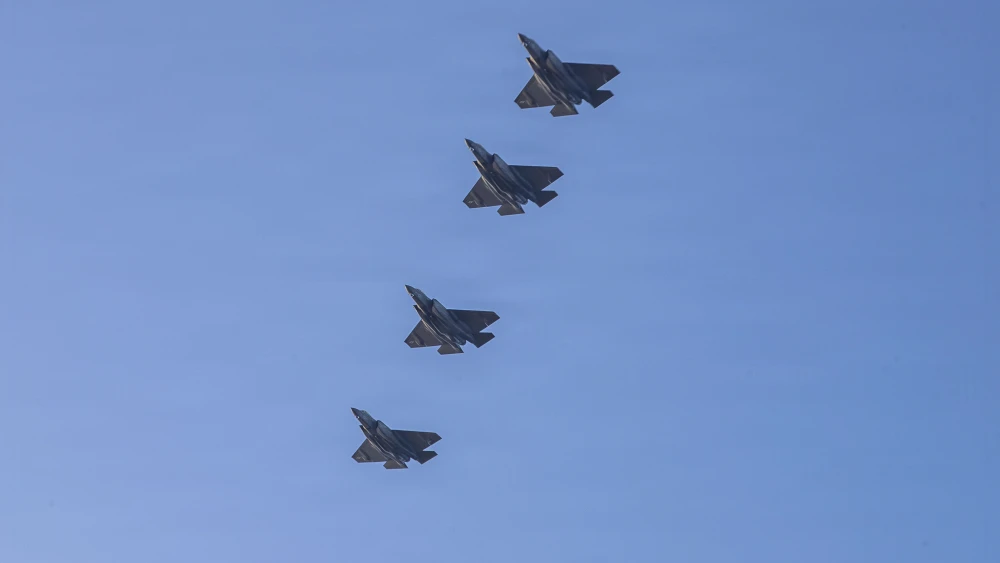
The broader campaign, known as “Operation Roaring Lion,” has already reshaped the strategic landscape. Israeli officials report that more than 4,000 bombs have been dropped on an estimated 1,000 targets across Iran. In one overnight operation, approximately 100 fighter jets struck a central leadership complex in Tehran, hitting facilities that allegedly housed the president’s headquarters, the Supreme National Security Council and key military training infrastructure.
These are not symbolic actions. They reflect a fundamental struggle over who controls the future of the Middle East.
The global economy is also at stake. A significant portion of the world’s oil flows through the Persian Gulf, a corridor that Tehran has repeatedly sought to dominate. Any disruption would reverberate directly through the American economy.
We must also remember the lessons of Sept. 11, 2001. Just 19 Islamic terrorists inflicted unspeakable devastation on the United States. Iran is a country of more than 85 million people, governed by a regime that has cultivated proxy militias and terror networks across multiple continents. The potential scale of asymmetric warfare is enormous.
Supporting Israel isn’t charity; it’s strategy. Israel stands on the front lines against radical Islam and Iranian expansionism. When Israel confronts these threats in the Middle East, it reduces the likelihood that American soldiers will have to confront them at home.
The moral equation is not complicated. Tell the families of 9/11 victims that confronting radical Islam is evil. Tell Americans who have lived under threat for decades that deterrence is immoral. The true moral failure would be appeasement in the face of open hostility.
U.S. President Donald Trump sees the America First movement as one of patriotism, faith and the defense of American sovereignty. Its foundation is not isolationism but strength.
And that strength must counter a new power struggle emerging within the Islamic world between Shia and Sunni factions. That is not America’s battle. Still, radical Islam has emerged from both camps, as has the Muslim Brotherhood and other extremist movements that openly threaten the West.
America did not choose this conflict. But history shows that ignoring ideological aggression doesn’t make it disappear.
“America First”means protecting American lives, preserving global stability and defending freedom wherever it is under siege.
Strength is not the enemy of peace. It is the prerequisite for it.