Initially defined as the national movement of the Jewish people, Zionism has made a huge comeback in global Jewry’s agenda. Organizations worldwide, including the government of Israel, are investing tremendous resources into the reclamation and re-education of Zionism.
On the one hand, the term has been hijacked by others for the purposes of delegitimization, anti-Israel activities, and, in some cases, lending credence to the age-old dehumanization of Jews—and, in the modern sense, the State of Israel. Ignoring Zionism’s true purpose is a strategy employed by those who seek Israel’s destruction, nothing less. Anti-Zionism is anti-Semitism, hence the global Jewish response when people seek to separate the two.
On the other hand, the philosophy and practice of Zionism have not moved on with the times, as they had in the past. As a result, the disengagement from Zionism has led to the hijacking of Zionism.
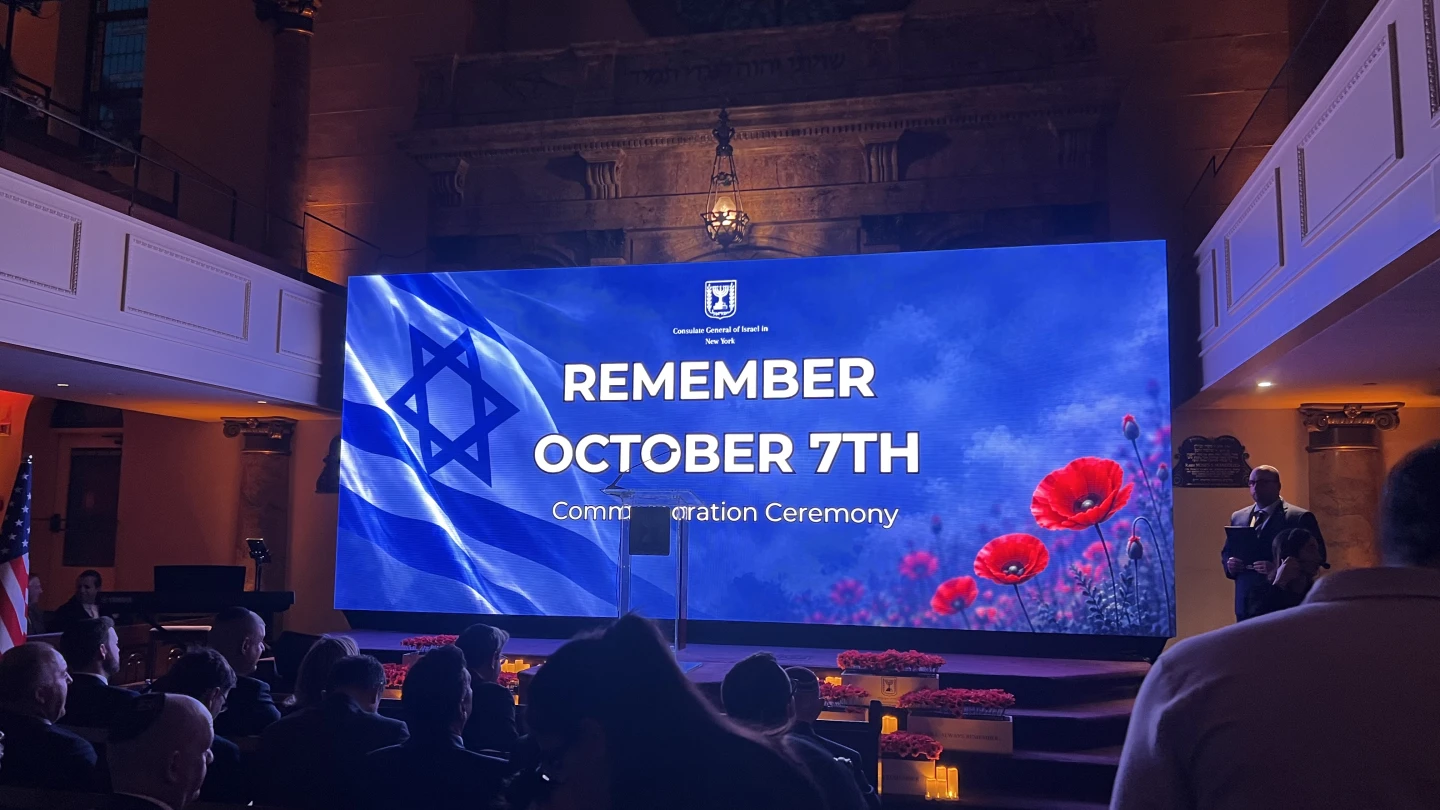
The Hamas-led terrorist attacks in southern Israel on Oct. 7, 2023, when its operatives and Palestinians murdered, terrorized and kidnapped innocent civilians, cast a harsh light on this reality. What followed—both the ensuing war and the alarming surge of antisemitism across Western societies—has fundamentally altered the discourse around Zionism and Jewish identity. For many, these events evoked painful historical echoes of times when Jews were hunted and persecuted, challenging the post-1948 narrative of safety and acceptance.
One of the challenges we must overcome is understanding our collective, and, specifically, our youth’s self-identification with “global citizenship.”
Before the State of Israel’s independence, the stateless Jew was relegated to her or his own group identity, sometimes while living inside a ghetto. The establishment of the modern state in 1948 changed that. Just as Theodor Herzl predicted, Israel—and, by extension, today’s Jew—has gone global. In reaction to international citizenship, ethnocentrism is less appealing. With the advancement of technology, high-speed communications, accessible transcontinental transportation and greater human interaction, Jews today find themselves torn between the tension of Jewish group self-preservation and larger group identity.
This tension has only intensified since Oct. 7. While global Jewry seeks to participate in social-justice causes, economies, business innovation and other areas of development, the violent targeting of Israelis and the subsequent rise of Jew-hatred across university campuses, social media and public spaces have raised sobering red flags. These developments have forced many to reconsider the balance between universalism and the particular needs of Jewish safety and continuity.
Generally speaking, those in the social-media generation are inspired by these trends and may no longer see themselves as “chosen”—as belonging to one ethnic group or to the land itself. Rather, they see themselves as part of the larger social group of loosely affiliated and overlapping layers of group identity (i.e., American, LGBTQ, universal values, global citizenship, entrepreneurship, etc.) that compete with the collective Jewish identity and narrative.
As part of our reclamation, redefining and re-education of Zionism, it is important that we consider incorporating a global, perhaps ambiguous, understanding of what Zionism means today. Rather than trying to pinpoint what Zionism means, we may opt for a broader definition; a definition of Zionism that is wide enough to include the variety of subgroup identities that Jews belong to, and one safe enough to ensure historical continuity, peoplehood and mission as part of Zionism’s original principle and anchored in national aspirations.
The post-Oct. 7 reality demands that this wider definition also acknowledge the renewed awareness of vulnerability while reaffirming the commitment to engage with the world. If we expect others, including youth, to feel included in our collective identity, we should feel comfortable enough exploring what Zionism means to others.
Here is my purposely ambiguous meaning of Zionism: Zionism is the physical manifestation of the Jewish soul.
Transmission of Zionism is experiential. It is through experientialism, based on imminent truths, that we are connected to real-world events. We explore, we ask questions, and we reveal purpose. Seeking clarity, purpose and answers to difficult questions permeates throughout our history. We identify inquiry and find purpose throughout our Jewish practices, which have evolved from presenting sacrifices at the time of the Temples to reciting prayer today. Likewise, Zionism, which is rooted in experimentalism, is a reaction to the world we live in.
Zionism today, particularly in the aftermath of Oct. 7, seeks its next exposé—one that acknowledges pain and trauma while refusing to abandon hope and the pursuit of a better future.
Early Zionist thought was fed by visions of a utopia—an Israel that would be perfect and, as a nation-state, would initiate a wave of understanding and coexistence resulting in an ideal global community. Those visions have yet to be realized, if they ever will be. Yet the entry into the community of nations is a reality that continues to alter the Jews’ psyche from exilic and excluded to welcomed and accepted, by and large, among the family of nations. As a result, and in reaction to ongoing geopolitical global events, Zionism is being questioned.
The war that followed Oct. 7 and the troubling responses to it have complicated this narrative. They serve as stark reminders that acceptance remains conditional for many Jews, that antisemitism can rapidly resurface in moments of crisis, and that Israel’s legitimacy continues to be questioned in ways no other nation-state experiences. Despite these harsh realities, we strive to look forward, hopeful for a time when light overcomes darkness. We refuse to abandon the vision of a future where both particular Jewish security and universal human flourishing can coexist.
Hopefully, we as a collective can awaken and focus on what binds us rather than what separates us, and leapfrog Zionism into an era Herzl and our ancestors could only dream of. Moving forward will require us to let go of the past—but not forget our past—and willing move into a globalized perception of self, a global Zionist citizenship.
As a people who are no longer scattered in exile but a nation among nations, we must see ourselves through a global prism, only then will we be successful in reclaiming, redefining and re-educating Zionism, our destiny and succeeding in the delivery of l’dor v’dor, “from generation to generation.” This mission remains unchanged, even as recent events have tested our resolve. Perhaps it is precisely in such moments of challenge that our commitment to a forward-looking, more universally engaged Zionism becomes most essential—not as a retreat from the world, but as a means of transforming it, bringing us closer to that time when light truly does overcome darkness.