



India’s national security council secretariat hosted envoys and officials from the United States, United Arab Emirates, Saudi Arabia, France, Italy, Germany, Israel, Jordan and the European Union in August to discuss progress on the “India-Middle East-Europe Economic Corridor.” The IMEC initiative was announced in September 2023.
The European Union, India, UAE, France, Germany, Italy, Saudi Arabia and the United States then signed a Memorandum of Understanding to build an economic system by creating a multi-modal network of railways, ports and highways to boost trade efficiency and regional collaboration. These will become a vital artery of global commerce and a potential alternative to China’s Belt and Road Initiative.
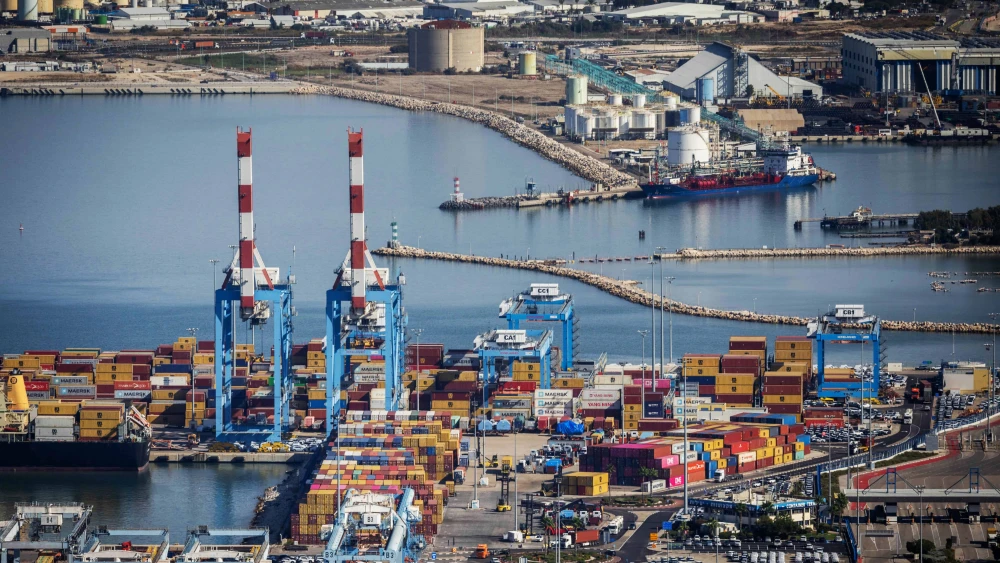
The corridor is expected to connect India, the Middle East and Europe, with the support of Washington. When completed, it will likely include three major Mediterranean Sea ports: Haifa in Israel, Piraeus in Greece and Trieste in Italy.
For Israel, the IMEC represents more than an economic opportunity; it is a pathway to redefine its strategic regional status and geopolitical alignments, according to Mordechai Chaziza of the University of Haifa. Israeli Prime Minister Benjamin Netanyahu has framed the corridor as a transformative platform for Israeli integration into Arab economies and global supply chains.
According to initial estimates, IMEC’s overland transportation route could reduce logistics costs by 30% and transportation time by 40% relative to shipping via the Suez Canal. The new route would also likely provide important structural benefits, such as reducing the risk of supply chain shocks and lowering energy costs.
A major setback against the project’s implementation was the Hamas-led terrorist attacks in southern Israel on Oct. 7, 2023, and the ensuing war with Hamas in Gaza. Just weeks after the IMEC memorandum of understanding was signed at the G20 Summit, Hamas invaded Israel. The escalating regional instability, particularly from Iran’s regional proxies, has effectively led to the halting of this significant initiative, as well as a Saudi-Israeli normalization deal.
“While normalization would certainly ease political and logistical hurdles, it’s not an absolute requirement, and the project could still move forward with careful diplomatic management,” write Rachel Rizzo and Nicholas Shafer for the Atlantic Council.
Hence, it appears that the quicker Israel manages to stabilize the Gaza situation, the sooner it will be able to focus on doing its part to make this project a reality.
An article by Nir Levitan, and professors Arie Reich and Jonathan Rynhold, notes some suggestions to realize the economic potential of IMEC: “To make the agreement a reality and attract private and governmental investment, several initial steps are required, including the creation of a multilateral agreement to establish an institutional framework for a structured and systematic dialogue between the participating countries … [A] dedicated body should be established to attract private investment and promote infrastructure development among the participating countries.”
Via this corridor, the United States and European Union seek to bolster their connectivity with South Asia and the Gulf, aiming to align their strategic objectives and counter China’s growing regional influence.
Several European countries have since appointed special envoys to the IMEC, including France and Italy. Under its framework, Israel and Cyprus announced new energy development projects in May, calling to relaunch the Israel-Cyprus-Greece trilateral forum.
It is now important for Europe, the United States and Israel to double down on their support so that more progress for this initiative can be achieved.
Rachel Rizzo and Nicholas Shafer write: “The E.U. and Washington can do this by promoting policies that continue to build momentum in various bilateral relationships and sectors underpinning IMEC, which will also reaffirm their leadership roles within the project. … Europe should name an official E.U. coordinator for IMEC. Based in Brussels, this person could coordinate the Europe side of the project, working primarily with the E.U. commissioner for international partnerships and the E.U. commissioner for trade and security. The goal should be to integrate regional partners, work on project timetables and cost estimates, and coordinate with France, Italy and Greece to discuss IMEC’s terminal port.”
The IMEC initiative has the potential to change the face of global trade and transportation, as well as digital and energy connectivity. It offers benefits to all the participating countries, possessing a great potential to leverage the economic growth of Europe, India and the Gulf.
And it also grants Israel an opportunity to enhance its significance and role in the international arena on strategic, economic and geographic levels. The government of Israel should prioritize taking steps to implement the IMEC project once its war against Hamas is over.


