


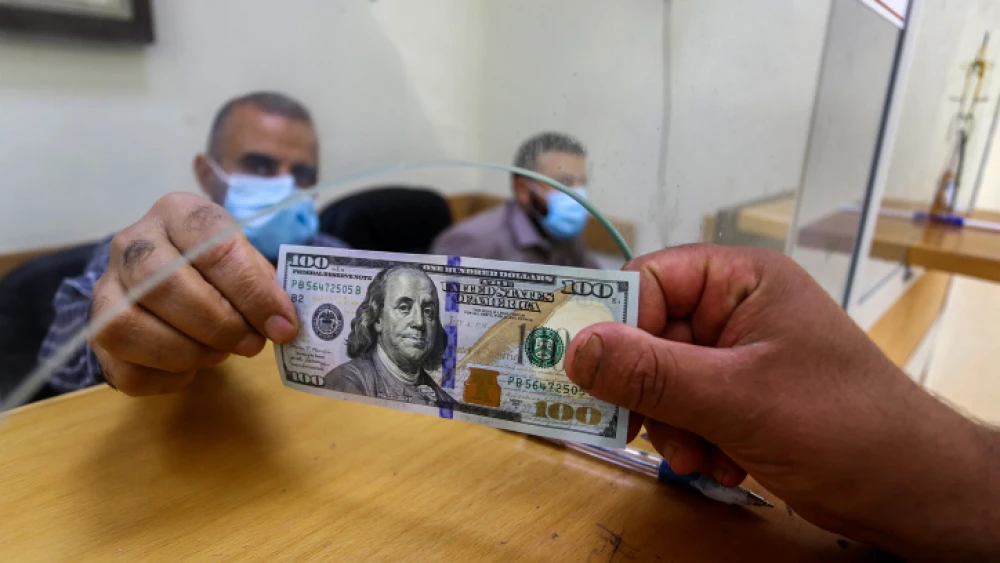
Palestinian banks and monetary bodies are resisting a new deal reached between Qatar and the Palestinian Authority to transfer Qatari assistance to the Gaza Strip for fear of being exposed to legal action over terror-financing charges, Ynet reported on Wednesday.
Qatar and the Palestinian Authority have spent recent weeks working out an arrangement to transfer funds to needy civilians in Gaza, said the report.
According to a written memorandum, Qatar will continue to transfer funds, but unlike in the past, the cash will not be sent through suitcases of money via Israel.
Instead, it will be wired to banks under the supervision of the P.A., which would then transfer it to their branches in Gaza, sending $100 to 100,000 selected needy families for a total of $10 million a month.
The salaries of some 27,000 Hamas government employees will also be covered by Qatar, adding up to an additional $7 million dollars a month, while an additional $10 million of monthly funds will go towards buying fuel from an Israeli energy company and sending it to Gaza’s power plant, according to the report.
The Palestinian banks are supposed to receive a commission of $250,000 per month but are reportedly concerned about being exposed to terror-financing lawsuits.


