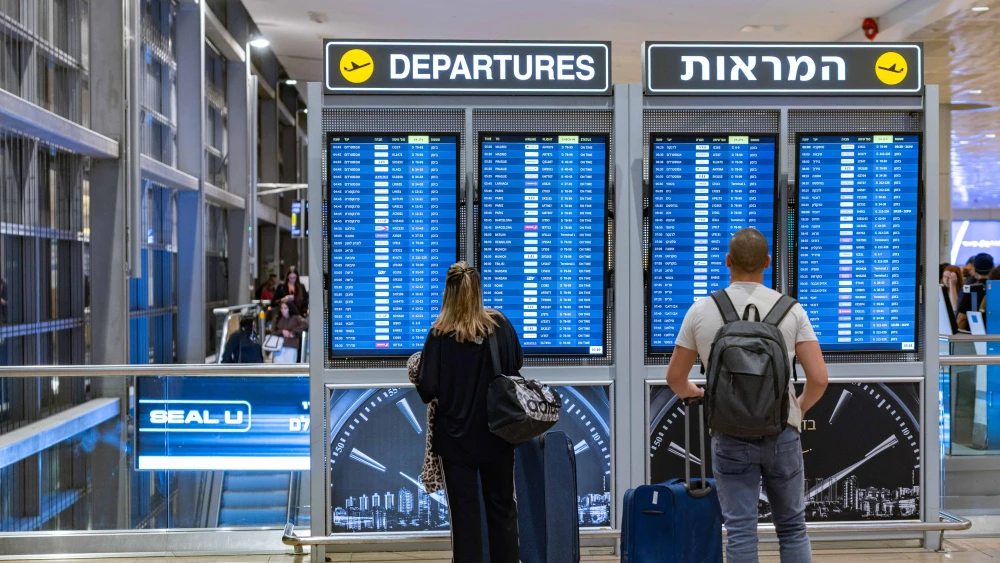
The European Union Aviation Safety Agency updated its Conflict Zone Information Bulletin on Friday, extending its recommendation not to fly to the Middle East and the Persian Gulf, including Israel, until at least May 1.
The EASA cited the Mideast war that started on Feb. 28 as the background for the risks involved in the region.
The implementation of the ceasefire that went into effect on April 8 “remains uncertain and therefore requires further monitoring to assess whether it leads to a sustained reduction of risk to civil aviation,” the European body wrote.
The kinetic war makes “the entire affected airspace vulnerable to spill-over risks, misidentification, miscalculation and failure of interception procedures,” the EASA continued in its explanation.
It said it will continue to closely monitor the situation and provide a further update before May 1.
In addition to Israel, the affected countries are Bahrain, Iraq, Iran, Jordan, Kuwait, Lebanon, Oman, Qatar, the United Arab Emirates and Saudi Arabia.
The EASA guidelines apply to all airlines operating in the 27 member states of the European Union. However, some aviation firms can make independent decisions on whether to adhere to the guidelines.
According to financial outlet Globes, most European airlines, including Lufthansa Group and its subsidiaries, have aligned their flight policy with that of the EASA.
Earlier this month, Wizz Air, the low-cost airline from Hungary that has flown more than 300,000 passengers in and out of Israel this year, extended its pause on traffic to Tel Aviv until May 4.