Newsletter
Newsletter Support JNS

Residents in Israel’s south fear relentless terror-tunnel efforts forged by Hamas

After IDF demolishes terror tunnel near Kibbutz Kerem Shalom, local residents fear nightmare scenario in which one tunnel goes undetected and dozens of terrorists carry out mega-attack • Cellular disruptions in recent weeks add to anxiety

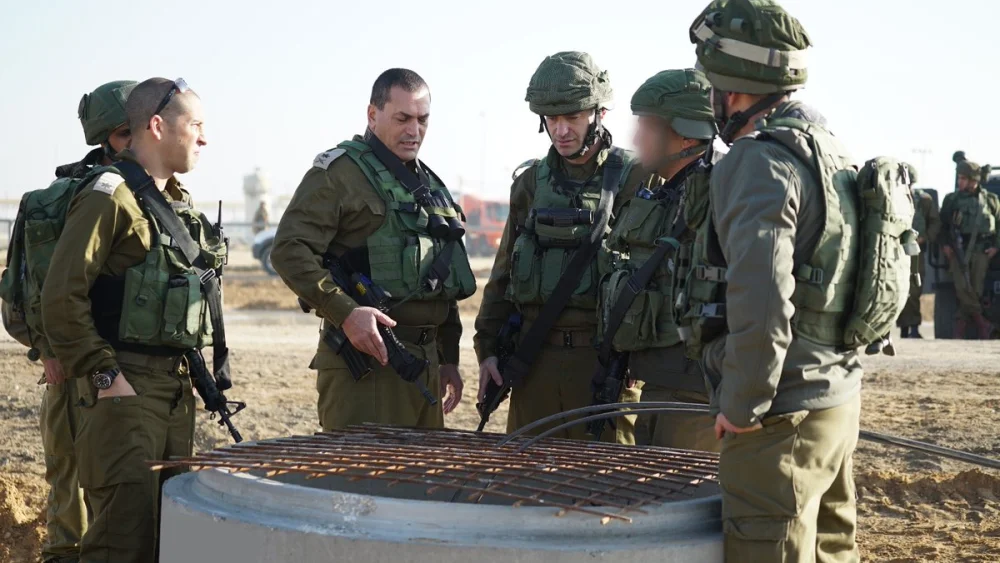
Israel Defense Force officers visit the site where a terror tunnel was exposed at Israel's Kerem Shalom border crossing with Gaza. Credit: IDF Spokesperson's Unit.
Israel Defense Force officers visit the site where a terror tunnel was exposed at Israel’s Kerem Shalom border crossing with Gaza. Credit: IDF Spokesperson’s Unit.

Israel Defense Forces demolished a Hamas tunnel the terrorist organization had intended to connect to an older, partially destroyed tunnel near Kibbutz Kerem Shalom on Sunday.

Residents of the Gaza border-adjacent communities told Israel Hayom that while they have gotten used to the security situation, cellular disruptions in recent weeks—the result of Egypt jamming communication frequencies to combat Sinai insurgents—have made them ever more anxious that they will be unable to contact loved ones in the event of a security breach.

Amit Caspi from Kibbutz Kerem Shalom told Israel Hayom that “we have unfortunately already gotten used [to this]. On one hand, it is worrying that there are tunnels, but on the other hand, it is good they [the IDF] are finding them.” He said there was disappointment among local residents that “the other side continues to with its tunnel excavations instead of focusing on with the real aspects of life.”

Daniel Matari, also of Kerem Shalom, said he was afraid of a nightmare scenario in which one of the terror tunnels is not discovered, and local residents are made to pay the price.

“Every time there is a tunnel directed at the country, there is the fear, ‘What will be on the day they miss a tunnel?’ If they have the option to carry out a mega-attack and they have an active tunnel, it won’t be two terrorists, but 30 or 40 terrorists that will come with grenades and LAW missiles,” he said.

Matari told Israel Hayom that he worries about the safety of his 4-year-old daughter, who goes to school at nearby Kibbutz Nir Yitzhak, especially in light of the reception problems in the area and the difficulty residents have in communicating regularly via cellphone.

“I am always worried,” he said. “It is enough for there to be one Code Red, and I don’t know what’s going to happen. It’s problematic when there is no reception.”

“While Republicans are grossly generalized as white supremacist extremists, the Democrats’ besetting sin of antisemitism is entirely whitewashed,” Victoria Coates of the Heritage Foundation told JNS.
“The story of resilience is the story of our people,” Israel’s U.S. ambassador said at the launch of Resilience on Campus, a new program seeking to equip students with the emotional tools to navigate hostility, isolation and identity-based challenges.
The U.S. treasury secretary justified the move by saying that “Iran has committed to free and open transit in the Strait of Hormuz and to permit International Atomic Energy Agency inspectors into the country.”
“That’s not criticizing a lobby. That’s laundering antisemitism from your podium as mayor of a city with more than a million Jews,” stated Rep. Josh Gottheimer.
“I’m proud to see the dedication these students bring to the challenges facing our communities,” the Jewish congressman stated.
“My directive, together with that of the defense minister, to the IDF is clear and has not changed,” he stressed.
Benny Gantz, JNS editor-in-chief Jonathan S. Tobin, Gilad Erdan, Mosab Hassan Yousef, Nissim Black and leading voices in security, diplomacy, media, law and Jewish communal affairs headline the summit’s third day in Jerusalem.