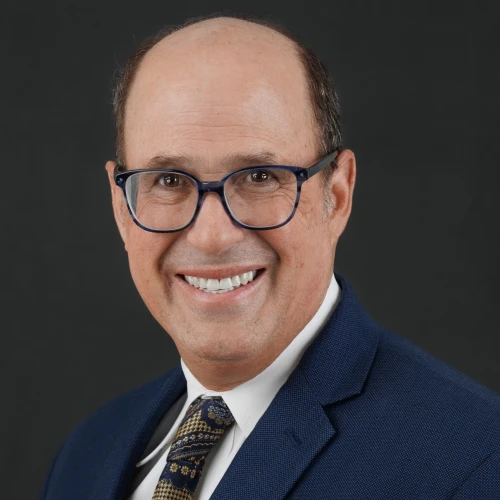
Professor Bernard Lewis, a world-renowned expert and historian whose prolific writings helped the world understand the complexities of the Middle East, passed away over the holiday of Shavuot at the age of 102.
Lewis was among the leading proponents of the idea of “a clash of civilizations” between Christianity and Islam as a major source of post-Cold War conflict. Lewis argued that the roots of the battle lie in the similarities at the cores of the two faiths, distinguishing them from other major religions.
Israeli Prime Minister Benjamin Netanyahu called Lewis “one of the great scholars of Islam and the Middle East in our time.”
“I will always feel privileged to have witnessed firsthand his extraordinary erudition, and I gleaned invaluable insights from our many meetings over the years,” Netanyahu said in a statement Monday. “Professor Lewis’s wisdom will continue to guide us for years to come.”
Lewis was born in 1916 to a middle-class Jewish family in London. His unrelenting drive to study the Middle East, its languages and culture, drove him to complete his Ph.D. in his late 20s. During World War II, he initially served in the Royal Armored Corps but his unique knowledge had him reassigned to the Intelligence Corps.
In 1974, he accepted a position at Princeton University, where his research on the Middle East and Islam made him a world-renowned scholar. His prolific work includes dozens of books and hundreds of papers.
Due to his unique expertise and experience, U.S. policymakers often sought his advice on various foreign-policy matters, including in the months after 9/11 and immediately preceding the 2003 invasion of Iraq.
He was also considered close to Israel’s political elite.
Due to his ties to American and Israeli leaders, as well as his pro-Israel views and hawkish foreign-policy positions, some criticized his Middle East research for being partial. Others praised his insights on the region and the cautionary approach he took when analyzing the Arab Spring and other major events.
His books include The Arabs in History, The Crisis of Islam and What Went Wrong?
Professor Moshe Sharon from the Hebrew University of Jerusalem—one of the leading Middle East scholars in Israel—praised Lewis as a giant in his field.
“Lewis was one of the great historians of Islam and the Middle East, perhaps the greatest,” Sharon, who collaborated with Lewis for more than 50 years, told Israel Hayom. “He was an expert in practically every Islam-related aspect, including literature, religion and science.
“He nurtured generation upon generation of students worldwide. He was beloved and appreciated everywhere. He was always welcome in the Arab world and the Islamic countries. He was the ultimate orientalist.
Continued Sharon: “Lewis was an ardent supporter of Zionism and truly pro-Israel. He knew how to talk about Israel so that people would listen everywhere, including in Europe and the U.S. His influence on U.S. policy toward the Middle East was extraordinary.”