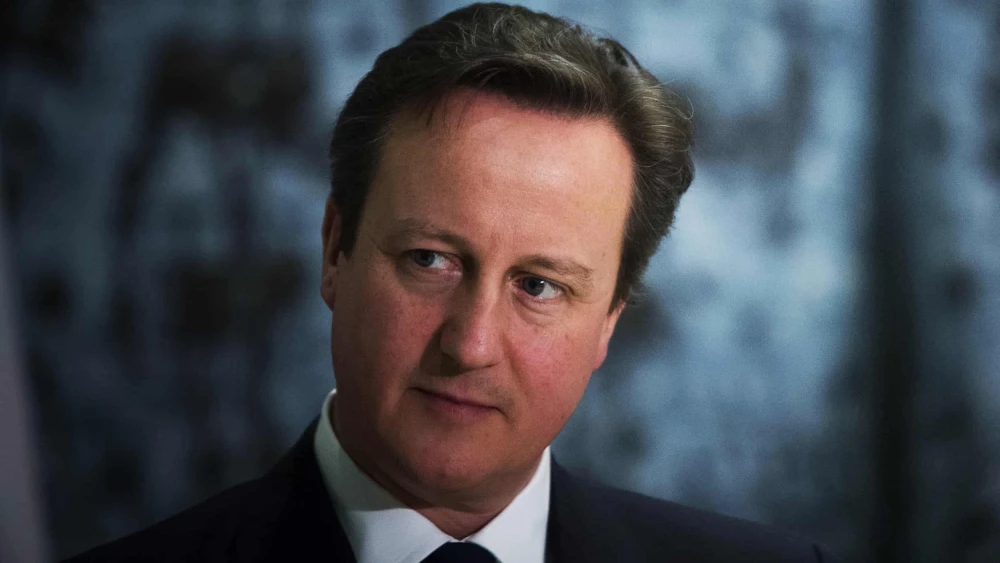
London followed Washington’s lead on Monday by announcing sanctions on “Israeli settlers who have violently attacked Palestinians in the occupied West Bank.”
British Foreign Secretary David Cameron decided to impose “financial and travel restrictions” on four Israelis, according to the Foreign Office.
One of the four accused Israelis, Yinon Levi from Meitarim Farm in the South Hebron Hills region of Judea, was already targeted by the Biden administration earlier this month along with three others for “extremist settler violence.” The executive order signed by Biden led to two out of the four having their bank accounts frozen, with Bank Hapoalim indicating it would suspend the other two accounts.
The other three named by the White House are David Chai Chasdai from Givat Ronen; Einan Tanjil from Kiryat Ekron; and Shalom Zicherman from Mitzpe Yair.
The other three targeted by the U.K. are Moshe Sharvit, Zvi Bar Yosef and Ely Federman. Levi and Sharvit are accused of having used “physical aggression, threatened families at gunpoint, and destroyed property as part of a targeted and calculated effort to displace Palestinian communities.”
Bar Yosef is accused of threatening families on a picnic at gunpoint and Federman of threatening shepherds south of Hebron. Federman was reportedly wounded in Gaza and has since returned to combat in Khan Yunis.
“Today’s sanctions place restrictions on those involved in some of the most egregious abuses of human rights,” Cameron said. “We should be clear about what is happening here. Extremist Israeli settlers are threatening Palestinians, often at gunpoint, and forcing them off land that is rightfully theirs. This behavior is illegal and unacceptable.”
Cameron called for Jerusalem to “take stronger action and put a stop to settler violence. Too often, we see commitments made and undertakings given, but not followed through.”
Israeli National Security Minister Itamar Ben-Gvir and Finance Minister Bezalel Smotrich on Thursday slammed the U.K. announcement.
“The decree in question reveals a serious moral confusion,” a statement from Ben-Gvir’s office said, noting that “we have not heard of a decree issued by the British against thousands of Gaza residents who took part in the [Oct. 7] massacre, rape and looting of Jews.”
“We will not shy away from supporting these dedicated settlers, whose only sin is their refusal to submit to terrorism,” vowed Ben-Gvir.
Smotrich told journalists at a faction meeting of his Religious Zionism Party that the British sanctions are part of a “combined American, European and Arab move” to end the war against Hamas in Gaza and force Jerusalem to agree to the establishment of a Palestinian state.
In contrast to public statements from Washington and London about the threat of “settler” violence, Israeli data has shown that Israeli violence in Judea and Samaria has been decreasing for some time. Earlier this year, then-Israeli Foreign Minister Eli Cohen called reports of growing “settler violence” a “blood libel” and “a lie disconnected from reality.”