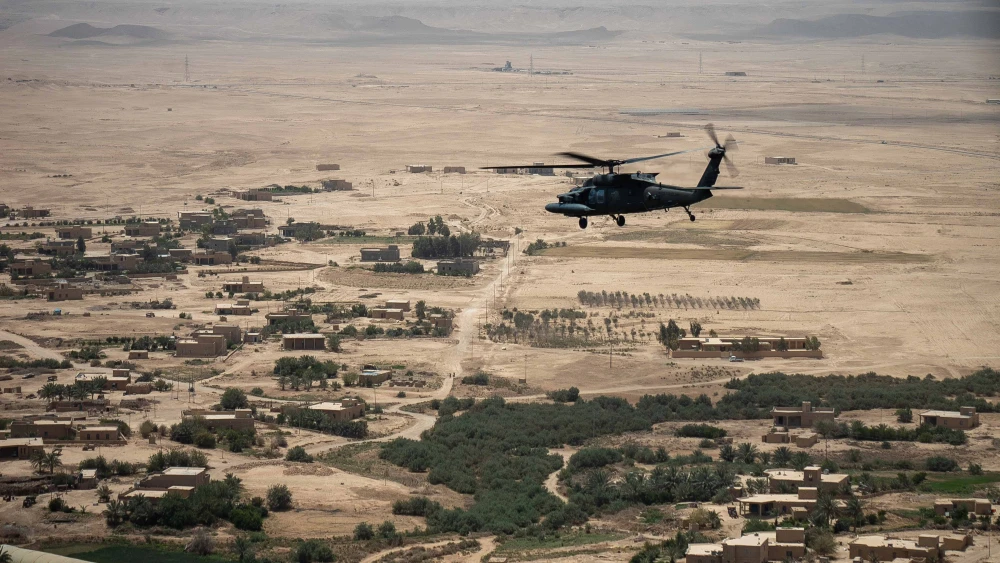
U.S. Central Command announced on Wednesday that it had launched a new mission to transfer ISIS detainees from northeastern Syria to Iraq “to help ensure the terrorists remain in secure detention facilities.”
CENTCOM stated that U.S. forces “successfully transported 150 ISIS fighters” from a detention facility in Hasakah, Syria, to a secure location in Iraq.
“Ultimately, up to 7,000 detainees could be transferred from Syria to Iraq-controlled facilities,” the statement read. It added that, in 2025, U.S. and partner forces detained more than 300 ISIS operatives in Syria and killed more than 20.
“Facilitating the orderly and secure transfer of ISIS detainees is critical to preventing a breakout that would pose a direct threat to the United States and regional security,” CENTCOM commander Adm. Brad Cooper stated.
According to CENTCOM, Cooper spoke with Syrian President Ahmed al-Sharaa on Wednesday to discuss “the importance of Syrian government forces adhering to a ceasefire with the Syrian Democratic Forces and supporting the coordinated transfer of ISIS detainees from Syria to Iraq.”
Cooper briefed the Syrian president on the transfer plan and “expressed expectations for Syrian forces, as well as all other forces, to avoid any actions that could interfere.”
Aaron Y. Zelin, a senior fellow at the Washington Institute, wrote that the transfer “suggests they don’t think the situation is stable enough to keep them there.”
“The effort to move up to 7,000 ISIS detainees from Syria to Iraq is welcome news,” Brian Carter, a research manager and fellow with the Critical Threats Project at the American Enterprise Institute, stated. “The Syrian army is on the outskirts of Hasakah, where there is a major detention facility for ISIS fighters.”
Adrian Shtuni, a senior fellow at Hedayah, wrote that the move is a “clear response to a rapidly evolving, high-risk security situation in northeast Syria” and signals “strong U.S. concern about ISIS resurgence.” He added that the United States should ultimately repatriate detainees to their countries of origin.